

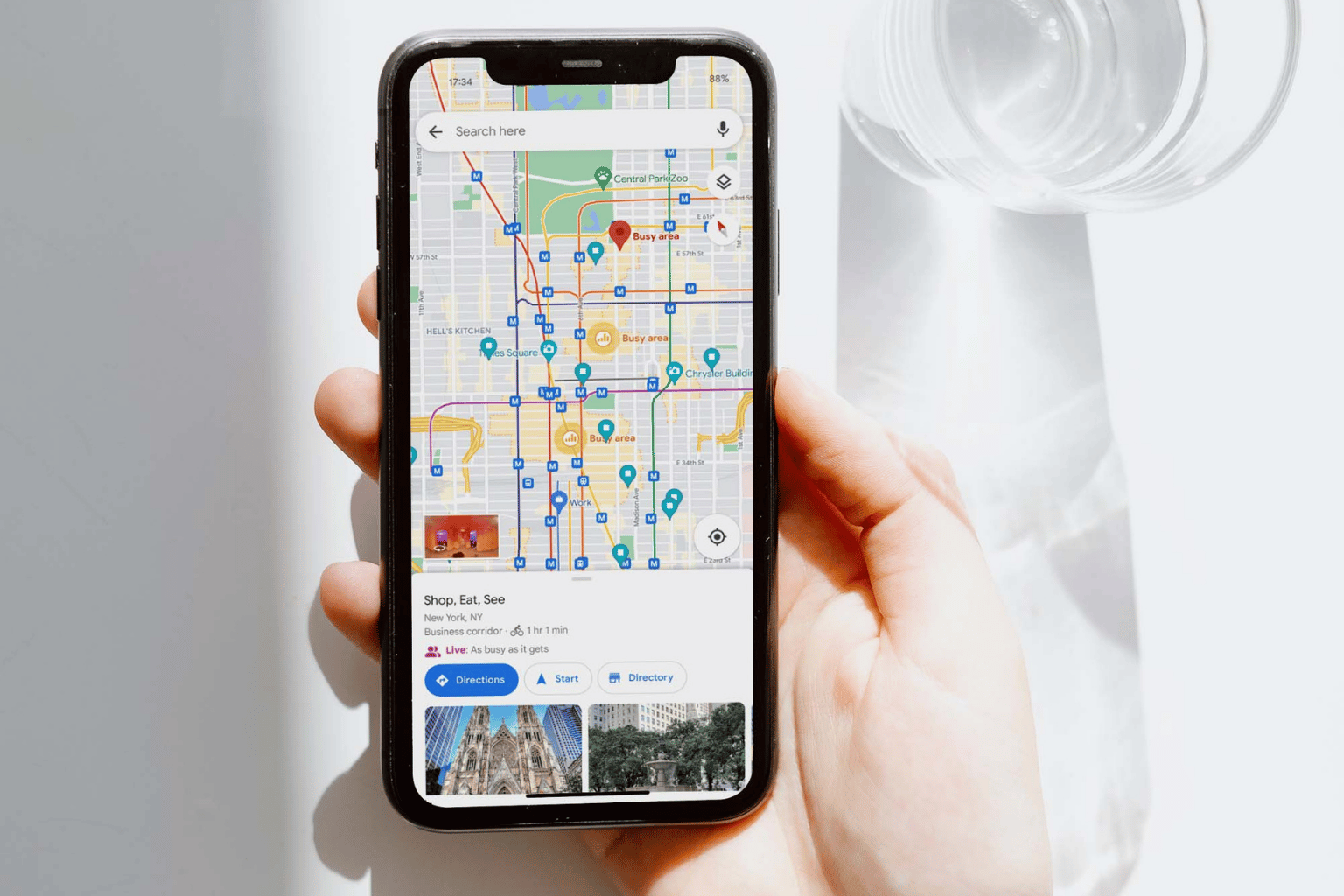
A customer searches “emergency plumber near me,” sees three businesses in the map results, and calls one before scrolling another inch. That is why the top Google Maps ranking factors matter so much for local businesses. Map visibility is not a vanity metric. It can mean booked jobs, filled tables, showroom visits, and a steadier lead pipeline without paying for every click.
Google does not publish a simple points-based formula, and nobody can honestly promise a permanent #1 Maps spot. What it does reward is clear: a relevant, nearby, trusted business that gives searchers a good experience. The smart move is not chasing hacks. It is making every local signal consistent, credible, and useful.
The top Google Maps ranking factors, explained
Google has long described local ranking around three ideas: relevance, distance, and prominence. Those concepts still provide the best framework, but each one is influenced by several practical details on your Google Business Profile, website, reviews, and local reputation.
Relevance: how well your business matches the search
Relevance is Google’s confidence that your business offers what someone is looking for. Your primary Google Business Profile category carries real weight here. A personal injury attorney should not choose the broadest category available just because it sounds impressive. The closest accurate category helps Google connect the firm to the right searches.
Secondary categories can add context, but only when they reflect real services. A Los Angeles dentist may offer cosmetic dentistry, dental implants, and teeth whitening. Adding those services makes sense if patients can actually book them. Stuffing categories with loosely related services creates confusion, not a competitive advantage.
Your profile content should support those choices. Complete your service list, write a straightforward business description, add products when they apply, and keep business hours accurate. Use natural language customers use, such as “same-day AC repair” or “commercial roof inspections,” rather than repeating a city name until the copy sounds like it was written by a malfunctioning robot.
Your website reinforces relevance. Each important service deserves a useful, well-built page that explains who it is for, what is included, and where you provide it. If your profile says you install garage doors but your site barely mentions garage door installation, Google has less evidence to work with.
Distance: the factor you cannot fully negotiate
Distance is based on the searcher’s location or the location named in their search. A coffee shop in Santa Monica will usually have an advantage for someone standing in Santa Monica. No amount of keyword optimization changes physical geography.
That does not mean businesses outside a dense city center should give up. Google also weighs relevance and prominence. A highly trusted specialist may appear farther from the searcher when the search is specific enough. Service-area businesses can compete by defining their service area accurately, creating strong location-relevant website content, and earning a reputation that travels beyond one ZIP code.
Do not create fake locations, virtual offices, or duplicate profiles to force visibility in neighboring cities. These tactics can trigger suspensions, erase hard-earned review history, and turn a marketing problem into a business interruption. If customers do not visit your address, follow Google’s rules for service-area businesses and hide the address when appropriate.
Prominence: why reputation wins attention
Prominence is the broadest of the major Google Maps ranking factors. It reflects how established and trustworthy a business appears online and, in some cases, offline. Reviews are a visible part of that picture, but they are not the whole story.
A consistent flow of genuine reviews tells Google and potential customers that the business is active. Review quantity matters, yet quality, recency, detail, and the way you respond matter too. Ten thoughtful reviews describing reliable service, fair pricing, and a specific repair can be more persuasive than a pile of vague one-word ratings.
Build a review process into your actual customer journey. Ask shortly after a completed service, make the request easy, and never pressure customers to leave only positive feedback. Respond professionally to reviews, including the awkward ones. A calm response to a legitimate complaint can show future customers that you take accountability seriously.
Prominence also comes from local mentions, industry citations, media coverage, community involvement, and authoritative websites referencing your brand. A contractor listed by a respected local builders association, featured in a neighborhood publication, or mentioned by a partner organization creates signals that are harder to fake than a keyword-stuffed profile.
Your Google Business Profile is the operational hub
Many businesses treat their Google Business Profile as a directory listing they set up once and forget. That is like putting up a storefront sign and never changing the burned-out letters. Your profile needs regular attention because it is often the first version of your business a local searcher sees.
Start with the fundamentals: the exact business name used in the real world, a monitored phone number, correct website destination, current hours, and accurate address or service area. Keep your name, address, and phone number consistent across major business listings and your website. Small variations are not always disastrous, but conflicting information makes it harder for platforms and customers to trust what they see.
Photos are another practical differentiator. Add recent, original images of your team, exterior signage, completed work, products, and the customer experience. For a restaurant, that might be food and dining space. For a home service company, it may be branded vehicles, technicians at work, and before-and-after projects. Stock photos can fill a gap, but they do not prove much.
Use Google Business Profile updates when you have something meaningful to share: seasonal services, an event, new inventory, a limited-time offer, or an operational change. These updates are not a magic ranking lever. They are a way to keep your profile useful and give searchers another reason to choose you.
Website signals that support local rankings
Google Maps does not operate in a vacuum. Your website helps validate your business and convert the attention your profile earns. A slow, confusing site can waste even excellent map visibility.
Make sure key local information is easy to find, especially your contact details, service areas, hours, and primary services. Location pages can work well for businesses with real, distinct markets, but each page must offer unique value. A useful page for Pasadena should address the services available there, local customer needs, proof of work, and clear next steps. Swapping “Burbank” for “Pasadena” across 30 nearly identical pages is thin content with a fresh coat of paint.
Mobile experience matters because so many Maps searches happen on phones with a customer ready to act. Calls should be tappable, forms should be short, pages should load quickly, and the path from question to contact should be obvious. Ranking gets the click. Conversion earns the revenue.
Structured data can also help search platforms better interpret details such as your business type, address, hours, and reviews. It is not a substitute for quality local SEO, but it is a clean technical foundation worth getting right.
What is changing for Maps visibility in 2026
Search behavior is becoming more conversational and more fragmented. Customers may ask Google, ChatGPT, or another AI-powered platform for “a reliable family lawyer near me who handles custody cases” instead of searching a short phrase. That increases the value of clear service information, strong reviews, consistent entity data, and credible third-party mentions.
AI results do not replace Google Maps for high-intent local needs. Someone who needs a locksmith at 11 p.m. still wants nearby options, open hours, directions, ratings, and a phone number. But the businesses best positioned for the next phase of search will make their facts easy to verify across the web, not just inside one profile.
This is where a broader local visibility strategy pays off. LAv1 approaches local SEO as a revenue system: Maps optimization, website conversion, reputation management, and readiness for AI-driven discovery all need to support the same business goal.
A practical monthly Maps checklist
Local SEO is less glamorous than a viral campaign, but consistency compounds. Each month, verify your hours and contact data, add a few authentic photos, review new customer questions, request reviews after completed work, and respond to feedback. Check whether your key services and service areas are still accurate on both your website and profile.
Then look beyond rankings. Track calls, direction requests, website visits, form submissions, booked appointments, and closed revenue where possible. A Maps position that produces calls from the wrong service area or leads for services you do not offer is not a win. Qualified demand is the metric that keeps the lights on.
Frequently asked questions
Do reviews directly improve Google Maps rankings?
Reviews are one of several prominence signals, and they can strongly influence whether people choose your listing. Focus on earning recent, authentic reviews and responding thoughtfully instead of buying reviews or using aggressive incentives. Those shortcuts can damage trust and violate platform policies.
How long does it take to rank higher on Google Maps?
It depends on competition, location, profile history, reputation, and how complete your local presence is. Some fixes, such as correcting categories or hours, can take effect relatively quickly. Building review momentum, local authority, and meaningful website relevance often takes months of consistent work.
Can a service-area business rank without a storefront?
Yes. Businesses that travel to customers can appear in Maps results when their profile is set up according to Google’s service-area guidelines. They should not use fake storefronts, and they should build authority through accurate services, reviews, website content, and real local credibility.
The best local marketing rarely comes from one clever tweak. It comes from becoming the easiest business for Google to understand and the easiest business for a nearby customer to trust. Do that consistently, and your Maps presence has a reason to grow.