

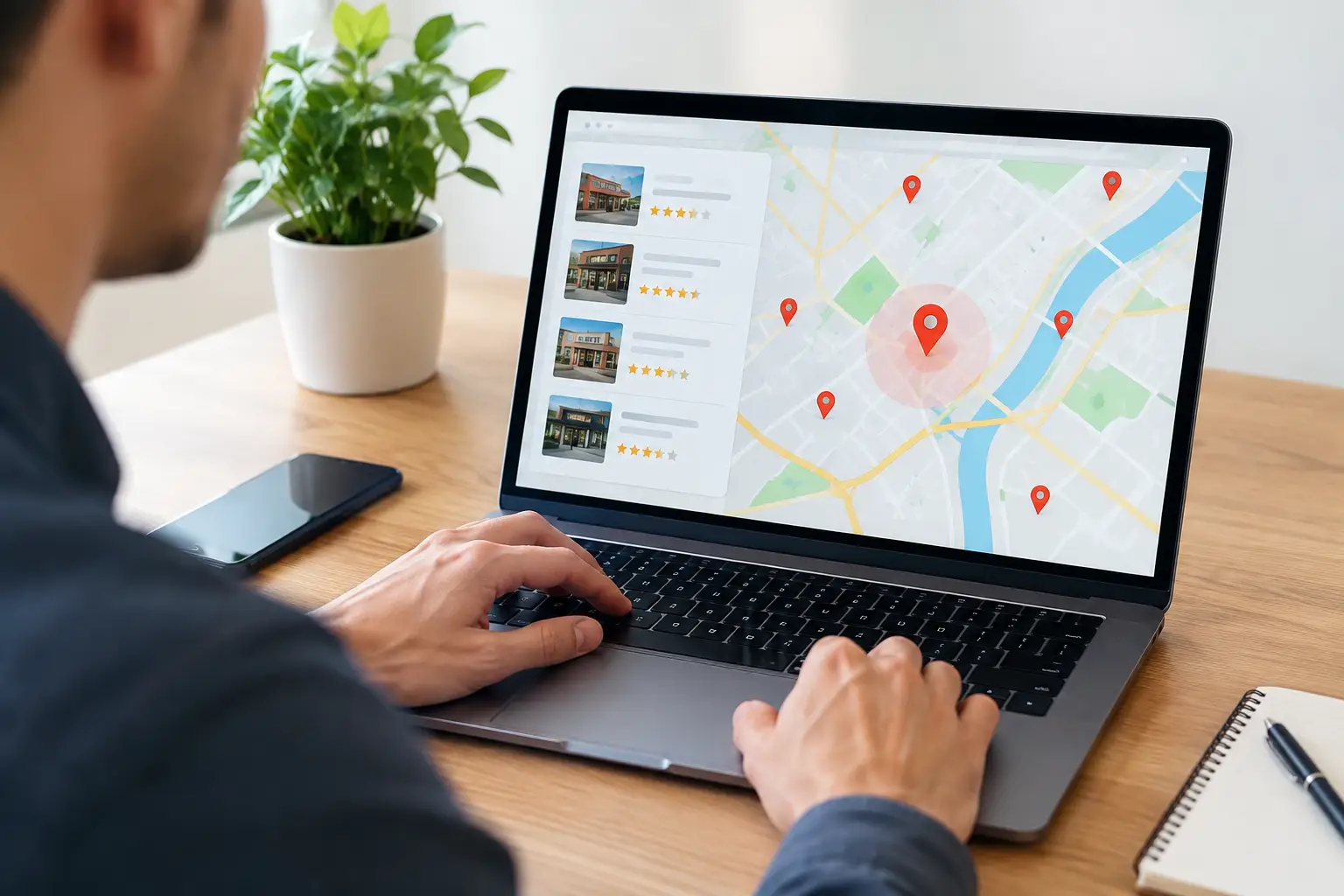
A mobile locksmith can be five minutes from a customer and still lose the Google Maps click to a competitor across town. That is the uncomfortable truth behind the question, how do you rank locally without a physical address? You can absolutely build local visibility as a service-area business, but hiding an address is not the same as removing location from the equation. Google still needs strong evidence of where you operate, what you do, and why customers trust you.
The goal is not to outsmart the map. It is to give search engines, AI search tools, and prospective customers a consistent, credible picture of your business.
How Do You Rank Locally Without a Physical Address?
Start by separating two goals that often get mashed together: ranking in Google Maps and ranking in local organic search results. A plumber, cleaner, mobile pet groomer, consultant, or home health provider can compete in both, but the playbook is slightly different.
For Google Maps, distance still matters. Even when your address is hidden from the public, Google knows the location connected to your verified business profile and may use it as one proximity signal. You cannot make a hidden address appear closer to every neighborhood. What you can do is strengthen relevance and prominence so you earn visibility across the service area where your business can realistically compete.
For local organic results, your website, reputation, local mentions, and service pages have more room to work. This is where a strong site can help you show up for searches such as “mobile auto detailing in Pasadena” or “emergency electrician near me,” even when you do not maintain a storefront there.
The practical answer: operate a legitimate service-area business, configure your business profile honestly, build geographic relevance on your website, and earn proof that real local customers choose you.
Set Up Your Google Business Profile the Right Way
If customers do not visit your business location, create or maintain your Google Business Profile as a service-area business. Use your real operating address for verification, then hide it from public view and set the areas you genuinely serve.
This is where businesses make expensive mistakes. A virtual office, mailbox, friend’s apartment, or rented desk is not a shortcut to map rankings. If the location is not staffed and customer-facing according to Google’s current eligibility rules, it can put the profile at risk. A suspended profile is not a growth strategy. It is a lead-generation blackout.
Choose the most accurate primary category for the core service that drives revenue. Add relevant secondary categories only when they represent real services. Then complete the profile with accurate hours, a local phone number, services, business description, photos, and regular updates.
Your service areas should be realistic, too. Listing every city in Southern California does not make a one-truck HVAC company more credible. It makes the profile less believable. Start with the areas you can serve well and expand only when capacity, travel time, and customer demand support it.
Build Location Relevance on Your Website
A hidden address does not mean your website should become geographically vague. Your site needs to clearly explain where you work, which services you provide, and what local problems you solve.
Your homepage should establish your primary market in natural language. A Los Angeles mobile mechanic, for example, can explain that it serves drivers across Los Angeles, Burbank, Glendale, and nearby communities. That is useful customer information. Repeating a city name 40 times in white text at the bottom of the page is not. Google has seen that movie before.
Create dedicated service pages for your highest-value offerings, then add city or area pages only when you have something meaningful to say. A useful local page includes the service, the neighborhoods or city it covers, common customer needs, realistic response expectations, original photos, testimonials where appropriate, and a clear way to contact you.
Avoid cloning one page 25 times and swapping the city name. Thin location pages tend to create weak user experiences and weak rankings. If every page says the exact same thing, customers notice and search engines usually do, too.
Focus on proof, not just place names
Local relevance becomes more convincing when it is supported by real-world details. Mention local job types you handle, regional regulations that affect your work, seasonal issues, recognizable service routes, or community partnerships. Use original images from actual jobs when privacy allows.
Add clear business details throughout the site, including your business name, phone number, service areas, and operating hours. Keep them consistent with your Google Business Profile and legitimate third-party listings. Consistency will not magically produce a top-three map placement, but conflicting information can erode trust and create unnecessary friction for customers.
Earn Reviews That Describe the Work and the Area
Reviews are one of the few local marketing assets that improve both visibility and conversion. They tell Google that the business is active and trusted, while telling a nervous prospect, “Yes, these people actually show up.”
Ask every satisfied customer for an honest review shortly after the job is complete. Make the request simple and do not pressure customers to use specific keywords. A natural review that mentions the service, experience, or neighborhood can be helpful, but authenticity matters more than forced phrasing.
Respond to reviews with a real human voice. Thank customers, address concerns professionally, and avoid copying the same reply repeatedly. Do not review-gate by asking only happy customers to leave public feedback. It is risky, and it creates a reputation that can fall apart the moment a frustrated customer decides to speak up.
Beyond Google, build legitimate mentions in local directories, trade associations, neighborhood organizations, chambers, and relevant industry platforms. Prioritize accuracy and quality over a giant pile of low-value listings. One respected local mention can do more for credibility than 100 sketchy directory submissions.
Use Content to Win Beyond the Map Pack
Map visibility is valuable, but it is not the entire local search landscape. A service-area business should create content that answers the questions customers ask before they are ready to call.
A water damage company might explain what homeowners should do in the first hour after a leak. A mobile dog groomer might cover coat-care needs during hot Los Angeles summers. A tax professional might answer what documents a new freelancer needs before filing. These are not fluff articles. They create useful entry points for local search, featured answers, and AI-generated recommendations.
As search behavior shifts through 2026 and beyond, more people will ask full questions in Google, ChatGPT, Perplexity, and other AI-driven tools. Those systems look for clear, consistent, well-supported information. Make your service details easy to understand, explain who you help, include transparent policies, and publish answers that reflect actual expertise.
AI visibility is not a replacement for local SEO. It is another place where a trustworthy local brand can be discovered. The businesses that benefit most are not the ones chasing every new acronym. They are the ones with accurate business data, useful content, strong reviews, and a website that answers customer questions better than the competition.
Know Where Organic Local SEO Has Limits
There is a trade-off: a hidden-address service business may have a harder time dominating Maps results far from its verified location. This is especially true in dense markets where customers search from many miles away and established competitors have storefronts across the region.
If you need leads from a distant city right now, local SEO may not be enough on its own. Combine it with tightly targeted paid search, local service advertising where available, referral partnerships, and a dedicated landing page built for that market. Paid ads can create immediate demand, while organic local authority compounds over time.
Do not confuse a broad service area with a local presence. If you routinely serve 15 cities, you need the staff, review history, content, and operational ability to support that claim. Ranking is only useful when the leads can be served profitably.
A Simple Local Visibility Checklist
Before chasing advanced tactics, make sure these basics are handled:
- Your Google Business Profile is verified, accurate, and configured as a service-area business when appropriate.
- Your primary category, services, hours, phone number, and customer-facing details are complete and consistent.
- Your website has strong service pages and genuinely useful pages for priority markets.
- You have a repeatable process for earning and responding to honest reviews.
- Your business is mentioned accurately on credible local and industry platforms.
- Your content answers real customer questions in plain English, not marketing jargon.
Can an online-only business rank in Google Maps?
Usually, no. Google Business Profiles are generally intended for businesses that meet customers in person, either at a storefront or within a defined service area. An online-only store, software company, or remote consultant with no in-person customer contact should focus on organic SEO, paid advertising, and broader brand visibility instead.
Should you use a virtual office to rank in a new city?
Not unless it qualifies as a legitimate, staffed customer-facing location under Google’s rules. Using an ineligible address can lead to profile edits, suspensions, lost reviews, and a lot of time spent cleaning up a mess that never needed to happen.
How long does local ranking take without a storefront?
It depends on competition, your starting reputation, website quality, review velocity, and distance from the searcher. Some improvements appear within weeks after profile and website fixes. Building durable visibility in competitive markets often takes several months of consistent work.
A physical address can be an advantage, but it is not a permission slip to win locally. The businesses that keep gaining ground are the ones that make it easy for customers and search platforms to verify a simple promise: we serve this area, we do this work well, and people here trust us. Start there, measure calls and qualified leads instead of vanity rankings, and let each real customer interaction strengthen the next one.