

If you are searching for a “local seo company los angeles,” you are probably not looking for prettier reports or a pile of marketing jargon. You want the phone to ring with people who can actually buy from you. In a market where a plumber in Sherman Oaks, a med spa in Beverly Hills, and a law firm downtown can all face dozens of nearby competitors, local visibility is not a vanity metric. It is a lead-generation system.
The catch: ranking in Google Maps is only part of the job now. Customers also ask Google conversational questions, compare businesses in AI search tools, and make decisions without clicking through ten blue links. The right agency should help your business show up where local decisions are being made, then turn that attention into calls, bookings, store visits, and revenue.
What a Local SEO Company in Los Angeles Should Actually Do
Local SEO is often sold as a quick fix: add a few keywords, collect reviews, and wait for the leads. That approach can create activity, but activity is not the same as growth. A useful local strategy starts with how customers search, what they need at that moment, and whether your website gives them a clear next step.
For a Los Angeles business, geography adds another layer. People may search by neighborhood, city, landmark, ZIP code, or simply “near me.” A homeowner might look for “emergency roofer near Encino,” while another searches “roof repair Los Angeles.” Both searches can lead to the same company, but they require different pages, signals, and expectations.
A capable agency connects the pieces: your Google Business Profile, website, service pages, location relevance, reputation, technical performance, paid search when it makes sense, and the growing world of AI-driven discovery. It should also explain what it is doing in plain English. If the monthly update leaves you more confused than when you started, that is not transparency.
Google Business Profile Is the Local Front Door
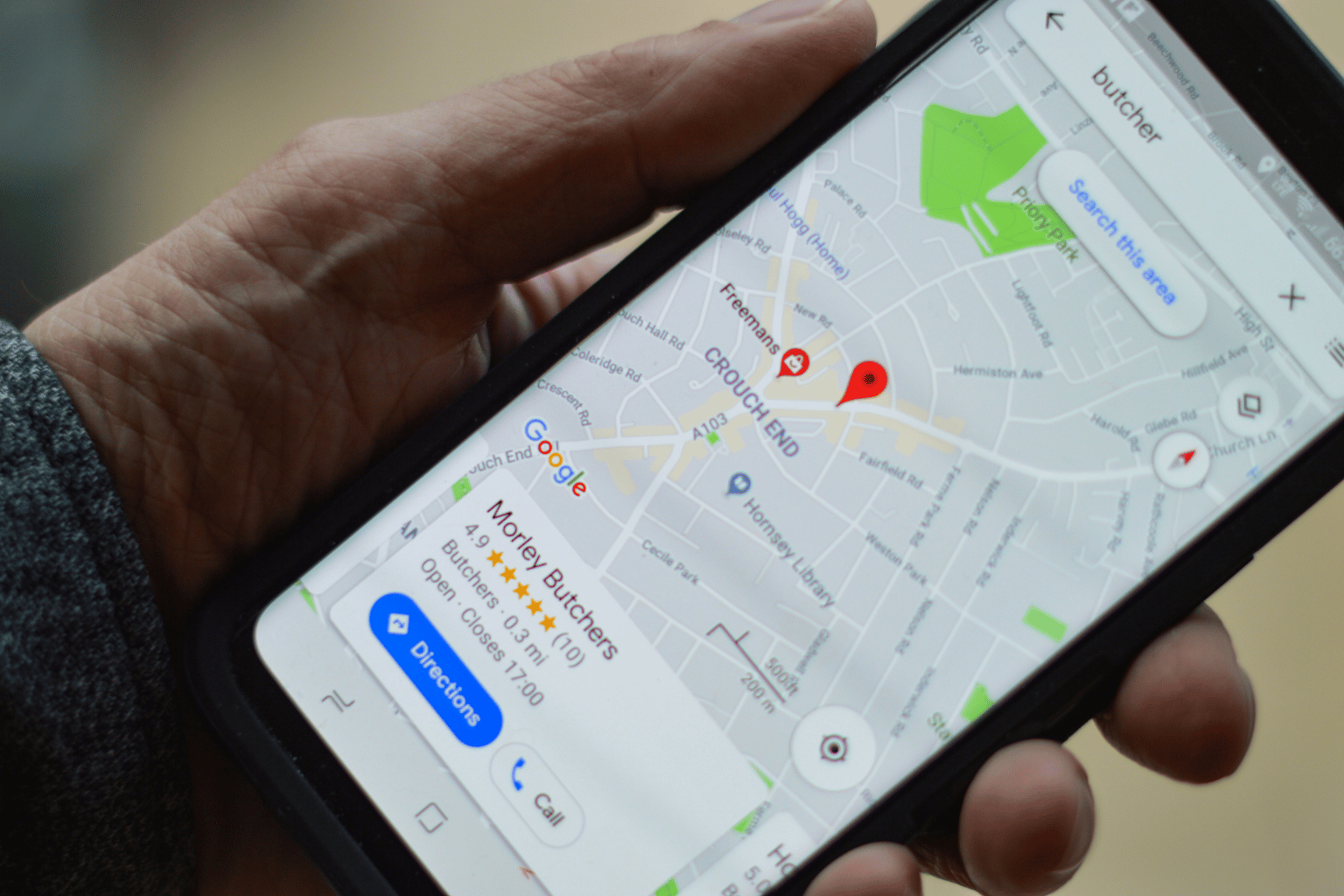
For many service businesses, the Google Business Profile is the first impression. It appears in Maps, local results, branded searches, and often before a visitor reaches your site. An incomplete or poorly managed profile can cost calls even when your business technically ranks.
The work goes beyond choosing a category and uploading a logo. It includes accurate service areas, business hours, primary and secondary categories, service descriptions, photos that reflect real work, question-and-answer management, review responses, and posts where they support customer communication. Most importantly, the profile details need to match the reality of your business. Trying to game the map with fake addresses or keyword-stuffed business names is a short-term gamble with a very real suspension risk.
Your Website Has to Convert the Visibility
A map ranking is not a finish line. If a potential customer taps through to a slow website, cannot tell whether you serve their area, or has to hunt for a phone number, the lead may go to the next result.
That is why local SEO and web design should not live in separate universes. High-performing local pages answer the practical questions fast: What do you do? Where do you do it? Who is it for? Why should someone trust you? What should they do next? A Los Angeles HVAC company, for example, may need focused pages for repair, installation, maintenance, and commercial work rather than one broad page trying to rank for everything.
Mobile experience matters especially in local search. Someone with a burst pipe is not reading a 2,000-word company history. They are looking for availability, proof, a service area, and a tap-to-call option. Clear beats clever when the customer has urgency.
The 2026 Local Search Shift: Maps, AI Answers, and Zero-Click Decisions
Local search is changing because the customer journey is changing. Search engines increasingly answer straightforward questions directly on the results page. AI tools summarize options, compare providers, and pull details from across the web. That means clicks may not always rise at the same pace as visibility, even when your marketing is working.
For small businesses, the practical question is not “How do we beat AI?” It is “How do we become an obvious, trustworthy answer when AI and search platforms evaluate local options?”
That requires consistent business information, credible third-party mentions, useful service content, strong reviews, and clear proof of expertise. An AI system cannot visit your office or inspect your workmanship. It relies on the signals it can find. If those signals are thin, inconsistent, or outdated, larger competitors often look safer by default.
In 2026, a smart local strategy should account for three realities. First, Google Maps still drives high-intent calls. Second, organic pages still matter because they build topical authority and capture searches that do not trigger a map pack. Third, AI visibility is becoming part of brand discovery, particularly for research-heavy services such as legal, medical, home improvement, financial services, and B2B.
This does not mean every business needs to chase every new platform. A neighborhood coffee shop and a multi-location accounting firm have different priorities. The point is to build a presence that makes sense to people and is easy for search systems to understand.
How to Judge a Local SEO Company Los Angeles Businesses Can Trust
Los Angeles has no shortage of agencies promising page-one rankings. The better question is whether an agency has a repeatable process for earning business outcomes without hiding behind vague deliverables.
During a consultation, ask how the agency decides which services, locations, and search terms deserve attention first. A thoughtful answer should involve opportunity, competition, margins, seasonality, and your capacity to handle new leads. Ranking for a low-value service may look good in a report while doing very little for the bank account.
Ask what reporting looks like, too. Rankings have value, but they should not be the entire conversation. You should be able to see movement in qualified calls, form submissions, booked appointments, direction requests, lead quality, and revenue where tracking allows. Good reporting connects marketing effort to the decisions you need to make as an owner.
Be cautious with guarantees. No ethical agency controls Google’s algorithm, competitors, or a customer’s final decision. A better promise is a defined plan, clear execution, honest measurement, and a willingness to adjust when the data says something is not working.
Here is a practical screening checklist before you sign a contract:
- Can the agency explain your current visibility gaps without using scare tactics?
- Will you retain ownership of your Google Business Profile, website, analytics, and ad accounts?
- Does the strategy include conversion improvements, not only rankings?
- Can it show how local SEO, organic content, reviews, and AI search visibility work together?
- Does it set realistic timelines and identify quick wins separately from long-term work?
Ownership matters more than many owners realize. Your business listings, website credentials, analytics history, and advertising accounts are business assets. An agency should manage and improve them, not hold them hostage.
What Results Should You Expect?
It depends on your starting point. A business with an unclaimed profile, inconsistent contact details, no service pages, and few reviews can often see foundational gains sooner than a company in a fiercely competitive category with established competitors. But meaningful local SEO is usually measured in months, not days.
The first phase is typically about cleanup and clarity: technical fixes, profile improvements, tracking, competitor research, and priority pages. Next comes authority building through useful content, reputation work, local relevance, and ongoing optimization. As data accumulates, the strategy should become more focused. You may learn that one neighborhood converts better, one service has stronger margins, or mobile callers close at a higher rate than form leads.
Paid search can be a useful companion while organic visibility develops, especially for urgent or high-value services. It is not an automatic substitute for SEO, though. Ads stop when the budget stops. Local SEO can keep creating demand capture over time, provided the work is maintained and your business continues earning trust.
The Real Goal Is Being the Easy Choice
The best local search strategy does not chase rankings for their own sake. It helps a nearby customer quickly understand that your business is relevant, credible, available, and worth contacting.
That is the approach LAv1 brings to small-business growth: practical local SEO paired with website performance, paid media when appropriate, and visibility strategies built for both traditional search and AI discovery. No mystery box, no recycled checklist pretending every Los Angeles business has the same problem.
Choose a partner that asks sharp questions about your customers, capacity, and revenue goals before prescribing tactics. The business that becomes easiest to find, easiest to trust, and easiest to contact usually has a much better shot at becoming the one customers choose.