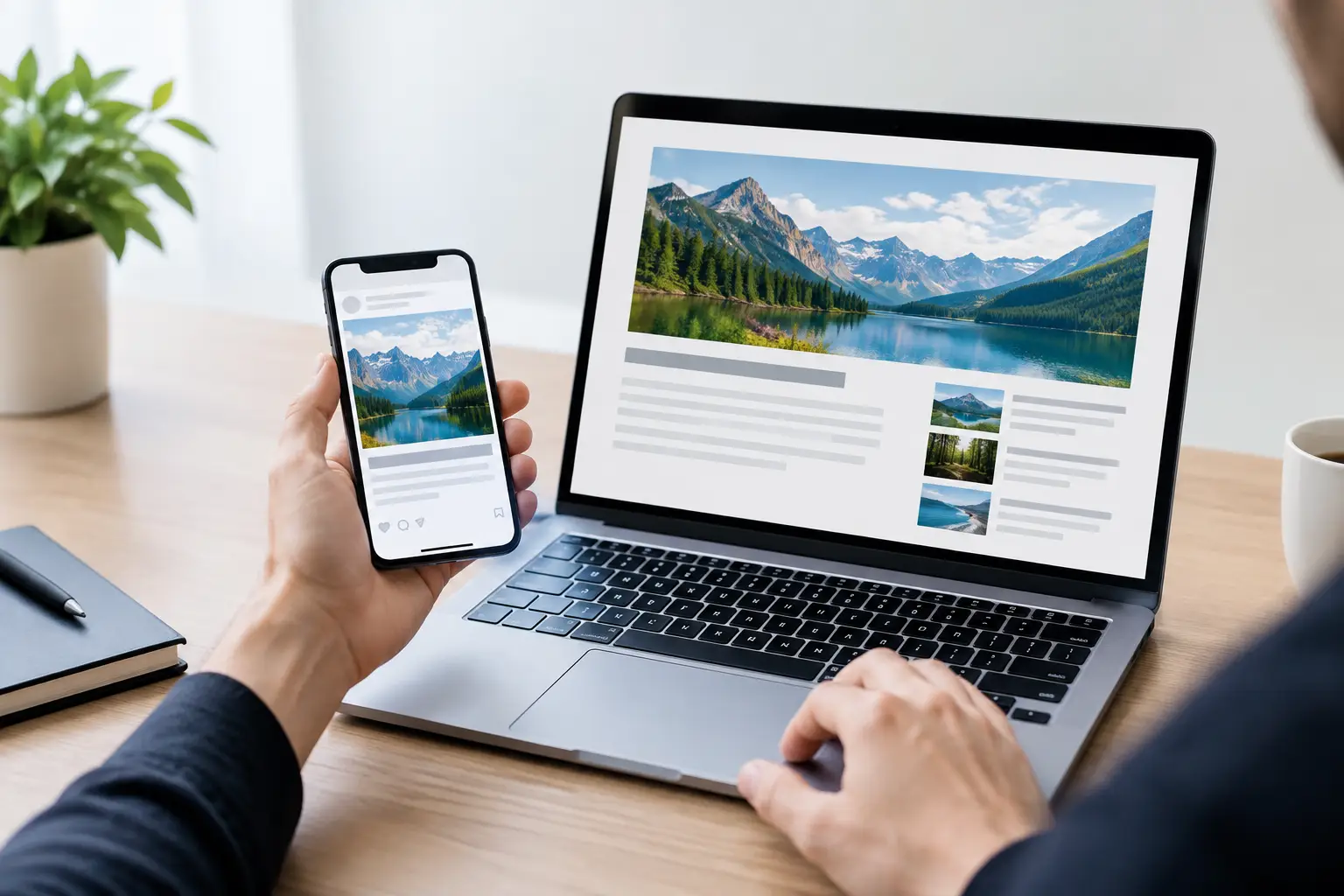
Should open graph titles match SEO title tags? Learn when to align them, when to tailor each one, and how to earn more clicks from search and social feeds.
A strong Google result gets the click. A strong social preview gets the share. Those are related jobs, but they do not always require identical copy. So, should open graph titles match SEO title tags? Usually, they should communicate the same core promise. But forcing an exact match can leave clicks, clarity, and campaign performance on the table.
For a small business, this is not a picky technical detail. A title is often the first sentence a potential customer sees when they find you through Google, a Facebook share, LinkedIn, Slack, iMessage, or another app that generates a page preview. If that sentence is vague, too long, or aimed at the wrong context, your content can look less useful before anyone even visits your site.
The short answer: match the message, not always the wording
Your SEO title tag is written primarily for search results. Your Open Graph title, set with the `og:title` tag, is written primarily for social previews and messaging platforms. They can be identical, and for many evergreen service pages, that is the cleanest, most practical choice.
The better rule is this: keep the topic, offer, and brand message aligned, then adapt the wording when the channel or audience behavior calls for it.
For example, a local roofing company might use this SEO title tag:
`Roof Repair in Pasadena | Fast, Local Service`
Its Open Graph title could be:
`Need Roof Repair in Pasadena? Get a Fast Local Quote`
Both titles promise roof repair in Pasadena. Neither misleads the reader. The social version simply sounds more like a post someone would stop scrolling to read.
That distinction matters because a searcher and a social user arrive with different levels of intent. Searchers often want an answer or provider right now. Social users may be curious, distracted, or responding to a recommendation from a friend. One title can serve both groups, but it does not have to.
SEO title tags and Open Graph titles do different work
A title tag appears in the HTML `
` element. Google may use it as the blue link in organic results, but it can also rewrite it when another page heading or on-page phrase seems more relevant to the query. Title tags help search engines understand the page and help searchers decide whether to click.</p>
<p>An Open Graph title is metadata that platforms use to build a rich social preview, usually with an image and description. Facebook, LinkedIn, and many messaging tools commonly rely on it. If it is missing, those platforms may fall back to your title tag, an H1, or another page element. That fallback can be messy.</p>
<p>The practical takeaway is simple: your title tag supports search visibility and search clicks. Your Open Graph title controls a separate moment of persuasion. It does not directly improve Google rankings just because it is clever, and changing it does not replace solid SEO fundamentals such as useful content, local relevance, technical health, and credible authority.</p>
<h2>When Open Graph titles should match SEO title tags</h2>
<p>Exact matching makes sense when the page has one clear purpose and the search-focused wording is already compelling to humans. This is common for core service pages, location pages, product pages, and straightforward educational resources.</p>
<p>A page titled `Emergency Plumber in Los Angeles | 24/7 Help` does not need a clever social makeover. It is direct, specific, and high-intent. Repeating it in `og:title` reinforces a consistent message across channels and reduces the odds of metadata drifting out of sync over time.</p>
<p>Matching is also smart when your team has limited bandwidth. Small businesses should not build a complicated metadata process for every page before the basics are covered. A well-written title tag used as the Open Graph title is far better than an empty or outdated social preview.</p>
<p>Consistency can build trust, too. If a person sees one promise in Google and a noticeably different promise when someone shares the page, they may wonder whether the page is baiting clicks. Keep the claim, location, pricing context, and offer honest across both versions.</p>
<h2>When your Open Graph title should be different</h2>
<p>A tailored Open Graph title earns its place when social context changes how people respond to the message. Campaign pages, timely blog posts, shareable guides, announcements, and case studies are the usual candidates.</p>
<h3>Search language can be too stiff for a feed</h3>
<p>SEO titles sometimes need precise terms that social audiences do not naturally use. A legal firm may target `What Is a Demand Letter?` because that is what people search. On social, `Got a Demand Letter? Here’s What Happens Next` can feel more immediate without changing the page topic.</p>
<p>The same applies to titles that include necessary but unexciting modifiers like a city, model number, or service category. Search benefits from precision. Social often benefits from a clearer hook, a useful outcome, or a relatable problem.</p>
<h3>Length and branding can affect previews</h3>
<p>Search results and social cards truncate text differently. There is no single perfect character count because display width changes by device, platform, and characters used. Still, lead with the meaningful words. Do not make readers wait until the end of a long title to learn what the page offers.</p>
<p>If your title tag ends with a brand name for search consistency, you may choose to omit that brand name from the Open Graph title when space is tight. On the other hand, keeping the brand can be valuable for recognizable local businesses and widely shared thought-leadership content. It depends on whether brand recognition or the immediate hook will do more work in that moment.</p>
<h3>Promotions need a different angle</h3>
<p>A PPC landing page may use a search-aligned title designed around a service and location. When shared socially, the title may need to emphasize a limited offer, seasonal deadline, or customer benefit. Just do not turn metadata into a promise your landing page cannot support. If the title says `Save 20% This Week`, the page needs to clearly show the same valid offer and terms.</p>
<h2>How to decide: a practical title test</h2>
<p>Before creating separate titles, ask one question: would a person clicking from social need a different reason to care than someone searching Google?</p>
<p>If the answer is no, use the same title. If the answer is yes, write a social-specific variation that preserves the page’s central subject. Then check four things:</p>
<ul>
<li>The primary topic is still obvious in both titles.</li>
<li>The social title matches the page headline and content promise.</li>
<li>The first words carry the main benefit or problem.</li>
<li>The title is readable aloud, without keyword stuffing or marketing fog.</li>
</ul>
<p>A useful test is to show each version to someone outside your marketing team for five seconds. Can they explain what the page is about and who it is for? If not, the title is trying to be too clever or too broad.</p>
<h2>Common mistakes that cost clicks</h2>
<p>The biggest mistake is treating Open Graph metadata as an afterthought. When `og:title`, `og:description`, or `og:image` is missing, a shared URL can display a random-looking preview that makes a polished business look unprepared.</p>
<p>Another mistake is creating two titles that target unrelated ideas. If Google shows `Commercial HVAC Repair in Burbank` but the social card says `Lower Your Energy Bills Fast`, users may land on a repair page expecting an energy-efficiency guide. That disconnect increases bounces and weakens trust.</p>
<p>Keyword stuffing is just as unhelpful on social as it is in search. `Los Angeles Dentist, Best Dentist LA, Cosmetic Dentist Los Angeles` does not sound credible to a customer. Write for the person deciding whether your page deserves attention.</p>
<p>Finally, remember that social platforms cache previews. After you update an Open Graph title or image, an old version may still appear temporarily in shares. Build a review step into launches, especially for promotions, seasonal pages, and redesigned websites.</p>
<h2>What this means for AI search visibility</h2>
<p>AI-generated answers and <a href="https://lav1.com/best-zero-click-seo-tactics/">zero-click search features</a> are changing how people discover brands, but they have not made clear page metadata obsolete. AI systems may use many signals beyond metadata, including page content, headings, <a href="https://lav1.com/can-ai-generate-accurate-schema-markup/">structured data</a>, reputation, and citations. No Open Graph title can guarantee inclusion in an AI answer.</p>
<p>Still, consistent titles help create a cleaner, more understandable web presence. When your title tag, page headline, social preview, and actual content all describe the same thing, people and systems have fewer reasons to misinterpret the page. That is good information architecture, not a gimmick.</p>
<p>For lean teams, LAv1 generally recommends getting the foundation right first: one accurate title tag, one strong H1, a relevant Open Graph title, and a <a href="https://lav1.com/best-website-features-for-lead-generation/">properly sized social image</a> for every important page. Then refine the pages that actually earn shares, ad traffic, or local leads.</p>
<h2>FAQs</h2>
<h3>Does an Open Graph title affect SEO rankings?</h3>
<p>Not directly. Google primarily evaluates the page itself and many broader ranking signals. An Open Graph title can improve how the page looks when shared, which may help attract referral traffic and engagement, but it is not a ranking lever on its own.</p>
<h3>Can I use my H1 as my Open Graph title?</h3>
<p>Yes, if the H1 is concise and compelling in a social preview. Many businesses use the same message across the H1, title tag, and `og:title`. Separate them only when there is a real reason to do so.</p>
<h3>What happens if I do not set an Open Graph title?</h3>
<p>Social platforms may pull a title from another source, often your title tag or page content. The result can be acceptable, but you give up control over one of the most visible parts of the shared preview.</p>
<p>The best title strategy is not about making every tag identical or making every tag different. It is about making the next click feel obvious. Before publishing your next key page, search for it, share it privately, and look at both versions through your customer’s eyes. That two-minute check can prevent a lot of wasted traffic.</p>
</div>
</div>
</div>
</div>
</div>
<div class="elementor-element elementor-element-69b7b73a e-flex e-con-boxed e-con e-parent" data-id="69b7b73a" data-element_type="container" data-e-type="container">
<div class="e-con-inner">
<div class="elementor-element elementor-element-26287328 elementor-widget elementor-widget-heading" data-id="26287328" data-element_type="widget" data-e-type="widget" data-widget_type="heading.default">
<h5 class="elementor-heading-title elementor-size-default">Like this article? Share it!</h5> </div>
<div class="elementor-element elementor-element-7818a49d elementor-share-buttons--skin-boxed elementor-share-buttons--shape-circle elementor-share-buttons--view-icon-text elementor-grid-0 elementor-share-buttons--color-official elementor-widget elementor-widget-share-buttons" data-id="7818a49d" data-element_type="widget" data-e-type="widget" data-widget_type="share-buttons.default">
<div class="elementor-grid" role="list">
<div class="elementor-grid-item" role="listitem">
<div class="elementor-share-btn elementor-share-btn_facebook" role="button" tabindex="0" aria-label="Share on facebook">
<span class="elementor-share-btn__icon">
<svg aria-hidden="true" class="e-font-icon-svg e-fab-facebook" viewBox="0 0 512 512" xmlns="http://www.w3.org/2000/svg"><path d="M504 256C504 119 393 8 256 8S8 119 8 256c0 123.78 90.69 226.38 209.25 245V327.69h-63V256h63v-54.64c0-62.15 37-96.48 93.67-96.48 27.14 0 55.52 4.84 55.52 4.84v61h-31.28c-30.8 0-40.41 19.12-40.41 38.73V256h68.78l-11 71.69h-57.78V501C413.31 482.38 504 379.78 504 256z"></path></svg> </span>
<div class="elementor-share-btn__text">
<span class="elementor-share-btn__title">
Facebook </span>
</div>
</div>
</div>
<div class="elementor-grid-item" role="listitem">
<div class="elementor-share-btn elementor-share-btn_x-twitter" role="button" tabindex="0" aria-label="Share on x-twitter">
<span class="elementor-share-btn__icon">
<svg aria-hidden="true" class="e-font-icon-svg e-fab-x-twitter" viewBox="0 0 512 512" xmlns="http://www.w3.org/2000/svg"><path d="M389.2 48h70.6L305.6 224.2 487 464H345L233.7 318.6 106.5 464H35.8L200.7 275.5 26.8 48H172.4L272.9 180.9 389.2 48zM364.4 421.8h39.1L151.1 88h-42L364.4 421.8z"></path></svg> </span>
<div class="elementor-share-btn__text">
<span class="elementor-share-btn__title">
X </span>
</div>
</div>
</div>
<div class="elementor-grid-item" role="listitem">
<div class="elementor-share-btn elementor-share-btn_linkedin" role="button" tabindex="0" aria-label="Share on linkedin">
<span class="elementor-share-btn__icon">
<svg aria-hidden="true" class="e-font-icon-svg e-fab-linkedin" viewBox="0 0 448 512" xmlns="http://www.w3.org/2000/svg"><path d="M416 32H31.9C14.3 32 0 46.5 0 64.3v383.4C0 465.5 14.3 480 31.9 480H416c17.6 0 32-14.5 32-32.3V64.3c0-17.8-14.4-32.3-32-32.3zM135.4 416H69V202.2h66.5V416zm-33.2-243c-21.3 0-38.5-17.3-38.5-38.5S80.9 96 102.2 96c21.2 0 38.5 17.3 38.5 38.5 0 21.3-17.2 38.5-38.5 38.5zm282.1 243h-66.4V312c0-24.8-.5-56.7-34.5-56.7-34.6 0-39.9 27-39.9 54.9V416h-66.4V202.2h63.7v29.2h.9c8.9-16.8 30.6-34.5 62.9-34.5 67.2 0 79.7 44.3 79.7 101.9V416z"></path></svg> </span>
<div class="elementor-share-btn__text">
<span class="elementor-share-btn__title">
LinkedIn </span>
</div>
</div>
</div>
<div class="elementor-grid-item" role="listitem">
<div class="elementor-share-btn elementor-share-btn_reddit" role="button" tabindex="0" aria-label="Share on reddit">
<span class="elementor-share-btn__icon">
<svg aria-hidden="true" class="e-font-icon-svg e-fab-reddit" viewBox="0 0 512 512" xmlns="http://www.w3.org/2000/svg"><path d="M201.5 305.5c-13.8 0-24.9-11.1-24.9-24.6 0-13.8 11.1-24.9 24.9-24.9 13.6 0 24.6 11.1 24.6 24.9 0 13.6-11.1 24.6-24.6 24.6zM504 256c0 137-111 248-248 248S8 393 8 256 119 8 256 8s248 111 248 248zm-132.3-41.2c-9.4 0-17.7 3.9-23.8 10-22.4-15.5-52.6-25.5-86.1-26.6l17.4-78.3 55.4 12.5c0 13.6 11.1 24.6 24.6 24.6 13.8 0 24.9-11.3 24.9-24.9s-11.1-24.9-24.9-24.9c-9.7 0-18 5.8-22.1 13.8l-61.2-13.6c-3-.8-6.1 1.4-6.9 4.4l-19.1 86.4c-33.2 1.4-63.1 11.3-85.5 26.8-6.1-6.4-14.7-10.2-24.1-10.2-34.9 0-46.3 46.9-14.4 62.8-1.1 5-1.7 10.2-1.7 15.5 0 52.6 59.2 95.2 132 95.2 73.1 0 132.3-42.6 132.3-95.2 0-5.3-.6-10.8-1.9-15.8 31.3-16 19.8-62.5-14.9-62.5zM302.8 331c-18.2 18.2-76.1 17.9-93.6 0-2.2-2.2-6.1-2.2-8.3 0-2.5 2.5-2.5 6.4 0 8.6 22.8 22.8 87.3 22.8 110.2 0 2.5-2.2 2.5-6.1 0-8.6-2.2-2.2-6.1-2.2-8.3 0zm7.7-75c-13.6 0-24.6 11.1-24.6 24.9 0 13.6 11.1 24.6 24.6 24.6 13.8 0 24.9-11.1 24.9-24.6 0-13.8-11-24.9-24.9-24.9z"></path></svg> </span>
<div class="elementor-share-btn__text">
<span class="elementor-share-btn__title">
Reddit </span>
</div>
</div>
</div>
<div class="elementor-grid-item" role="listitem">
<div class="elementor-share-btn elementor-share-btn_threads" role="button" tabindex="0" aria-label="Share on threads">
<span class="elementor-share-btn__icon">
<svg aria-hidden="true" class="e-font-icon-svg e-fab-threads" viewBox="0 0 448 512" xmlns="http://www.w3.org/2000/svg"><path d="M331.5 235.7c2.2 .9 4.2 1.9 6.3 2.8c29.2 14.1 50.6 35.2 61.8 61.4c15.7 36.5 17.2 95.8-30.3 143.2c-36.2 36.2-80.3 52.5-142.6 53h-.3c-70.2-.5-124.1-24.1-160.4-70.2c-32.3-41-48.9-98.1-49.5-169.6V256v-.2C17 184.3 33.6 127.2 65.9 86.2C102.2 40.1 156.2 16.5 226.4 16h.3c70.3 .5 124.9 24 162.3 69.9c18.4 22.7 32 50 40.6 81.7l-40.4 10.8c-7.1-25.8-17.8-47.8-32.2-65.4c-29.2-35.8-73-54.2-130.5-54.6c-57 .5-100.1 18.8-128.2 54.4C72.1 146.1 58.5 194.3 58 256c.5 61.7 14.1 109.9 40.3 143.3c28 35.6 71.2 53.9 128.2 54.4c51.4-.4 85.4-12.6 113.7-40.9c32.3-32.2 31.7-71.8 21.4-95.9c-6.1-14.2-17.1-26-31.9-34.9c-3.7 26.9-11.8 48.3-24.7 64.8c-17.1 21.8-41.4 33.6-72.7 35.3c-23.6 1.3-46.3-4.4-63.9-16c-20.8-13.8-33-34.8-34.3-59.3c-2.5-48.3 35.7-83 95.2-86.4c21.1-1.2 40.9-.3 59.2 2.8c-2.4-14.8-7.3-26.6-14.6-35.2c-10-11.7-25.6-17.7-46.2-17.8H227c-16.6 0-39 4.6-53.3 26.3l-34.4-23.6c19.2-29.1 50.3-45.1 87.8-45.1h.8c62.6 .4 99.9 39.5 103.7 107.7l-.2 .2zm-156 68.8c1.3 25.1 28.4 36.8 54.6 35.3c25.6-1.4 54.6-11.4 59.5-73.2c-13.2-2.9-27.8-4.4-43.4-4.4c-4.8 0-9.6 .1-14.4 .4c-42.9 2.4-57.2 23.2-56.2 41.8l-.1 .1z"></path></svg> </span>
<div class="elementor-share-btn__text">
<span class="elementor-share-btn__title">
Threads </span>
</div>
</div>
</div>
</div>
</div>
</div>
</div>
<div class="elementor-element elementor-element-5873daf1 e-flex e-con-boxed e-con e-parent" data-id="5873daf1" data-element_type="container" data-e-type="container">
<div class="e-con-inner">
<div class="elementor-element elementor-element-5b87ab47 e-con-full e-flex e-con e-child" data-id="5b87ab47" data-element_type="container" data-e-type="container">
<div class="elementor-element elementor-element-7e99ac65 elementor-icon-list--layout-traditional elementor-list-item-link-full_width elementor-widget elementor-widget-icon-list" data-id="7e99ac65" data-element_type="widget" data-e-type="widget" data-widget_type="icon-list.default">
<ul class="elementor-icon-list-items">
<li class="elementor-icon-list-item">
<span class="elementor-icon-list-icon">
<svg aria-hidden="true" class="e-font-icon-svg e-fas-star-of-life" viewBox="0 0 480 512" xmlns="http://www.w3.org/2000/svg"><path d="M471.99 334.43L336.06 256l135.93-78.43c7.66-4.42 10.28-14.2 5.86-21.86l-32.02-55.43c-4.42-7.65-14.21-10.28-21.87-5.86l-135.93 78.43V16c0-8.84-7.17-16-16.01-16h-64.04c-8.84 0-16.01 7.16-16.01 16v156.86L56.04 94.43c-7.66-4.42-17.45-1.79-21.87 5.86L2.15 155.71c-4.42 7.65-1.8 17.44 5.86 21.86L143.94 256 8.01 334.43c-7.66 4.42-10.28 14.21-5.86 21.86l32.02 55.43c4.42 7.65 14.21 10.27 21.87 5.86l135.93-78.43V496c0 8.84 7.17 16 16.01 16h64.04c8.84 0 16.01-7.16 16.01-16V339.14l135.93 78.43c7.66 4.42 17.45 1.8 21.87-5.86l32.02-55.43c4.42-7.65 1.8-17.43-5.86-21.85z"></path></svg> </span>
<span class="elementor-icon-list-text">Explore Our Marketing Blog</span>
</li>
</ul>
</div>
<div class="elementor-element elementor-element-29541588 elementor-widget__width-initial elementor-headline--style-highlight elementor-widget elementor-widget-animated-headline" data-id="29541588" data-element_type="widget" data-e-type="widget" data-settings="{"highlighted_text":"Related ","headline_style":"highlight","marker":"circle","highlight_animation_duration":1200}" data-widget_type="animated-headline.default">
<h3 class="elementor-headline">
<span class="elementor-headline-plain-text elementor-headline-text-wrapper">Expore All</span>
<span class="elementor-headline-dynamic-wrapper elementor-headline-text-wrapper">
<span class="elementor-headline-dynamic-text elementor-headline-text-active">Related </span>
</span>
<span class="elementor-headline-plain-text elementor-headline-text-wrapper">Posts</span>
</h3>
</div>
</div>
<div class="elementor-element elementor-element-25d24580 e-con-full e-flex e-con e-child" data-id="25d24580" data-element_type="container" data-e-type="container">
<div class="elementor-element elementor-element-715abed5 e-con-full e-flex e-con e-child" data-id="715abed5" data-element_type="container" data-e-type="container">
<div class="elementor-element elementor-element-1a54831e elementor-widget elementor-widget-button" data-id="1a54831e" data-element_type="widget" data-e-type="widget" data-widget_type="button.default">
<a class="elementor-button elementor-button-link elementor-size-sm" href="/blog/">
<span class="elementor-button-content-wrapper">
<span class="elementor-button-text">View More</span>
</span>
</a>
</div>
</div>
</div>
<div class="elementor-element elementor-element-7f8396c0 e-flex e-con-boxed e-con e-child" data-id="7f8396c0" data-element_type="container" data-e-type="container">
<div class="e-con-inner">
<div class="elementor-element elementor-element-4b62b05a elementor-grid-tablet-3 elementor-grid-3 elementor-grid-mobile-1 elementor-posts--thumbnail-top elementor-widget elementor-widget-posts" data-id="4b62b05a" data-element_type="widget" data-e-type="widget" data-settings="{"classic_columns_tablet":"3","classic_columns":"3","classic_columns_mobile":"1","classic_row_gap":{"unit":"px","size":35,"sizes":[]},"classic_row_gap_tablet":{"unit":"px","size":"","sizes":[]},"classic_row_gap_mobile":{"unit":"px","size":"","sizes":[]}}" data-widget_type="posts.classic">
<div class="elementor-widget-container">
<div class="elementor-posts-container elementor-posts elementor-posts--skin-classic elementor-grid" role="list">
<article class="elementor-post elementor-grid-item post-11023 post type-post status-publish format-standard has-post-thumbnail hentry category-uncategorized" role="listitem">
<a class="elementor-post__thumbnail__link" href="https://lav1.com/should-open-graph-titles-match-seo-title-tags/" tabindex="-1" >
<div class="elementor-post__thumbnail"><img width="1536" height="1024" src="https://lav1.com/wp-content/uploads/2026/11/should-open-graph-titles-match-seo-title-tags-featured.webp" class="attachment-full size-full wp-image-11024" alt="Should Open Graph Titles Match SEO Title Tags?" /></div>
</a>
<div class="elementor-post__text">
<h3 class="elementor-post__title">
<a href="https://lav1.com/should-open-graph-titles-match-seo-title-tags/" >
Should Open Graph Titles Match SEO Title Tags? </a>
</h3>
<div class="elementor-post__meta-data">
<span class="elementor-post-date">
November 17, 2026 </span>
</div>
</div>
</article>
<article class="elementor-post elementor-grid-item post-11021 post type-post status-publish format-standard has-post-thumbnail hentry category-uncategorized" role="listitem">
<a class="elementor-post__thumbnail__link" href="https://lav1.com/is-humanizing-ai-content-necessary-for-seo/" tabindex="-1" >
<div class="elementor-post__thumbnail"><img width="1536" height="1024" src="https://lav1.com/wp-content/uploads/2026/11/is-humanizing-ai-content-necessary-for-seo-featured.webp" class="attachment-full size-full wp-image-11022" alt="Is “Humanizing” AI Content Necessary for SEO?" /></div>
</a>
<div class="elementor-post__text">
<h3 class="elementor-post__title">
<a href="https://lav1.com/is-humanizing-ai-content-necessary-for-seo/" >
Is “Humanizing” AI Content Necessary for SEO? </a>
</h3>
<div class="elementor-post__meta-data">
<span class="elementor-post-date">
November 16, 2026 </span>
</div>
</div>
</article>
<article class="elementor-post elementor-grid-item post-11019 post type-post status-publish format-standard has-post-thumbnail hentry category-uncategorized" role="listitem">
<a class="elementor-post__thumbnail__link" href="https://lav1.com/what-happens-seo-ai-replaces-search-clicks/" tabindex="-1" >
<div class="elementor-post__thumbnail"><img loading="lazy" width="1536" height="1024" src="https://lav1.com/wp-content/uploads/2026/11/what-happens-to-seo-when-ai-replaces-search-clicks-featured.webp" class="attachment-full size-full wp-image-11020" alt="What Happens to SEO When AI Replaces Search Clicks?" /></div>
</a>
<div class="elementor-post__text">
<h3 class="elementor-post__title">
<a href="https://lav1.com/what-happens-seo-ai-replaces-search-clicks/" >
What Happens to SEO When AI Replaces Search Clicks? </a>
</h3>
<div class="elementor-post__meta-data">
<span class="elementor-post-date">
November 15, 2026 </span>
</div>
</div>
</article>
<article class="elementor-post elementor-grid-item post-11017 post type-post status-publish format-standard has-post-thumbnail hentry category-uncategorized" role="listitem">
<a class="elementor-post__thumbnail__link" href="https://lav1.com/what-seo-data-monthly-client-report/" tabindex="-1" >
<div class="elementor-post__thumbnail"><img loading="lazy" width="1536" height="1024" src="https://lav1.com/wp-content/uploads/2026/11/what-seo-data-should-be-included-in-a-monthly-clie-featured.webp" class="attachment-full size-full wp-image-11018" alt="What SEO Data Should Be Included in a Monthly Client Report?" /></div>
</a>
<div class="elementor-post__text">
<h3 class="elementor-post__title">
<a href="https://lav1.com/what-seo-data-monthly-client-report/" >
What SEO Data Should Be Included in a Monthly Client Report? </a>
</h3>
<div class="elementor-post__meta-data">
<span class="elementor-post-date">
November 14, 2026 </span>
</div>
</div>
</article>
<article class="elementor-post elementor-grid-item post-11015 post type-post status-publish format-standard has-post-thumbnail hentry category-uncategorized" role="listitem">
<a class="elementor-post__thumbnail__link" href="https://lav1.com/404-410-301-302-403-429-500-status-codes-affect-seo/" tabindex="-1" >
<div class="elementor-post__thumbnail"><img loading="lazy" width="1536" height="1024" src="https://lav1.com/wp-content/uploads/2026/11/404-410-301-302-403-429-and-500-status-codes-affec-featured.webp" class="attachment-full size-full wp-image-11016" alt="404, 410, 301, 302, 403, 429 and 500 Status Codes Affect SEO" /></div>
</a>
<div class="elementor-post__text">
<h3 class="elementor-post__title">
<a href="https://lav1.com/404-410-301-302-403-429-500-status-codes-affect-seo/" >
404, 410, 301, 302, 403, 429 and 500 Status Codes Affect SEO </a>
</h3>
<div class="elementor-post__meta-data">
<span class="elementor-post-date">
November 13, 2026 </span>
</div>
</div>
</article>
<article class="elementor-post elementor-grid-item post-11007 post type-post status-publish format-standard has-post-thumbnail hentry category-uncategorized" role="listitem">
<a class="elementor-post__thumbnail__link" href="https://lav1.com/earn-backlinks-without-sending-cold-outreach/" tabindex="-1" >
<div class="elementor-post__thumbnail"><img loading="lazy" width="1536" height="1024" src="https://lav1.com/wp-content/uploads/2026/11/how-do-you-earn-backlinks-without-sending-cold-out-featured.webp" class="attachment-full size-full wp-image-11008" alt="How Do You Earn Backlinks Without Sending Cold Outreach?" /></div>
</a>
<div class="elementor-post__text">
<h3 class="elementor-post__title">
<a href="https://lav1.com/earn-backlinks-without-sending-cold-outreach/" >
How Do You Earn Backlinks Without Sending Cold Outreach? </a>
</h3>
<div class="elementor-post__meta-data">
<span class="elementor-post-date">
November 12, 2026 </span>
</div>
</div>
</article>
</div>
</div>
</div>
</div>
</div>
</div>
</div>
</div>
<footer data-elementor-type="footer" data-elementor-id="2404" class="elementor elementor-2404 elementor-location-footer" data-elementor-post-type="elementor_library">
<div class="elementor-element elementor-element-37116fd e-con-full e-flex e-con e-parent" data-id="37116fd" data-element_type="container" data-e-type="container">
<div class="elementor-element elementor-element-e10807d elementor-widget elementor-widget-shortcode" data-id="e10807d" data-element_type="widget" data-e-type="widget" data-widget_type="shortcode.default">
<div class="elementor-shortcode"><link data-noptimize="1" data-no-optimize="1" data-no-minify="1" data-no-defer="1" rel="stylesheet" href="https://cdn.trustindex.io/assets/widget-presetted-css/v2/108-light-background.css" media="all"><div style="opacity: 0; height: 0 !important; overflow: hidden !important" data-css-url="https://cdn.trustindex.io/assets/widget-presetted-css/v2/108-light-background.css" class="ti-widget" data-plugin-version="15.0" data-layout-id="108" data-layout-category="slider" data-set-id="light-background" data-pid="1d910ff5049e331812060f19ef9" data-language="en" data-close-locale="Close" data-review-target-width="360" data-css-version="2" data-review-text-mode="readmore" data-reply-by-locale="Owner's reply" data-only-rating-locale="This user only left a rating." data-pager-autoplay-timeout="6" data-slider-loop="1" > <span class="ti-ai-summary" hidden data-ti-json="%7B%22%40context%22%3A%22http%3A%2F%2Fschema.org%22%2C%22summary%22%3A%7B%22title%22%3A%22Review%20summary%22%2C%22comment%22%3A%22Based%20on%2025%20reviews%22%2C%22images%22%3A%5B%22https%3A%2F%2Flh3.googleusercontent.com%2Fa-%2FALV-UjXISfuyf7WOGR1YAOei1JeKDzwageiH0RFFUwTjPV6w-UgImSY%3Ds120-c-rp-mo-br100%22%2C%22https%3A%2F%2Flh3.googleusercontent.com%2Fa-%2FALV-UjXpEpwG0Zqn-RsvlQbY9qiu43sXk7a46dpJnIHcWluHQ4W3_C8%3Ds120-c-rp-mo-br100%22%2C%22https%3A%2F%2Flh3.googleusercontent.com%2Fa%2FACg8ocIGiuqvEpvMwj9JmCsnHLa0SBvQmtHYtxY3VNhmoVBe5nYwJg%3Ds120-c-rp-mo-br100%22%5D%2C%22text%22%3A%22%3Cul%20class%3D%5C%22ti-summary-list%5C%22%3E%3Cli%3EExceptional%20results%20in%20SEO%20and%20Google%20Ads%20tailored%20to%20each%20client.%3C%2Fli%3E%3Cli%3EHighly%20professional%2C%20responsive%2C%20and%20committed%20team%20led%20by%20Bruno.%3C%2Fli%3E%3Cli%3EDelivers%20impactful%20business%20growth%3B%20a%20great%20investment.%3C%2Fli%3E%3C%2Ful%3E%22%7D%7D"></span> <span class="ti-lightbox-data" hidden data-ti-json="%7B%22%40context%22%3A%22http%3A%2F%2Fschema.org%22%2C%22data%22%3A%5B%7B%22src%22%3A%22https%3A%2F%2Flh3.googleusercontent.com%2Fgrass-cs%2FAABkmLeDo3dMApDU9y9nZBB2LcGtfBuDmQW3UFouJnBJDwNVydEYUzQMNwW4sBM0fEEKS8shSFgLS7_qAE-VlTaN3G2n0y519d7y9qCuBoVRcWIjcWhQVrRdcCxhA4XYJ7L_v-hPEAn0SvTBKoA%3Dk-no%22%2C%22thumbnail%22%3A%22https%3A%2F%2Flh3.googleusercontent.com%2Fgrass-cs%2FAABkmLeDo3dMApDU9y9nZBB2LcGtfBuDmQW3UFouJnBJDwNVydEYUzQMNwW4sBM0fEEKS8shSFgLS7_qAE-VlTaN3G2n0y519d7y9qCuBoVRcWIjcWhQVrRdcCxhA4XYJ7L_v-hPEAn0SvTBKoA%3Dk-no%22%2C%22index%22%3A0%2C%22r%22%3A%22bb40ef93e189adc8f4f9b2e6c8b062da%22%7D%5D%7D"></span> <div class="ti-widget-container ti-col-3"> <div class="ti-widget-header"> <div class="ti-header-content source-Google ti-active"> <div class="ti-header-logo"> <img loading="lazy" class="ti-header-logo-img skip-lazy" src="https://cdn.trustindex.io/assets/platform/Google/logo.svg" loading="lazy" alt="Google" width="150" height="21" /> </div> <div class="ti-header-rating-text"><span class="ti-header-rating">5.0</span><span class="ti-stars"><img loading="lazy" class="ti-star f skip-lazy" src="https://cdn.trustindex.io/assets/platform/Google/star/f.svg" alt="Google star 1" width="17" height="17" loading="lazy" /><img loading="lazy" class="ti-star f skip-lazy" src="https://cdn.trustindex.io/assets/platform/Google/star/f.svg" alt="Google star 2" width="17" height="17" loading="lazy" /><img loading="lazy" class="ti-star f skip-lazy" src="https://cdn.trustindex.io/assets/platform/Google/star/f.svg" alt="Google star 3" width="17" height="17" loading="lazy" /><img loading="lazy" class="ti-star f skip-lazy" src="https://cdn.trustindex.io/assets/platform/Google/star/f.svg" alt="Google star 4" width="17" height="17" loading="lazy" /><img loading="lazy" class="ti-star f skip-lazy" src="https://cdn.trustindex.io/assets/platform/Google/star/f.svg" alt="Google star 5" width="17" height="17" loading="lazy" /></span></div> <div class="ti-header-rating-text ti-mobile"><span class="ti-header-rating">5.0</span><span class="ti-stars"><img loading="lazy" class="ti-star f skip-lazy" src="https://cdn.trustindex.io/assets/platform/Google/star/f.svg" alt="Google star 1" width="17" height="17" loading="lazy" /><img loading="lazy" class="ti-star f skip-lazy" src="https://cdn.trustindex.io/assets/platform/Google/star/f.svg" alt="Google star 2" width="17" height="17" loading="lazy" /><img loading="lazy" class="ti-star f skip-lazy" src="https://cdn.trustindex.io/assets/platform/Google/star/f.svg" alt="Google star 3" width="17" height="17" loading="lazy" /><img loading="lazy" class="ti-star f skip-lazy" src="https://cdn.trustindex.io/assets/platform/Google/star/f.svg" alt="Google star 4" width="17" height="17" loading="lazy" /><img loading="lazy" class="ti-star f skip-lazy" src="https://cdn.trustindex.io/assets/platform/Google/star/f.svg" alt="Google star 5" width="17" height="17" loading="lazy" /></span></div> <div class="ti-top-rated-title">Top Rated Service 2026</div> <div class="ti-verified-by ti-verified-by-top-rated" data-style="1"> <div class="ti-inner"> Verified by Trustindex <span class="ti-info-icon"></span> <div class="ti-disclaimer"> <div class="ti-disclaimer-title">Top Rated Service</div> <ul class="ti-disclaimer-list"> <li class="ti-disclaimer-star"> <strong>5.0 Excellent rating</strong> Last 12 months </li> <li class="ti-disclaimer-reply"> <strong>Responds to customer reviews</strong> 100% response rate within 48 hours </li> <li class="ti-disclaimer-verified"> <strong>Verified by Trustindex</strong> Based on real customer reviews <a href="https://www.trustindex.io/?a=sys&c=top-rated-badge&url=/the-trustindex-verified-badge/" target="_blank" class="ti-disclaimer-link">Learn more</a> </li> </ul> </div> </div> </div> </div> <div class="ti-widget-header-tick"></div> </div> <div class="ti-reviews-container"> <div class="ti-controls"> <div class="ti-next" aria-label="Next review" role="button" tabindex="0"></div> <div class="ti-prev" aria-label="Previous review" role="button" tabindex="0"></div> </div> <div class="ti-reviews-container-wrapper"> <div class="ti-review-item source-Google ti-image-layout-thumbnail" data-platform-page-url="https://www.google.com/maps/search/?api=1&query=Google&query_place_id=ChIJrwQSM2e7woARocEi-vfsWh0" data-time="1782856379" data-id="d3ee18ad2af6c8bb955a90c7b962a5da" data-language="en" data-rating="5.0" data-max-rating="5" > <div class="ti-inner"> <div class="ti-review-header"> <div class="ti-platform-icon ti-with-tooltip"> <span class="ti-tooltip">Posted on Google</span> <img loading="lazy" class="skip-lazy" src="https://cdn.trustindex.io/assets/platform/Google/icon.svg" alt="Google" width="20" height="20" loading="lazy" /> </div> <div class="ti-profile-img"> <img class="skip-lazy" src="https://lh3.googleusercontent.com/a-/ALV-UjXISfuyf7WOGR1YAOei1JeKDzwageiH0RFFUwTjPV6w-UgImSY=w40-h40-c-rp-mo-br100" srcset="https://lh3.googleusercontent.com/a-/ALV-UjXISfuyf7WOGR1YAOei1JeKDzwageiH0RFFUwTjPV6w-UgImSY=w80-h80-c-rp-mo-br100 2x" alt="Mathieu Aucoin profile picture" loading="lazy" /> </div> <div class="ti-profile-details"> <div class="ti-name"> Mathieu Aucoin </div> <div class="ti-date">30 June 2026</div> </div> </div> <span class="ti-stars"><img loading="lazy" class="ti-star f skip-lazy" src="https://cdn.trustindex.io/assets/platform/Google/star/f.svg" alt="Google star 1" width="17" height="17" loading="lazy" /><img loading="lazy" class="ti-star f skip-lazy" src="https://cdn.trustindex.io/assets/platform/Google/star/f.svg" alt="Google star 2" width="17" height="17" loading="lazy" /><img loading="lazy" class="ti-star f skip-lazy" src="https://cdn.trustindex.io/assets/platform/Google/star/f.svg" alt="Google star 3" width="17" height="17" loading="lazy" /><img loading="lazy" class="ti-star f skip-lazy" src="https://cdn.trustindex.io/assets/platform/Google/star/f.svg" alt="Google star 4" width="17" height="17" loading="lazy" /><img loading="lazy" class="ti-star f skip-lazy" src="https://cdn.trustindex.io/assets/platform/Google/star/f.svg" alt="Google star 5" width="17" height="17" loading="lazy" /><span class="ti-verified-review ti-verified-platform ti-color-blue"><span class="ti-verified-tooltip">Trustindex verifies that the original source of the review is Google.</span></span></span> <div class="ti-review-text-container ti-review-content"><!-- R-CONTENT -->Lav1 has too many things good to say about them to start a list. I am from the tech universe, so understand the tiny tip of the iceberg of what they do. And it's top tier. They remade my website and my SEO and I look like a multinational as a small business owner. I see the results daily and I am very early in the process.<!-- R-CONTENT --></div> <span class="ti-read-more" data-container=".ti-review-content" data-collapse-text="Hide" data-open-text="Read more" ></span> </div> </div> <div class="ti-review-item source-Google ti-image-layout-thumbnail" data-platform-page-url="https://www.google.com/maps/search/?api=1&query=Google&query_place_id=ChIJrwQSM2e7woARocEi-vfsWh0" data-time="1779473625" data-id="463e6f045594363ed69fefdd2bcd401f" data-language="en" data-rating="5.0" data-max-rating="5" > <div class="ti-inner"> <div class="ti-review-header"> <div class="ti-platform-icon ti-with-tooltip"> <span class="ti-tooltip">Posted on Google</span> <img loading="lazy" class="skip-lazy" src="https://cdn.trustindex.io/assets/platform/Google/icon.svg" alt="Google" width="20" height="20" loading="lazy" /> </div> <div class="ti-profile-img"> <img class="skip-lazy" src="https://lh3.googleusercontent.com/a-/ALV-UjXpEpwG0Zqn-RsvlQbY9qiu43sXk7a46dpJnIHcWluHQ4W3_C8=w40-h40-c-rp-mo-br100" srcset="https://lh3.googleusercontent.com/a-/ALV-UjXpEpwG0Zqn-RsvlQbY9qiu43sXk7a46dpJnIHcWluHQ4W3_C8=w80-h80-c-rp-mo-br100 2x" alt="Angela Ceccarini profile picture" loading="lazy" /> </div> <div class="ti-profile-details"> <div class="ti-name"> Angela Ceccarini </div> <div class="ti-date">22 May 2026</div> </div> </div> <span class="ti-stars"><img loading="lazy" class="ti-star f skip-lazy" src="https://cdn.trustindex.io/assets/platform/Google/star/f.svg" alt="Google star 1" width="17" height="17" loading="lazy" /><img loading="lazy" class="ti-star f skip-lazy" src="https://cdn.trustindex.io/assets/platform/Google/star/f.svg" alt="Google star 2" width="17" height="17" loading="lazy" /><img loading="lazy" class="ti-star f skip-lazy" src="https://cdn.trustindex.io/assets/platform/Google/star/f.svg" alt="Google star 3" width="17" height="17" loading="lazy" /><img loading="lazy" class="ti-star f skip-lazy" src="https://cdn.trustindex.io/assets/platform/Google/star/f.svg" alt="Google star 4" width="17" height="17" loading="lazy" /><img loading="lazy" class="ti-star f skip-lazy" src="https://cdn.trustindex.io/assets/platform/Google/star/f.svg" alt="Google star 5" width="17" height="17" loading="lazy" /><span class="ti-verified-review ti-verified-platform ti-color-blue"><span class="ti-verified-tooltip">Trustindex verifies that the original source of the review is Google.</span></span></span> <div class="ti-review-text-container ti-review-content"><!-- R-CONTENT -->It’s rare to find an agency partner who over-delivers the way Bruno does. Before working with LaV1, I read all the glowing reviews, and I can happily confirm they are all true. Bruno completely took the guesswork out of our marketing by streamlining and managing our SEO. He is pointing our overall digital strategy in the right direction, and the momentum we are seeing is incredible. He brings massive, up-to-date expertise to the table, acts like an extension of our own team, and is a total pleasure to collaborate with. In addition to his expertise, Bruno is a genuine and wonderful person. Five stars isn't enough—I couldn't recommend him and LaV1 more highly!<!-- R-CONTENT --></div> <span class="ti-read-more" data-container=".ti-review-content" data-collapse-text="Hide" data-open-text="Read more" ></span> </div> </div> <div class="ti-review-item source-Google ti-image-layout-thumbnail" data-platform-page-url="https://www.google.com/maps/search/?api=1&query=Google&query_place_id=ChIJrwQSM2e7woARocEi-vfsWh0" data-time="1772495123" data-id="9530f6a2f2eab8ed7a47b597de32c5f3" data-language="en" data-rating="5.0" data-max-rating="5" > <div class="ti-inner"> <div class="ti-review-header"> <div class="ti-platform-icon ti-with-tooltip"> <span class="ti-tooltip">Posted on Google</span> <img loading="lazy" class="skip-lazy" src="https://cdn.trustindex.io/assets/platform/Google/icon.svg" alt="Google" width="20" height="20" loading="lazy" /> </div> <div class="ti-profile-img"> <img class="skip-lazy" src="https://lh3.googleusercontent.com/a/ACg8ocIGiuqvEpvMwj9JmCsnHLa0SBvQmtHYtxY3VNhmoVBe5nYwJg=w40-h40-c-rp-mo-br100" srcset="https://lh3.googleusercontent.com/a/ACg8ocIGiuqvEpvMwj9JmCsnHLa0SBvQmtHYtxY3VNhmoVBe5nYwJg=w80-h80-c-rp-mo-br100 2x" alt="Stan Levy profile picture" loading="lazy" /> </div> <div class="ti-profile-details"> <div class="ti-name"> Stan Levy </div> <div class="ti-date">2 March 2026</div> </div> </div> <span class="ti-stars"><img loading="lazy" class="ti-star f skip-lazy" src="https://cdn.trustindex.io/assets/platform/Google/star/f.svg" alt="Google star 1" width="17" height="17" loading="lazy" /><img loading="lazy" class="ti-star f skip-lazy" src="https://cdn.trustindex.io/assets/platform/Google/star/f.svg" alt="Google star 2" width="17" height="17" loading="lazy" /><img loading="lazy" class="ti-star f skip-lazy" src="https://cdn.trustindex.io/assets/platform/Google/star/f.svg" alt="Google star 3" width="17" height="17" loading="lazy" /><img loading="lazy" class="ti-star f skip-lazy" src="https://cdn.trustindex.io/assets/platform/Google/star/f.svg" alt="Google star 4" width="17" height="17" loading="lazy" /><img loading="lazy" class="ti-star f skip-lazy" src="https://cdn.trustindex.io/assets/platform/Google/star/f.svg" alt="Google star 5" width="17" height="17" loading="lazy" /><span class="ti-verified-review ti-verified-platform ti-color-blue"><span class="ti-verified-tooltip">Trustindex verifies that the original source of the review is Google.</span></span></span> <div class="ti-review-text-container ti-review-content"><!-- R-CONTENT -->I was a novice when we first contacted Bruno about updating our very prehistoric website. Thanks to his diligence and professionalism I feel we now have a fantastic eye catching website that enhances our online presence. The cost was fair and the end product far exceeded our expectations. I appreciate the opportunity to recommend LaV1 and their excellent team for any digital marketing needs you might have.
Stan Levy
President
A-1 Floor Covering Co.<!-- R-CONTENT --></div> <span class="ti-read-more" data-container=".ti-review-content" data-collapse-text="Hide" data-open-text="Read more" ></span> </div> </div> <div class="ti-review-item source-Google ti-image-layout-thumbnail" data-platform-page-url="https://www.google.com/maps/search/?api=1&query=Google&query_place_id=ChIJrwQSM2e7woARocEi-vfsWh0" data-time="1772245491" data-id="385861520dda278738baf8153a7a7381" data-language="en" data-rating="5.0" data-max-rating="5" > <div class="ti-inner"> <div class="ti-review-header"> <div class="ti-platform-icon ti-with-tooltip"> <span class="ti-tooltip">Posted on Google</span> <img loading="lazy" class="skip-lazy" src="https://cdn.trustindex.io/assets/platform/Google/icon.svg" alt="Google" width="20" height="20" loading="lazy" /> </div> <div class="ti-profile-img"> <img class="skip-lazy" src="https://lh3.googleusercontent.com/a/ACg8ocJrbwnNYNa23LPfa6E-lSZJ5ErxrWdQbvremQCH69FyLWj_2g=w40-h40-c-rp-mo-br100" srcset="https://lh3.googleusercontent.com/a/ACg8ocJrbwnNYNa23LPfa6E-lSZJ5ErxrWdQbvremQCH69FyLWj_2g=w80-h80-c-rp-mo-br100 2x" alt="Sharon Levy profile picture" loading="lazy" /> </div> <div class="ti-profile-details"> <div class="ti-name"> Sharon Levy </div> <div class="ti-date">28 February 2026</div> </div> </div> <span class="ti-stars"><img loading="lazy" class="ti-star f skip-lazy" src="https://cdn.trustindex.io/assets/platform/Google/star/f.svg" alt="Google star 1" width="17" height="17" loading="lazy" /><img loading="lazy" class="ti-star f skip-lazy" src="https://cdn.trustindex.io/assets/platform/Google/star/f.svg" alt="Google star 2" width="17" height="17" loading="lazy" /><img loading="lazy" class="ti-star f skip-lazy" src="https://cdn.trustindex.io/assets/platform/Google/star/f.svg" alt="Google star 3" width="17" height="17" loading="lazy" /><img loading="lazy" class="ti-star f skip-lazy" src="https://cdn.trustindex.io/assets/platform/Google/star/f.svg" alt="Google star 4" width="17" height="17" loading="lazy" /><img loading="lazy" class="ti-star f skip-lazy" src="https://cdn.trustindex.io/assets/platform/Google/star/f.svg" alt="Google star 5" width="17" height="17" loading="lazy" /><span class="ti-verified-review ti-verified-platform ti-color-blue"><span class="ti-verified-tooltip">Trustindex verifies that the original source of the review is Google.</span></span></span> <div class="ti-review-text-container ti-review-content"><!-- R-CONTENT -->I'll never forget the day Bruno walked in to our small mom & pop shop here on Pico, offering his services as a web designer. That was a good day. Unlike the 100's of others who had previously come in offering the same thing over the last 15+ years, and god knows I needed someone for this very task, I knew right away Bruno was different and could work with him. He was the first one I ever agreed to meet with again.
We decided to go with Bruno to build my new business website that was way overdue and in need, and after working many months with him I can honestly say it was the Best decision I ever made!
Not only do we have the most beautiful and professional new website up and running, but even more than that I think I appreciate how knowledgeable, how patient, how kind and generous he was been throughout the whole process. Every single thing he said he would do he did x10. No exaggeration. He followed through on his word every time, something that can be hard to find in business dealings these days.
I'm a perfectionist, OCD to some degree, and so completing a task such as a new website has been a daunting one I avoided for far too long. But having the right team by my side made it possible, and not only that but Bruno never made me feel like it was all to much, I'm sure more than he understood initially it would be working with me. Instead he always inspired me to keep going with confidence. I have made a great new friend in Bruno, but also someone I intend to continue working with in a business capacity for as long as we are in business (going on 77 years this year), for he has only proven to be a true asset in every single way possible.
We thank you Bruno, we love you, and we Truly appreciate you!<!-- R-CONTENT --></div> <span class="ti-read-more" data-container=".ti-review-content" data-collapse-text="Hide" data-open-text="Read more" ></span> </div> </div> <div class="ti-review-item source-Google ti-image-layout-thumbnail" data-platform-page-url="https://www.google.com/maps/search/?api=1&query=Google&query_place_id=ChIJrwQSM2e7woARocEi-vfsWh0" data-time="1755632938" data-id="2ea154f71bcd2165e7649c49148f7034" data-language="en" data-rating="5.0" data-max-rating="5" > <div class="ti-inner"> <div class="ti-review-header"> <div class="ti-platform-icon ti-with-tooltip"> <span class="ti-tooltip">Posted on Google</span> <img loading="lazy" class="skip-lazy" src="https://cdn.trustindex.io/assets/platform/Google/icon.svg" alt="Google" width="20" height="20" loading="lazy" /> </div> <div class="ti-profile-img"> <img class="skip-lazy" src="https://lh3.googleusercontent.com/a-/ALV-UjXv5w7lb7WhKcwEq_RMS1G0AX3DZgcxYA7HrHkMd96tDnzDO9CY=w40-h40-c-rp-mo-br100" srcset="https://lh3.googleusercontent.com/a-/ALV-UjXv5w7lb7WhKcwEq_RMS1G0AX3DZgcxYA7HrHkMd96tDnzDO9CY=w80-h80-c-rp-mo-br100 2x" alt="Olga Kuznetsova profile picture" loading="lazy" /> </div> <div class="ti-profile-details"> <div class="ti-name"> Olga Kuznetsova </div> <div class="ti-date">19 August 2025</div> </div> </div> <span class="ti-stars"><img loading="lazy" class="ti-star f skip-lazy" src="https://cdn.trustindex.io/assets/platform/Google/star/f.svg" alt="Google star 1" width="17" height="17" loading="lazy" /><img loading="lazy" class="ti-star f skip-lazy" src="https://cdn.trustindex.io/assets/platform/Google/star/f.svg" alt="Google star 2" width="17" height="17" loading="lazy" /><img loading="lazy" class="ti-star f skip-lazy" src="https://cdn.trustindex.io/assets/platform/Google/star/f.svg" alt="Google star 3" width="17" height="17" loading="lazy" /><img loading="lazy" class="ti-star f skip-lazy" src="https://cdn.trustindex.io/assets/platform/Google/star/f.svg" alt="Google star 4" width="17" height="17" loading="lazy" /><img loading="lazy" class="ti-star f skip-lazy" src="https://cdn.trustindex.io/assets/platform/Google/star/f.svg" alt="Google star 5" width="17" height="17" loading="lazy" /><span class="ti-verified-review ti-verified-platform ti-color-blue"><span class="ti-verified-tooltip">Trustindex verifies that the original source of the review is Google.</span></span></span> <div class="ti-review-text-container ti-review-content"><!-- R-CONTENT -->Working with this team for over 2 year! Exceptional professionalism, dedication, level of service and knowledge. If you looking for the best SEO and marketing service in Los Angeles. They are the top ones.<!-- R-CONTENT --></div> <span class="ti-read-more" data-container=".ti-review-content" data-collapse-text="Hide" data-open-text="Read more" ></span> </div> </div> <div class="ti-review-item source-Google ti-image-layout-thumbnail" data-platform-page-url="https://www.google.com/maps/search/?api=1&query=Google&query_place_id=ChIJrwQSM2e7woARocEi-vfsWh0" data-time="1754937563" data-id="c8827f6e01d26317ca007e3ff0b1efbc" data-language="en" data-rating="5.0" data-max-rating="5" > <div class="ti-inner"> <div class="ti-review-header"> <div class="ti-platform-icon ti-with-tooltip"> <span class="ti-tooltip">Posted on Google</span> <img loading="lazy" class="skip-lazy" src="https://cdn.trustindex.io/assets/platform/Google/icon.svg" alt="Google" width="20" height="20" loading="lazy" /> </div> <div class="ti-profile-img"> <img class="skip-lazy" src="https://lh3.googleusercontent.com/a/ACg8ocLpdTcCeINea4iHMYaPeg2zAozucjotoR92H6wv6lgtjvU9WQ=w40-h40-c-rp-mo-br100" srcset="https://lh3.googleusercontent.com/a/ACg8ocLpdTcCeINea4iHMYaPeg2zAozucjotoR92H6wv6lgtjvU9WQ=w80-h80-c-rp-mo-br100 2x" alt="American Water Works profile picture" loading="lazy" /> </div> <div class="ti-profile-details"> <div class="ti-name"> American Water Works </div> <div class="ti-date">11 August 2025</div> </div> </div> <span class="ti-stars"><img loading="lazy" class="ti-star f skip-lazy" src="https://cdn.trustindex.io/assets/platform/Google/star/f.svg" alt="Google star 1" width="17" height="17" loading="lazy" /><img loading="lazy" class="ti-star f skip-lazy" src="https://cdn.trustindex.io/assets/platform/Google/star/f.svg" alt="Google star 2" width="17" height="17" loading="lazy" /><img loading="lazy" class="ti-star f skip-lazy" src="https://cdn.trustindex.io/assets/platform/Google/star/f.svg" alt="Google star 3" width="17" height="17" loading="lazy" /><img loading="lazy" class="ti-star f skip-lazy" src="https://cdn.trustindex.io/assets/platform/Google/star/f.svg" alt="Google star 4" width="17" height="17" loading="lazy" /><img loading="lazy" class="ti-star f skip-lazy" src="https://cdn.trustindex.io/assets/platform/Google/star/f.svg" alt="Google star 5" width="17" height="17" loading="lazy" /><span class="ti-verified-review ti-verified-platform ti-color-blue"><span class="ti-verified-tooltip">Trustindex verifies that the original source of the review is Google.</span></span></span> <div class="ti-review-text-container ti-review-content"><!-- R-CONTENT -->Bruno is great! His custom work will pay off!<!-- R-CONTENT --></div> <span class="ti-read-more" data-container=".ti-review-content" data-collapse-text="Hide" data-open-text="Read more" ></span> </div> </div> <div class="ti-review-item source-Google ti-image-layout-thumbnail" data-platform-page-url="https://www.google.com/maps/search/?api=1&query=Google&query_place_id=ChIJrwQSM2e7woARocEi-vfsWh0" data-time="1754426801" data-id="c6bf30f06067f77b75fc49dd1a10fd9b" data-language="en" data-rating="5.0" data-max-rating="5" > <div class="ti-inner"> <div class="ti-review-header"> <div class="ti-platform-icon ti-with-tooltip"> <span class="ti-tooltip">Posted on Google</span> <img loading="lazy" class="skip-lazy" src="https://cdn.trustindex.io/assets/platform/Google/icon.svg" alt="Google" width="20" height="20" loading="lazy" /> </div> <div class="ti-profile-img"> <img class="skip-lazy" src="https://lh3.googleusercontent.com/a/ACg8ocImET7W0copzzbSRueq9CQJbRLSatOjp2T49Lkv8ML6pzQAKQ=w40-h40-c-rp-mo-br100" srcset="https://lh3.googleusercontent.com/a/ACg8ocImET7W0copzzbSRueq9CQJbRLSatOjp2T49Lkv8ML6pzQAKQ=w80-h80-c-rp-mo-br100 2x" alt="Tel-Us Call Center profile picture" loading="lazy" /> </div> <div class="ti-profile-details"> <div class="ti-name"> Tel-Us Call Center </div> <div class="ti-date">5 August 2025</div> </div> </div> <span class="ti-stars"><img loading="lazy" class="ti-star f skip-lazy" src="https://cdn.trustindex.io/assets/platform/Google/star/f.svg" alt="Google star 1" width="17" height="17" loading="lazy" /><img loading="lazy" class="ti-star f skip-lazy" src="https://cdn.trustindex.io/assets/platform/Google/star/f.svg" alt="Google star 2" width="17" height="17" loading="lazy" /><img loading="lazy" class="ti-star f skip-lazy" src="https://cdn.trustindex.io/assets/platform/Google/star/f.svg" alt="Google star 3" width="17" height="17" loading="lazy" /><img loading="lazy" class="ti-star f skip-lazy" src="https://cdn.trustindex.io/assets/platform/Google/star/f.svg" alt="Google star 4" width="17" height="17" loading="lazy" /><img loading="lazy" class="ti-star f skip-lazy" src="https://cdn.trustindex.io/assets/platform/Google/star/f.svg" alt="Google star 5" width="17" height="17" loading="lazy" /><span class="ti-verified-review ti-verified-platform ti-color-blue"><span class="ti-verified-tooltip">Trustindex verifies that the original source of the review is Google.</span></span></span> <div class="ti-review-text-container ti-review-content"><!-- R-CONTENT -->Bruno and his team are wonderful! They take care of my Digital Marketing & SEO. Over the past five years, we have seen my company listings climb to the top positions in multiple categories on Google, and I am grateful for that. Bruno is easy to work with and he reviews all of the work being done every month. Give him a call and see what he can do for your business!<!-- R-CONTENT --></div> <span class="ti-read-more" data-container=".ti-review-content" data-collapse-text="Hide" data-open-text="Read more" ></span> </div> </div> <div class="ti-review-item source-Google ti-image-layout-thumbnail" data-platform-page-url="https://www.google.com/maps/search/?api=1&query=Google&query_place_id=ChIJrwQSM2e7woARocEi-vfsWh0" data-time="1753827029" data-id="7989252a1e41367586bace72386badd6" data-language="en" data-rating="5.0" data-max-rating="5" > <div class="ti-inner"> <div class="ti-review-header"> <div class="ti-platform-icon ti-with-tooltip"> <span class="ti-tooltip">Posted on Google</span> <img loading="lazy" class="skip-lazy" src="https://cdn.trustindex.io/assets/platform/Google/icon.svg" alt="Google" width="20" height="20" loading="lazy" /> </div> <div class="ti-profile-img"> <img class="skip-lazy" src="https://lh3.googleusercontent.com/a/ACg8ocLFvp4PXAKLCLvnhNr6pENBAgdaBgSQDFbt4D_OQF8YRmkLcg=w40-h40-c-rp-mo-ba12-br100" srcset="https://lh3.googleusercontent.com/a/ACg8ocLFvp4PXAKLCLvnhNr6pENBAgdaBgSQDFbt4D_OQF8YRmkLcg=w80-h80-c-rp-mo-ba12-br100 2x" alt="Dave Beller profile picture" loading="lazy" /> </div> <div class="ti-profile-details"> <div class="ti-name"> Dave Beller </div> <div class="ti-date">29 July 2025</div> </div> </div> <span class="ti-stars"><img loading="lazy" class="ti-star f skip-lazy" src="https://cdn.trustindex.io/assets/platform/Google/star/f.svg" alt="Google star 1" width="17" height="17" loading="lazy" /><img loading="lazy" class="ti-star f skip-lazy" src="https://cdn.trustindex.io/assets/platform/Google/star/f.svg" alt="Google star 2" width="17" height="17" loading="lazy" /><img loading="lazy" class="ti-star f skip-lazy" src="https://cdn.trustindex.io/assets/platform/Google/star/f.svg" alt="Google star 3" width="17" height="17" loading="lazy" /><img loading="lazy" class="ti-star f skip-lazy" src="https://cdn.trustindex.io/assets/platform/Google/star/f.svg" alt="Google star 4" width="17" height="17" loading="lazy" /><img loading="lazy" class="ti-star f skip-lazy" src="https://cdn.trustindex.io/assets/platform/Google/star/f.svg" alt="Google star 5" width="17" height="17" loading="lazy" /><span class="ti-verified-review ti-verified-platform ti-color-blue"><span class="ti-verified-tooltip">Trustindex verifies that the original source of the review is Google.</span></span></span> <div class="ti-review-text-container ti-review-content"><!-- R-CONTENT -->Strong SEO work with a clean, new site.
Bruno focuses on our SEO and we’re already seeing improvements in rankings. As part of the project, he also put together a clean new website that supports the SEO goals. He’s easy to work with and keeps things moving without any hassle.<!-- R-CONTENT --></div> <span class="ti-read-more" data-container=".ti-review-content" data-collapse-text="Hide" data-open-text="Read more" ></span> </div> </div> <div class="ti-review-item source-Google ti-image-layout-thumbnail" data-platform-page-url="https://www.google.com/maps/search/?api=1&query=Google&query_place_id=ChIJrwQSM2e7woARocEi-vfsWh0" data-time="1753724023" data-id="09edc31e6ce1c4e5a5d733043ee9468f" data-language="en" data-rating="5.0" data-max-rating="5" > <div class="ti-inner"> <div class="ti-review-header"> <div class="ti-platform-icon ti-with-tooltip"> <span class="ti-tooltip">Posted on Google</span> <img loading="lazy" class="skip-lazy" src="https://cdn.trustindex.io/assets/platform/Google/icon.svg" alt="Google" width="20" height="20" loading="lazy" /> </div> <div class="ti-profile-img"> <img class="skip-lazy" src="https://lh3.googleusercontent.com/a-/ALV-UjUJ6LeKAJn8sLP-qX4u4ZtjlwbDaeL-aG7SsxzBd2mboM6XNuPRaw=w40-h40-c-rp-mo-ba12-br100" srcset="https://lh3.googleusercontent.com/a-/ALV-UjUJ6LeKAJn8sLP-qX4u4ZtjlwbDaeL-aG7SsxzBd2mboM6XNuPRaw=w80-h80-c-rp-mo-ba12-br100 2x" alt="Tara McCormick profile picture" loading="lazy" /> </div> <div class="ti-profile-details"> <div class="ti-name"> Tara McCormick </div> <div class="ti-date">28 July 2025</div> </div> </div> <span class="ti-stars"><img loading="lazy" class="ti-star f skip-lazy" src="https://cdn.trustindex.io/assets/platform/Google/star/f.svg" alt="Google star 1" width="17" height="17" loading="lazy" /><img loading="lazy" class="ti-star f skip-lazy" src="https://cdn.trustindex.io/assets/platform/Google/star/f.svg" alt="Google star 2" width="17" height="17" loading="lazy" /><img loading="lazy" class="ti-star f skip-lazy" src="https://cdn.trustindex.io/assets/platform/Google/star/f.svg" alt="Google star 3" width="17" height="17" loading="lazy" /><img loading="lazy" class="ti-star f skip-lazy" src="https://cdn.trustindex.io/assets/platform/Google/star/f.svg" alt="Google star 4" width="17" height="17" loading="lazy" /><img loading="lazy" class="ti-star f skip-lazy" src="https://cdn.trustindex.io/assets/platform/Google/star/f.svg" alt="Google star 5" width="17" height="17" loading="lazy" /><span class="ti-verified-review ti-verified-platform ti-color-blue"><span class="ti-verified-tooltip">Trustindex verifies that the original source of the review is Google.</span></span></span> <div class="ti-review-text-container ti-review-content"><!-- R-CONTENT -->I have been working with Bruno for a couple of years now and it has been the best thing for my business!! He is very professional, punctual, thorough, and experienced. He has helped me with insight into how to make my business grow and I can't be more happy.<!-- R-CONTENT --></div> <span class="ti-read-more" data-container=".ti-review-content" data-collapse-text="Hide" data-open-text="Read more" ></span> </div> </div> <div class="ti-review-item source-Google ti-image-layout-thumbnail" data-platform-page-url="https://www.google.com/maps/search/?api=1&query=Google&query_place_id=ChIJrwQSM2e7woARocEi-vfsWh0" data-time="1753392434" data-id="bb40ef93e189adc8f4f9b2e6c8b062da" data-language="en" data-rating="5.0" data-max-rating="5" > <div class="ti-inner"> <div class="ti-review-header"> <div class="ti-platform-icon ti-with-tooltip"> <span class="ti-tooltip">Posted on Google</span> <img loading="lazy" class="skip-lazy" src="https://cdn.trustindex.io/assets/platform/Google/icon.svg" alt="Google" width="20" height="20" loading="lazy" /> </div> <div class="ti-profile-img"> <img class="skip-lazy" src="https://lh3.googleusercontent.com/a/ACg8ocL2jcAvzw17YUUw0Z0oQtgIKkAgl2FfzlM6Vo9iXJzUhqnUQQ=w40-h40-c-rp-mo-ba12-br100" srcset="https://lh3.googleusercontent.com/a/ACg8ocL2jcAvzw17YUUw0Z0oQtgIKkAgl2FfzlM6Vo9iXJzUhqnUQQ=w80-h80-c-rp-mo-ba12-br100 2x" alt="Peter Ross profile picture" loading="lazy" /> </div> <div class="ti-profile-details"> <div class="ti-name"> Peter Ross </div> <div class="ti-date">24 July 2025</div> </div> </div> <span class="ti-stars"><img loading="lazy" class="ti-star f skip-lazy" src="https://cdn.trustindex.io/assets/platform/Google/star/f.svg" alt="Google star 1" width="17" height="17" loading="lazy" /><img loading="lazy" class="ti-star f skip-lazy" src="https://cdn.trustindex.io/assets/platform/Google/star/f.svg" alt="Google star 2" width="17" height="17" loading="lazy" /><img loading="lazy" class="ti-star f skip-lazy" src="https://cdn.trustindex.io/assets/platform/Google/star/f.svg" alt="Google star 3" width="17" height="17" loading="lazy" /><img loading="lazy" class="ti-star f skip-lazy" src="https://cdn.trustindex.io/assets/platform/Google/star/f.svg" alt="Google star 4" width="17" height="17" loading="lazy" /><img loading="lazy" class="ti-star f skip-lazy" src="https://cdn.trustindex.io/assets/platform/Google/star/f.svg" alt="Google star 5" width="17" height="17" loading="lazy" /><span class="ti-verified-review ti-verified-platform ti-color-blue"><span class="ti-verified-tooltip">Trustindex verifies that the original source of the review is Google.</span></span></span> <div class="ti-review-text-container ti-review-content"><div class="ti-review-image" data-image-index="0"><img class="skip-lazy" src="https://lh3.googleusercontent.com/grass-cs/AABkmLeDo3dMApDU9y9nZBB2LcGtfBuDmQW3UFouJnBJDwNVydEYUzQMNwW4sBM0fEEKS8shSFgLS7_qAE-VlTaN3G2n0y519d7y9qCuBoVRcWIjcWhQVrRdcCxhA4XYJ7L_v-hPEAn0SvTBKoA=k-no" loading="lazy" alt="" /><div class="ti-more-image-count">+0</div></div><!-- R-CONTENT -->Bruno is the best in Los Angeles! Doing business with him is easy and refreshing. Nothing but good results for my business 👏🏻🙏🏻<!-- R-CONTENT --></div> <span class="ti-read-more" data-container=".ti-review-content" data-collapse-text="Hide" data-open-text="Read more" ></span> </div> </div> </div> <div class="ti-controls-line"> <div class="dot"></div> </div> </div> </div> </div> <pre class="ti-hidden-markup" hidden style="display: none"><style class="scss-content">@charset "UTF-8"; .ti-amp-iframe-body{background:#ffffff}.ti-widget[data-layout-id='108'][data-set-id='light-background'][data-pid='1d910ff5049e331812060f19ef9'] .ti-widget-container,.ti-widget[data-layout-id='108'][data-set-id='light-background'][data-pid='1d910ff5049e331812060f19ef9'] .ti-widget-container *{font-family:inherit}.ti-widget[data-layout-id='108'][data-set-id='light-background'][data-pid='1d910ff5049e331812060f19ef9'] .ti-widget-container .ti-date{color:#767676}.ti-widget[data-layout-id='108'][data-set-id='light-background'][data-pid='1d910ff5049e331812060f19ef9'] .ti-reviews-container-wrapper{padding-top:12px !important;padding-bottom:12px !important}.ti-widget[data-layout-id='108'][data-set-id='light-background'][data-pid='1d910ff5049e331812060f19ef9'] .ti-review-item>.ti-inner{border-radius:10px !important;background-color:#f4f4fd}.ti-widget[data-layout-id='108'][data-set-id='light-background'][data-pid='1d910ff5049e331812060f19ef9'] .ti-review-item .ti-review-image{border-radius:10px}.ti-widget[data-layout-id='108'][data-set-id='light-background'][data-pid='1d910ff5049e331812060f19ef9'] .ti-review-content{height:108.75px !important;-webkit-line-clamp:5}.ti-widget[data-layout-id='108'][data-set-id='light-background'][data-pid='1d910ff5049e331812060f19ef9'] .ti-ai-summary-item .ti-review-content{-webkit-line-clamp:6;height:132.5px !important}.ti-widget[data-layout-id='108'][data-set-id='light-background'][data-pid='1d910ff5049e331812060f19ef9'] .ti-ai-summary-item .ti-profile-img img:not(.ti-ai-profile-img){border:2px solid #f4f4fd;border-color:white}.ti-widget[data-layout-id='108'][data-set-id='light-background'][data-pid='1d910ff5049e331812060f19ef9'] .ti-ai-summary-item>.ti-inner,.ti-widget[data-layout-id='108'][data-set-id='light-background'][data-pid='1d910ff5049e331812060f19ef9'] .ti-ai-summary-item.ti-lightbox-review-item{background:linear-gradient(115deg, #E0F6FE 0%, #EED8F1 100%) !important}.ti-widget[data-layout-id='108'][data-set-id='light-background'][data-pid='1d910ff5049e331812060f19ef9'] .ti-review-item>.ti-inner,.ti-widget[data-layout-id='108'][data-set-id='light-background'][data-pid='1d910ff5049e331812060f19ef9'] .ti-load-more-reviews-container .ti-load-more-reviews-button{box-shadow:1px 4px 10px 0px rgba(0, 0, 0, 0.15), 0px 0px 2px 0px rgba(0, 0, 0, 0.05);background-color:#f4f4fd !important}.ti-widget[data-layout-id='108'][data-set-id='light-background'][data-pid='1d910ff5049e331812060f19ef9'] .ti-widget-header{margin-bottom:4px !important;background-color:#f4f4fd;border-radius:10px;box-shadow:1px 1px 7px 0px rgba(0, 0, 0, 0.15), 0px 0px 2px 0px rgba(0, 0, 0, 0.05)}.ti-widget-lightbox[data-layout-id='108'][data-set-id='light-background'][data-pid='1d910ff5049e331812060f19ef9'] .ti-ai-summary-item .ti-profile-img img:not(.ti-ai-profile-img){border:2px solid #f4f4fd;border-color:white}.ti-widget-lightbox[data-layout-id='108'][data-set-id='light-background'][data-pid='1d910ff5049e331812060f19ef9'] .ti-ai-summary-item>.ti-inner,.ti-widget-lightbox[data-layout-id='108'][data-set-id='light-background'][data-pid='1d910ff5049e331812060f19ef9'] .ti-ai-summary-item.ti-lightbox-review-item{background:linear-gradient(115deg, #E0F6FE 0%, #EED8F1 100%) !important}.ti-widget[data-layout-id='108'][data-set-id='light-background'][data-pid='1d910ff5049e331812060f19ef9'] .ti-widget-header .ti-platform-tabs .ti-tab-item:not(.ti-tab-active):hover{background:#c9c9f5}.ti-widget[data-layout-id='108'][data-set-id='light-background'][data-pid='1d910ff5049e331812060f19ef9'] .ti-widget-header .ti-platform-tabs .ti-platform-tab-nav .ti-arrow-next{background:linear-gradient(-90deg, #f4f4fd 67%, rgba(244, 244, 253, 0) 85%)}.ti-widget[data-layout-id='108'][data-set-id='light-background'][data-pid='1d910ff5049e331812060f19ef9'] .ti-widget-header .ti-platform-tabs .ti-platform-tab-nav .ti-arrow-prev{background:linear-gradient(90deg, #f4f4fd 67%, rgba(244, 244, 253, 0) 85%)}}.ti-widget[data-layout-id='108'][data-set-id='light-background'][data-pid='1d910ff5049e331812060f19ef9'] .ti-controls{margin-top:-15px}</style></pre><pre class="ti-hidden-markup" hidden style="display: none"><script>
(function () { if (window.tiLoaderFallback) { return; } window.tiLoaderFallback = true; function tiLoadLoader() { if (window.TrustindexWidget || document.querySelector('script[src*="https://cdn.trustindex.io/loader.js"]')) { return; } let script = document.createElement("script"); script.async = true; script.src = "https://cdn.trustindex.io/loader.js"; script.setAttribute("data-ccm-injected", "1"); document.head.appendChild(script); } if ("loading" === document.readyState) { document.addEventListener("DOMContentLoaded", tiLoadLoader); } else { tiLoadLoader(); } })();
</script>
</pre></div>
</div>
</div>
<footer class="elementor-element elementor-element-64d28a3d e-con-full e-flex e-con e-parent" data-id="64d28a3d" data-element_type="container" data-e-type="container">
<div class="elementor-element elementor-element-3de39082 e-con-full e-flex e-con e-child" data-id="3de39082" data-element_type="container" data-e-type="container" data-settings="{"background_background":"classic"}">
<div class="elementor-element elementor-element-40b23388 e-con-full e-flex e-con e-child" data-id="40b23388" data-element_type="container" data-e-type="container" data-settings="{"background_background":"classic"}">
<div class="elementor-element elementor-element-33458f0d elementor-widget elementor-widget-heading" data-id="33458f0d" data-element_type="widget" data-e-type="widget" data-widget_type="heading.default">
<h2 class="elementor-heading-title elementor-size-default">Ready to Unleash</br>
your site's full potential?</h2> </div>
<div class="elementor-element elementor-element-39ee6973 e-grid elementor-hidden-desktop elementor-hidden-tablet e-con-boxed e-con e-child" data-id="39ee6973" data-element_type="container" data-e-type="container">
<div class="e-con-inner">
<div class="elementor-element elementor-element-3befb86c elementor-align-center elementor-widget elementor-widget-button" data-id="3befb86c" data-element_type="widget" data-e-type="widget" data-widget_type="button.default">
<a class="elementor-button elementor-button-link elementor-size-md" href="/contact/">
<span class="elementor-button-content-wrapper">
<span class="elementor-button-text">Schedule a free consultation</span>
</span>
</a>
</div>
</div>
</div>
<div class="elementor-element elementor-element-65400cf5 e-grid e-con-full elementor-hidden-desktop elementor-hidden-tablet e-con e-child" data-id="65400cf5" data-element_type="container" data-e-type="container">
<div class="elementor-element elementor-element-6c42a8c9 elementor-align-left elementor-mobile-align-left elementor-widget elementor-widget-button" data-id="6c42a8c9" data-element_type="widget" data-e-type="widget" data-widget_type="button.default">
<a class="elementor-button elementor-button-link elementor-size-md" href="tel:+12138420774">
<span class="elementor-button-content-wrapper">
<span class="elementor-button-text">Call Us</span>
</span>
</a>
</div>
<div class="elementor-element elementor-element-439199d4 elementor-align-right elementor-mobile-align-right elementor-widget elementor-widget-button" data-id="439199d4" data-element_type="widget" data-e-type="widget" data-widget_type="button.default">
<a class="elementor-button elementor-button-link elementor-size-md" href="sms:+12138420774">
<span class="elementor-button-content-wrapper">
<span class="elementor-button-text">Text Us</span>
</span>
</a>
</div>
</div>
<div class="elementor-element elementor-element-56dc2388 e-grid e-con-full elementor-hidden-mobile e-con e-child" data-id="56dc2388" data-element_type="container" data-e-type="container">
<div class="elementor-element elementor-element-987d9c7 elementor-align-right elementor-widget elementor-widget-button" data-id="987d9c7" data-element_type="widget" data-e-type="widget" data-widget_type="button.default">
<a class="elementor-button elementor-button-link elementor-size-md" href="sms:+12138420774">
<span class="elementor-button-content-wrapper">
<span class="elementor-button-text">Text Us</span>
</span>
</a>
</div>
<div class="elementor-element elementor-element-0394794 elementor-align-center elementor-invisible elementor-widget elementor-widget-button" data-id="0394794" data-element_type="widget" data-e-type="widget" data-settings="{"_animation":"zoomIn"}" data-widget_type="button.default">
<a class="elementor-button elementor-button-link elementor-size-md" href="/contact/">
<span class="elementor-button-content-wrapper">
<span class="elementor-button-text">Schedule a Free Consultation</span>
</span>
</a>
</div>
<div class="elementor-element elementor-element-48b58949 elementor-align-left elementor-widget elementor-widget-button" data-id="48b58949" data-element_type="widget" data-e-type="widget" data-widget_type="button.default">
<a class="elementor-button elementor-button-link elementor-size-md" href="tel:+12138420774">
<span class="elementor-button-content-wrapper">
<span class="elementor-button-text">Call Us</span>
</span>
</a>
</div>
</div>
<div class="elementor-element elementor-element-24dbab84 elementor-widget__width-initial elementor-absolute elementor-widget elementor-widget-image" data-id="24dbab84" data-element_type="widget" data-e-type="widget" data-settings="{"_position":"absolute"}" data-widget_type="image.default">
<img loading="lazy" width="800" height="800" src="https://lav1.com/wp-content/uploads/2025/02/8.-TorusKnot-X8ETG54.png-1.webp" class="attachment-full size-full wp-image-2878" alt="bubble links" srcset="https://lav1.com/wp-content/uploads/2025/02/8.-TorusKnot-X8ETG54.png-1.webp 800w, https://lav1.com/wp-content/uploads/2025/02/8.-TorusKnot-X8ETG54.png-1-300x300.webp 300w, https://lav1.com/wp-content/uploads/2025/02/8.-TorusKnot-X8ETG54.png-1-150x150.webp 150w, https://lav1.com/wp-content/uploads/2025/02/8.-TorusKnot-X8ETG54.png-1-768x768.webp 768w" sizes="(max-width: 800px) 100vw, 800px" /> </div>
<div class="elementor-element elementor-element-617c04ef elementor-widget__width-initial elementor-absolute elementor-widget elementor-widget-image" data-id="617c04ef" data-element_type="widget" data-e-type="widget" data-settings="{"_position":"absolute"}" data-widget_type="image.default">
<img loading="lazy" width="800" height="800" src="https://lav1.com/wp-content/uploads/2025/02/8.-TorusKnot-X8ETG54.png-1.webp" class="attachment-full size-full wp-image-2878" alt="bubble links" srcset="https://lav1.com/wp-content/uploads/2025/02/8.-TorusKnot-X8ETG54.png-1.webp 800w, https://lav1.com/wp-content/uploads/2025/02/8.-TorusKnot-X8ETG54.png-1-300x300.webp 300w, https://lav1.com/wp-content/uploads/2025/02/8.-TorusKnot-X8ETG54.png-1-150x150.webp 150w, https://lav1.com/wp-content/uploads/2025/02/8.-TorusKnot-X8ETG54.png-1-768x768.webp 768w" sizes="(max-width: 800px) 100vw, 800px" /> </div>
</div>
<div class="elementor-element elementor-element-2d56f7cf e-con-full elementor-hidden-tablet elementor-hidden-mobile e-flex e-con e-child" data-id="2d56f7cf" data-element_type="container" data-e-type="container">
<div class="elementor-element elementor-element-76381a38 e-con-full e-flex e-con e-child" data-id="76381a38" data-element_type="container" data-e-type="container">
<div class="elementor-element elementor-element-274052a6 elementor-widget__width-inherit elementor-widget elementor-widget-heading" data-id="274052a6" data-element_type="widget" data-e-type="widget" data-widget_type="heading.default">
<h6 class="elementor-heading-title elementor-size-default">Contacts</h6> </div>
<div class="elementor-element elementor-element-24ac1fad elementor-widget__width-inherit elementor-icon-list--layout-traditional elementor-list-item-link-full_width elementor-widget elementor-widget-icon-list" data-id="24ac1fad" data-element_type="widget" data-e-type="widget" data-widget_type="icon-list.default">
<ul class="elementor-icon-list-items">
<li class="elementor-icon-list-item">
<a href="tel:+12138420774">
<span class="elementor-icon-list-icon">
<svg aria-hidden="true" class="e-font-icon-svg e-fas-phone-alt" viewBox="0 0 512 512" xmlns="http://www.w3.org/2000/svg"><path d="M497.39 361.8l-112-48a24 24 0 0 0-28 6.9l-49.6 60.6A370.66 370.66 0 0 1 130.6 204.11l60.6-49.6a23.94 23.94 0 0 0 6.9-28l-48-112A24.16 24.16 0 0 0 122.6.61l-104 24A24 24 0 0 0 0 48c0 256.5 207.9 464 464 464a24 24 0 0 0 23.4-18.6l24-104a24.29 24.29 0 0 0-14.01-27.6z"></path></svg> </span>
<span class="elementor-icon-list-text">+1 (213) 842-0774</span>
</a>
</li>
</ul>
</div>
<div class="elementor-element elementor-element-197fc5b0 elementor-icon-list--layout-traditional elementor-list-item-link-full_width elementor-widget elementor-widget-icon-list" data-id="197fc5b0" data-element_type="widget" data-e-type="widget" data-widget_type="icon-list.default">
<ul class="elementor-icon-list-items">
<li class="elementor-icon-list-item">
<a href="mailto:info@lav1.com">
<span class="elementor-icon-list-icon">
<svg aria-hidden="true" class="e-font-icon-svg e-far-envelope" viewBox="0 0 512 512" xmlns="http://www.w3.org/2000/svg"><path d="M464 64H48C21.49 64 0 85.49 0 112v288c0 26.51 21.49 48 48 48h416c26.51 0 48-21.49 48-48V112c0-26.51-21.49-48-48-48zm0 48v40.805c-22.422 18.259-58.168 46.651-134.587 106.49-16.841 13.247-50.201 45.072-73.413 44.701-23.208.375-56.579-31.459-73.413-44.701C106.18 199.465 70.425 171.067 48 152.805V112h416zM48 400V214.398c22.914 18.251 55.409 43.862 104.938 82.646 21.857 17.205 60.134 55.186 103.062 54.955 42.717.231 80.509-37.199 103.053-54.947 49.528-38.783 82.032-64.401 104.947-82.653V400H48z"></path></svg> </span>
<span class="elementor-icon-list-text">info [at] lav1.com</span>
</a>
</li>
</ul>
</div>
<div class="elementor-element elementor-element-77360235 elementor-widget__width-inherit elementor-icon-list--layout-traditional elementor-list-item-link-full_width elementor-widget elementor-widget-icon-list" data-id="77360235" data-element_type="widget" data-e-type="widget" data-widget_type="icon-list.default">
<ul class="elementor-icon-list-items">
<li class="elementor-icon-list-item">
<a href="https://maps.app.goo.gl/UzVH9xgth3aAC9dv5">
<span class="elementor-icon-list-icon">
<svg aria-hidden="true" class="e-font-icon-svg e-fas-map-marker-alt" viewBox="0 0 384 512" xmlns="http://www.w3.org/2000/svg"><path d="M172.268 501.67C26.97 291.031 0 269.413 0 192 0 85.961 85.961 0 192 0s192 85.961 192 192c0 77.413-26.97 99.031-172.268 309.67-9.535 13.774-29.93 13.773-39.464 0zM192 272c44.183 0 80-35.817 80-80s-35.817-80-80-80-80 35.817-80 80 35.817 80 80 80z"></path></svg> </span>
<span class="elementor-icon-list-text">6230 Wilshire Blvd #1109, Los Angeles, CA, 90048, United States</span>
</a>
</li>
</ul>
</div>
<div class="elementor-element elementor-element-4eac3a3 elementor-widget elementor-widget-html" data-id="4eac3a3" data-element_type="widget" data-e-type="widget" data-widget_type="html.default">
<iframe src="https://www.google.com/maps/embed?pb=!1m18!1m12!1m3!1d3305.257749418411!2d-118.367415024283!3d34.062906373152856!2m3!1f0!2f0!3f0!3m2!1i1024!2i768!4f13.1!3m3!1m2!1s0x80c2bb67331204af%3A0x1d5aecf7fa22c1a1!2sLaV1!5e0!3m2!1sen!2sus!4v1752954701810!5m2!1sen!2sus" width="180" height="180" style="border:0;" allowfullscreen="" loading="lazy" referrerpolicy="no-referrer-when-downgrade"></iframe> </div>
</div>
<div class="elementor-element elementor-element-7caaa5b e-con-full e-flex e-con e-child" data-id="7caaa5b" data-element_type="container" data-e-type="container">
<div class="elementor-element elementor-element-3af06f5d elementor-widget__width-inherit elementor-widget elementor-widget-heading" data-id="3af06f5d" data-element_type="widget" data-e-type="widget" data-widget_type="heading.default">
<h6 class="elementor-heading-title elementor-size-default">SEO Services</h6> </div>
<div class="elementor-element elementor-element-979bd21 elementor-icon-list--layout-traditional elementor-list-item-link-full_width elementor-widget elementor-widget-icon-list" data-id="979bd21" data-element_type="widget" data-e-type="widget" data-widget_type="icon-list.default">
<ul class="elementor-icon-list-items">
<li class="elementor-icon-list-item">
<a href="/organic-seo-services/">
<span class="elementor-icon-list-text">Organic SEO</span>
</a>
</li>
<li class="elementor-icon-list-item">
<a href="/local-seo-services/">
<span class="elementor-icon-list-text">Local SEO</span>
</a>
</li>
<li class="elementor-icon-list-item">
<a href="/chatgpt-search-optimization/">
<span class="elementor-icon-list-text">ChatGPT Search Optimization</span>
</a>
</li>
<li class="elementor-icon-list-item">
<a href="/perplexity-ai-seo/">
<span class="elementor-icon-list-text">Perplexity AI SEO</span>
</a>
</li>
<li class="elementor-icon-list-item">
<a href="/google-sge-optimization/">
<span class="elementor-icon-list-text">Google SGE Optimization</span>
</a>
</li>
</ul>
</div>
</div>
<div class="elementor-element elementor-element-559459a e-con-full e-flex e-con e-child" data-id="559459a" data-element_type="container" data-e-type="container">
<div class="elementor-element elementor-element-51bf91dc elementor-widget__width-inherit elementor-widget elementor-widget-heading" data-id="51bf91dc" data-element_type="widget" data-e-type="widget" data-widget_type="heading.default">
<h6 class="elementor-heading-title elementor-size-default">Other Services</h6> </div>
<div class="elementor-element elementor-element-47be8999 elementor-icon-list--layout-traditional elementor-list-item-link-full_width elementor-widget elementor-widget-icon-list" data-id="47be8999" data-element_type="widget" data-e-type="widget" data-widget_type="icon-list.default">
<ul class="elementor-icon-list-items">
<li class="elementor-icon-list-item">
<a href="/chatgpt-ads-agency/">
<span class="elementor-icon-list-text">ChatGPT Ads</span>
</a>
</li>
<li class="elementor-icon-list-item">
<a href="/paid-ads-ppc/">
<span class="elementor-icon-list-text">Paid Ads (PPC)</span>
</a>
</li>
<li class="elementor-icon-list-item">
<a href="/web-design-services/">
<span class="elementor-icon-list-text">Website Design</span>
</a>
</li>
</ul>
</div>
</div>
<div class="elementor-element elementor-element-57d22b9a e-con-full e-flex e-con e-child" data-id="57d22b9a" data-element_type="container" data-e-type="container">
<div class="elementor-element elementor-element-154f6072 elementor-widget__width-inherit elementor-widget elementor-widget-heading" data-id="154f6072" data-element_type="widget" data-e-type="widget" data-widget_type="heading.default">
<h6 class="elementor-heading-title elementor-size-default">Recources</h6> </div>
<div class="elementor-element elementor-element-52460911 elementor-icon-list--layout-traditional elementor-list-item-link-full_width elementor-widget elementor-widget-icon-list" data-id="52460911" data-element_type="widget" data-e-type="widget" data-widget_type="icon-list.default">
<ul class="elementor-icon-list-items">
<li class="elementor-icon-list-item">
<a href="/blog/">
<span class="elementor-icon-list-text">Blog</span>
</a>
</li>
<li class="elementor-icon-list-item">
<a href="#">
<span class="elementor-icon-list-text">Checklists</span>
</a>
</li>
<li class="elementor-icon-list-item">
<a href="/seo-books/">
<span class="elementor-icon-list-text">SEO Books</span>
</a>
</li>
<li class="elementor-icon-list-item">
<a href="/seo-knowledge-hub/">
<span class="elementor-icon-list-text">SEO Knowledge Hub</span>
</a>
</li>
<li class="elementor-icon-list-item">
<a href="/site-navigation/">
<span class="elementor-icon-list-text">Site Navigation</span>
</a>
</li>
</ul>
</div>
</div>
<div class="elementor-element elementor-element-773322bb e-con-full e-flex e-con e-child" data-id="773322bb" data-element_type="container" data-e-type="container">
<div class="elementor-element elementor-element-88e57b9 elementor-widget__width-inherit elementor-widget elementor-widget-heading" data-id="88e57b9" data-element_type="widget" data-e-type="widget" data-widget_type="heading.default">
<h6 class="elementor-heading-title elementor-size-default">Follow us</h6> </div>
<div class="elementor-element elementor-element-c930216 elementor-widget elementor-widget-ucaddon_rotating_social_icons" data-id="c930216" data-element_type="widget" data-e-type="widget" data-widget_type="ucaddon_rotating_social_icons.default">
<div class="elementor-widget-container">
<!-- start Rotating Social Icons -->
<style>/* widget: Rotating Social Icons */
#uc_rotating_social_icons_elementor_c930216
{
display:flex;
flex-wrap: wrap;
}
#uc_rotating_social_icons_elementor_c930216 a
{
text-decoration:none;
display:block;
transition: 0.3s ease;
}
#uc_rotating_social_icons_elementor_c930216 .social_icon {
position: relative;
transition: 0.3s ease;
box-sizing:border-box;
line-height:1em;
display:flex;
justify-content:center;
align-items:center;
}
#uc_rotating_social_icons_elementor_c930216 .social_icon svg {
height:1em;
width:1em;
}
</style>
<div class="ue-icons" id="uc_rotating_social_icons_elementor_c930216">
<a class="social_iconwrapper elementor-repeater-item-9d95494" href="https://www.instagram.com/lav1inc/" >
<span class="social_icon "><i class='fab fa-instagram'></i></span>
</a>
<a class="social_iconwrapper elementor-repeater-item-606c962" href="https://www.facebook.com/lav1inc" >
<span class="social_icon "><i class='fab fa-facebook-f'></i></span>
</a>
<a class="social_iconwrapper elementor-repeater-item-569db97" href="https://www.youtube.com/@LaV1IncLosAngeles" >
<span class="social_icon "><i class='fab fa-youtube'></i></span>
</a>
<a class="social_iconwrapper elementor-repeater-item-7816f7a" href="https://x.com/LaV1Inc" >
<span class="social_icon "><svg xmlns="http://www.w3.org/2000/svg" shape-rendering="geometricPrecision" text-rendering="geometricPrecision" image-rendering="optimizeQuality" fill-rule="evenodd" clip-rule="evenodd" viewBox="0 0 512 462.799"><path fill-rule="nonzero" d="M403.229 0h78.506L310.219 196.04 512 462.799H354.002L230.261 301.007 88.669 462.799h-78.56l183.455-209.683L0 0h161.999l111.856 147.88L403.229 0zm-27.556 415.805h43.505L138.363 44.527h-46.68l283.99 371.278z"/></svg></span>
</a>
</div>
<!-- end Rotating Social Icons --> </div>
</div>
<div class="elementor-element elementor-element-65ef70b elementor-widget elementor-widget-ucaddon_rotating_social_icons" data-id="65ef70b" data-element_type="widget" data-e-type="widget" data-widget_type="ucaddon_rotating_social_icons.default">
<div class="elementor-widget-container">
<!-- start Rotating Social Icons -->
<style>/* widget: Rotating Social Icons */
#uc_rotating_social_icons_elementor_65ef70b
{
display:flex;
flex-wrap: wrap;
}
#uc_rotating_social_icons_elementor_65ef70b a
{
text-decoration:none;
display:block;
transition: 0.3s ease;
}
#uc_rotating_social_icons_elementor_65ef70b .social_icon {
position: relative;
transition: 0.3s ease;
box-sizing:border-box;
line-height:1em;
display:flex;
justify-content:center;
align-items:center;
}
#uc_rotating_social_icons_elementor_65ef70b .social_icon svg {
height:1em;
width:1em;
}
</style>
<div class="ue-icons" id="uc_rotating_social_icons_elementor_65ef70b">
<a class="social_iconwrapper elementor-repeater-item-9d95494" href="https://www.tiktok.com/@losangelesaiexpert" >
<span class="social_icon "><i class='fab fa-tiktok'></i></span>
</a>
<a class="social_iconwrapper elementor-repeater-item-606c962" href="https://www.linkedin.com/company/lav1/" >
<span class="social_icon "><i class='fab fa-linkedin-in'></i></span>
</a>
<a class="social_iconwrapper elementor-repeater-item-569db97" href="https://maps.app.goo.gl/t1nQuCwYwcd6rJw57" >
<span class="social_icon "><i class='fab fa-google'></i></span>
</a>
<a class="social_iconwrapper elementor-repeater-item-7816f7a" href="https://www.yelp.com/biz/lav1-los-angeles-5" >
<span class="social_icon "><i class='fab fa-yelp'></i></span>
</a>
</div>
<!-- end Rotating Social Icons --> </div>
</div>
<div class="elementor-element elementor-element-754e3d5 elementor-widget__width-auto elementor-widget elementor-widget-shortcode" data-id="754e3d5" data-element_type="widget" data-e-type="widget" data-widget_type="shortcode.default">
<div class="elementor-shortcode"><link data-noptimize="1" data-no-optimize="1" data-no-minify="1" data-no-defer="1" rel="stylesheet" href="https://cdn.trustindex.io/assets/widget-presetted-css/v2/101-drop-shadow.css" media="all"><div style="opacity: 0; height: 0 !important; overflow: hidden !important" data-css-url="https://cdn.trustindex.io/assets/widget-presetted-css/v2/101-drop-shadow.css" class="ti-widget ti-no-profile-img" data-plugin-version="15.0" data-layout-id="101" data-layout-category="badge, top-rated-badge" data-set-id="drop-shadow" data-pid="3d5ba4850a033295b546e97fe5d" data-language="en" data-close-locale="Close" data-css-version="2" data-footer-link-domain="example.com" data-size="1" > <div class="ti-widget-container"> <div class="ti-header source-Google"> <div class="ti-top-rated-title"> <a href="https://example.com" target="_blank" rel="noopener nofollow" > Top Rated <br /> Service 2026</a></div> <div class="ti-profile-details"> <img loading="lazy" class="ti-platform-icon skip-lazy" src="https://cdn.trustindex.io/assets/platform/Google/icon.svg" alt="Google" width="20" height="20" loading="lazy" /> <span class="ti-rating">5.0</span> <div class="ti-stars"><img loading="lazy" class="ti-star f skip-lazy" src="https://cdn.trustindex.io/assets/platform/Google/star/f.svg" alt="Google star 1" width="17" height="17" loading="lazy" /><img loading="lazy" class="ti-star f skip-lazy" src="https://cdn.trustindex.io/assets/platform/Google/star/f.svg" alt="Google star 2" width="17" height="17" loading="lazy" /><img loading="lazy" class="ti-star f skip-lazy" src="https://cdn.trustindex.io/assets/platform/Google/star/f.svg" alt="Google star 3" width="17" height="17" loading="lazy" /><img loading="lazy" class="ti-star f skip-lazy" src="https://cdn.trustindex.io/assets/platform/Google/star/f.svg" alt="Google star 4" width="17" height="17" loading="lazy" /><img loading="lazy" class="ti-star f skip-lazy" src="https://cdn.trustindex.io/assets/platform/Google/star/f.svg" alt="Google star 5" width="17" height="17" loading="lazy" /></div> </div> <div class="ti-verified-by">verified by Trustindex <span class="ti-info-icon"></span></div> <div class="ti-disclaimer">Trustindex verifies that the company has a review score above 4.5, based on reviews collected on Google over the past 12 months, qualifying it to receive the <a href="https://www.trustindex.io/?a=sys&c=top-rated-badge&url=/the-trustindex-verified-badge/" target="_blank">Top Rated Certificate</a>.</div> </div> </div> </div> </div>
</div>
</div>
</div>
<div class="elementor-element elementor-element-21dbe064 e-con-full elementor-hidden-tablet elementor-hidden-mobile e-flex e-con e-child" data-id="21dbe064" data-element_type="container" data-e-type="container">
<div class="elementor-element elementor-element-166b5da6 e-con-full e-flex e-con e-child" data-id="166b5da6" data-element_type="container" data-e-type="container">
<div class="elementor-element elementor-element-4339cfa1 elementor-widget__width-initial elementor-widget elementor-widget-image" data-id="4339cfa1" data-element_type="widget" data-e-type="widget" data-widget_type="image.default">
<a href="/">
<img loading="lazy" width="444" height="267" src="https://lav1.com/wp-content/uploads/2025/02/lav1_violet_logo_bl-1.webp" class="attachment-full size-full wp-image-2904" alt="lav1 violet logo" srcset="https://lav1.com/wp-content/uploads/2025/02/lav1_violet_logo_bl-1.webp 444w, https://lav1.com/wp-content/uploads/2025/02/lav1_violet_logo_bl-1-300x180.webp 300w" sizes="(max-width: 444px) 100vw, 444px" /> </a>
</div>
<div class="elementor-element elementor-element-7a7ec587 elementor-widget__width-initial elementor-widget-mobile__width-inherit elementor-widget elementor-widget-heading" data-id="7a7ec587" data-element_type="widget" data-e-type="widget" data-widget_type="heading.default">
<h6 class="elementor-heading-title elementor-size-default">© 1995-2026 </br>Digital Marketing — AI SEO | Organic & Local SEO | Web Design</h6> </div>
</div>
<div class="elementor-element elementor-element-1be1f2f e-con-full e-flex e-con e-child" data-id="1be1f2f" data-element_type="container" data-e-type="container">
<div class="elementor-element elementor-element-f3b55c8 elementor-widget elementor-widget-image" data-id="f3b55c8" data-element_type="widget" data-e-type="widget" data-widget_type="image.default">
<a href="https://www.designrush.com/agency/profile/lav1-inc">
<img loading="lazy" width="382" height="99" src="https://lav1.com/wp-content/uploads/2025/02/Verified_agency_v2.svg" class="attachment-large size-large wp-image-6343" alt="Lav1 is a Verified agency by Designrush.com" /> </a>
</div>
</div>
<div class="elementor-element elementor-element-0e31997 e-con-full e-flex e-con e-child" data-id="0e31997" data-element_type="container" data-e-type="container">
<div class="elementor-element elementor-element-3995fce elementor-widget elementor-widget-html" data-id="3995fce" data-element_type="widget" data-e-type="widget" data-widget_type="html.default">
<script type="text/javascript" src="https://widget.clutch.co/static/js/widget.js"></script> <div class="clutch-widget" data-url="https://widget.clutch.co" data-widget-type="2" data-height="45" data-nofollow="true" data-expandifr="true" data-scale="100" data-clutchcompany-id="369264"></div> </div>
</div>
<div class="elementor-element elementor-element-12075df e-con-full e-flex e-con e-child" data-id="12075df" data-element_type="container" data-e-type="container">
<div class="elementor-element elementor-element-5c7fe81 elementor-widget elementor-widget-html" data-id="5c7fe81" data-element_type="widget" data-e-type="widget" data-widget_type="html.default">
<a href="https://agencies.semrush.com/lav1/" rel="noreferrer noopener" target="_blank" > <img loading="lazy" src="https://static.semrush.com/agency-directory/shared/badge.svg" width="100" height="100" alt="" > </a> </div>
</div>
</div>
<div class="elementor-element elementor-element-e10aec6 e-con-full elementor-hidden-desktop e-flex e-con e-child" data-id="e10aec6" data-element_type="container" data-e-type="container">
<div class="elementor-element elementor-element-b3ccb4b e-con-full e-flex e-con e-child" data-id="b3ccb4b" data-element_type="container" data-e-type="container">
<div class="elementor-element elementor-element-1cc7a09 elementor-widget__width-inherit elementor-widget elementor-widget-heading" data-id="1cc7a09" data-element_type="widget" data-e-type="widget" data-widget_type="heading.default">
<h6 class="elementor-heading-title elementor-size-default">Contacts</h6> </div>
<div class="elementor-element elementor-element-4dd29fc elementor-widget__width-inherit elementor-icon-list--layout-traditional elementor-list-item-link-full_width elementor-widget elementor-widget-icon-list" data-id="4dd29fc" data-element_type="widget" data-e-type="widget" data-widget_type="icon-list.default">
<ul class="elementor-icon-list-items">
<li class="elementor-icon-list-item">
<a href="tel:+12138420774">
<span class="elementor-icon-list-icon">
<svg aria-hidden="true" class="e-font-icon-svg e-fas-phone-alt" viewBox="0 0 512 512" xmlns="http://www.w3.org/2000/svg"><path d="M497.39 361.8l-112-48a24 24 0 0 0-28 6.9l-49.6 60.6A370.66 370.66 0 0 1 130.6 204.11l60.6-49.6a23.94 23.94 0 0 0 6.9-28l-48-112A24.16 24.16 0 0 0 122.6.61l-104 24A24 24 0 0 0 0 48c0 256.5 207.9 464 464 464a24 24 0 0 0 23.4-18.6l24-104a24.29 24.29 0 0 0-14.01-27.6z"></path></svg> </span>
<span class="elementor-icon-list-text">+1 (213) 842-0774</span>
</a>
</li>
</ul>
</div>
<div class="elementor-element elementor-element-f0e0794 elementor-icon-list--layout-traditional elementor-list-item-link-full_width elementor-widget elementor-widget-icon-list" data-id="f0e0794" data-element_type="widget" data-e-type="widget" data-widget_type="icon-list.default">
<ul class="elementor-icon-list-items">
<li class="elementor-icon-list-item">
<a href="mailto:info@lav1.com">
<span class="elementor-icon-list-icon">
<svg aria-hidden="true" class="e-font-icon-svg e-far-envelope" viewBox="0 0 512 512" xmlns="http://www.w3.org/2000/svg"><path d="M464 64H48C21.49 64 0 85.49 0 112v288c0 26.51 21.49 48 48 48h416c26.51 0 48-21.49 48-48V112c0-26.51-21.49-48-48-48zm0 48v40.805c-22.422 18.259-58.168 46.651-134.587 106.49-16.841 13.247-50.201 45.072-73.413 44.701-23.208.375-56.579-31.459-73.413-44.701C106.18 199.465 70.425 171.067 48 152.805V112h416zM48 400V214.398c22.914 18.251 55.409 43.862 104.938 82.646 21.857 17.205 60.134 55.186 103.062 54.955 42.717.231 80.509-37.199 103.053-54.947 49.528-38.783 82.032-64.401 104.947-82.653V400H48z"></path></svg> </span>
<span class="elementor-icon-list-text">info [at] lav1.com</span>
</a>
</li>
</ul>
</div>
<div class="elementor-element elementor-element-2ccd8d2 elementor-widget__width-inherit elementor-icon-list--layout-traditional elementor-list-item-link-full_width elementor-widget elementor-widget-icon-list" data-id="2ccd8d2" data-element_type="widget" data-e-type="widget" data-widget_type="icon-list.default">
<ul class="elementor-icon-list-items">
<li class="elementor-icon-list-item">
<a href="https://maps.app.goo.gl/UzVH9xgth3aAC9dv5">
<span class="elementor-icon-list-icon">
<svg aria-hidden="true" class="e-font-icon-svg e-fas-map-marker-alt" viewBox="0 0 384 512" xmlns="http://www.w3.org/2000/svg"><path d="M172.268 501.67C26.97 291.031 0 269.413 0 192 0 85.961 85.961 0 192 0s192 85.961 192 192c0 77.413-26.97 99.031-172.268 309.67-9.535 13.774-29.93 13.773-39.464 0zM192 272c44.183 0 80-35.817 80-80s-35.817-80-80-80-80 35.817-80 80 35.817 80 80 80z"></path></svg> </span>
<span class="elementor-icon-list-text">6230 Wilshire Blvd #1109, Los Angeles, CA, 90048, United States</span>
</a>
</li>
</ul>
</div>
</div>
<div class="elementor-element elementor-element-da802b7 e-con-full e-flex e-con e-child" data-id="da802b7" data-element_type="container" data-e-type="container">
<div class="elementor-element elementor-element-47b94fa elementor-widget__width-inherit elementor-widget elementor-widget-heading" data-id="47b94fa" data-element_type="widget" data-e-type="widget" data-widget_type="heading.default">
<h6 class="elementor-heading-title elementor-size-default">SEO Services</h6> </div>
<div class="elementor-element elementor-element-0fd7efa elementor-icon-list--layout-traditional elementor-list-item-link-full_width elementor-widget elementor-widget-icon-list" data-id="0fd7efa" data-element_type="widget" data-e-type="widget" data-widget_type="icon-list.default">
<ul class="elementor-icon-list-items">
<li class="elementor-icon-list-item">
<a href="/organic-seo-services/">
<span class="elementor-icon-list-text">Organic SEO</span>
</a>
</li>
<li class="elementor-icon-list-item">
<a href="/local-seo-services/">
<span class="elementor-icon-list-text">Local SEO</span>
</a>
</li>
<li class="elementor-icon-list-item">
<a href="/chatgpt-search-optimization/">
<span class="elementor-icon-list-text">ChatGPT Search Optimization</span>
</a>
</li>
<li class="elementor-icon-list-item">
<a href="/perplexity-ai-seo/">
<span class="elementor-icon-list-text">Perplexity AI SEO</span>
</a>
</li>
<li class="elementor-icon-list-item">
<a href="/google-sge-optimization/">
<span class="elementor-icon-list-text">Google SGE Optimization</span>
</a>
</li>
</ul>
</div>
</div>
<div class="elementor-element elementor-element-8f74ba6 e-con-full e-flex e-con e-child" data-id="8f74ba6" data-element_type="container" data-e-type="container">
<div class="elementor-element elementor-element-d57ec94 elementor-widget__width-inherit elementor-widget elementor-widget-heading" data-id="d57ec94" data-element_type="widget" data-e-type="widget" data-widget_type="heading.default">
<h6 class="elementor-heading-title elementor-size-default">Other Services</h6> </div>
<div class="elementor-element elementor-element-a851b05 elementor-icon-list--layout-traditional elementor-list-item-link-full_width elementor-widget elementor-widget-icon-list" data-id="a851b05" data-element_type="widget" data-e-type="widget" data-widget_type="icon-list.default">
<ul class="elementor-icon-list-items">
<li class="elementor-icon-list-item">
<a href="/chatgpt-ads-agency/">
<span class="elementor-icon-list-text">ChatGPT Ads</span>
</a>
</li>
<li class="elementor-icon-list-item">
<a href="/paid-ads-ppc/">
<span class="elementor-icon-list-text">Paid Ads (PPC)</span>
</a>
</li>
<li class="elementor-icon-list-item">
<a href="/web-design-services/">
<span class="elementor-icon-list-text">Website Design</span>
</a>
</li>
</ul>
</div>
</div>
<div class="elementor-element elementor-element-3b7da7b e-con-full e-flex e-con e-child" data-id="3b7da7b" data-element_type="container" data-e-type="container">
<div class="elementor-element elementor-element-67a540d elementor-widget__width-inherit elementor-widget elementor-widget-heading" data-id="67a540d" data-element_type="widget" data-e-type="widget" data-widget_type="heading.default">
<h6 class="elementor-heading-title elementor-size-default">Recources</h6> </div>
<div class="elementor-element elementor-element-948a9b9 elementor-icon-list--layout-traditional elementor-list-item-link-full_width elementor-widget elementor-widget-icon-list" data-id="948a9b9" data-element_type="widget" data-e-type="widget" data-widget_type="icon-list.default">
<ul class="elementor-icon-list-items">
<li class="elementor-icon-list-item">
<a href="/blog/">
<span class="elementor-icon-list-text">Blog</span>
</a>
</li>
<li class="elementor-icon-list-item">
<a href="#">
<span class="elementor-icon-list-text">Checklists</span>
</a>
</li>
<li class="elementor-icon-list-item">
<a href="/seo-books/">
<span class="elementor-icon-list-text">SEO Books</span>
</a>
</li>
<li class="elementor-icon-list-item">
<a href="/seo-knowledge-hub/">
<span class="elementor-icon-list-text">SEO Knowledge Hub</span>
</a>
</li>
<li class="elementor-icon-list-item">
<a href="/site-navigation/">
<span class="elementor-icon-list-text">Site Navigation</span>
</a>
</li>
</ul>
</div>
</div>
<div class="elementor-element elementor-element-0b989ff e-con-full e-flex e-con e-child" data-id="0b989ff" data-element_type="container" data-e-type="container">
<div class="elementor-element elementor-element-153fcd1 elementor-widget__width-inherit elementor-widget elementor-widget-heading" data-id="153fcd1" data-element_type="widget" data-e-type="widget" data-widget_type="heading.default">
<h6 class="elementor-heading-title elementor-size-default">Follow us</h6> </div>
<div class="elementor-element elementor-element-92fb731 e-grid-align-left elementor-widget__width-inherit e-grid-align-mobile-left elementor-shape-rounded elementor-grid-0 elementor-widget elementor-widget-social-icons" data-id="92fb731" data-element_type="widget" data-e-type="widget" data-widget_type="social-icons.default">
<div class="elementor-social-icons-wrapper elementor-grid" role="list">
<span class="elementor-grid-item" role="listitem">
<a class="elementor-icon elementor-social-icon elementor-social-icon-facebook elementor-repeater-item-db9c314" href="https://www.facebook.com/lav1inc" target="_blank">
<span class="elementor-screen-only">Facebook</span>
<svg aria-hidden="true" class="e-font-icon-svg e-fab-facebook" viewBox="0 0 512 512" xmlns="http://www.w3.org/2000/svg"><path d="M504 256C504 119 393 8 256 8S8 119 8 256c0 123.78 90.69 226.38 209.25 245V327.69h-63V256h63v-54.64c0-62.15 37-96.48 93.67-96.48 27.14 0 55.52 4.84 55.52 4.84v61h-31.28c-30.8 0-40.41 19.12-40.41 38.73V256h68.78l-11 71.69h-57.78V501C413.31 482.38 504 379.78 504 256z"></path></svg> </a>
</span>
<span class="elementor-grid-item" role="listitem">
<a class="elementor-icon elementor-social-icon elementor-social-icon-instagram elementor-repeater-item-375d61b" href="https://www.instagram.com/lav1inc/" target="_blank">
<span class="elementor-screen-only">Instagram</span>
<svg aria-hidden="true" class="e-font-icon-svg e-fab-instagram" viewBox="0 0 448 512" xmlns="http://www.w3.org/2000/svg"><path d="M224.1 141c-63.6 0-114.9 51.3-114.9 114.9s51.3 114.9 114.9 114.9S339 319.5 339 255.9 287.7 141 224.1 141zm0 189.6c-41.1 0-74.7-33.5-74.7-74.7s33.5-74.7 74.7-74.7 74.7 33.5 74.7 74.7-33.6 74.7-74.7 74.7zm146.4-194.3c0 14.9-12 26.8-26.8 26.8-14.9 0-26.8-12-26.8-26.8s12-26.8 26.8-26.8 26.8 12 26.8 26.8zm76.1 27.2c-1.7-35.9-9.9-67.7-36.2-93.9-26.2-26.2-58-34.4-93.9-36.2-37-2.1-147.9-2.1-184.9 0-35.8 1.7-67.6 9.9-93.9 36.1s-34.4 58-36.2 93.9c-2.1 37-2.1 147.9 0 184.9 1.7 35.9 9.9 67.7 36.2 93.9s58 34.4 93.9 36.2c37 2.1 147.9 2.1 184.9 0 35.9-1.7 67.7-9.9 93.9-36.2 26.2-26.2 34.4-58 36.2-93.9 2.1-37 2.1-147.8 0-184.8zM398.8 388c-7.8 19.6-22.9 34.7-42.6 42.6-29.5 11.7-99.5 9-132.1 9s-102.7 2.6-132.1-9c-19.6-7.8-34.7-22.9-42.6-42.6-11.7-29.5-9-99.5-9-132.1s-2.6-102.7 9-132.1c7.8-19.6 22.9-34.7 42.6-42.6 29.5-11.7 99.5-9 132.1-9s102.7-2.6 132.1 9c19.6 7.8 34.7 22.9 42.6 42.6 11.7 29.5 9 99.5 9 132.1s2.7 102.7-9 132.1z"></path></svg> </a>
</span>
<span class="elementor-grid-item" role="listitem">
<a class="elementor-icon elementor-social-icon elementor-social-icon-youtube elementor-repeater-item-8503ccd" href="https://www.youtube.com/@LaV1IncLosAngeles" target="_blank">
<span class="elementor-screen-only">Youtube</span>
<svg aria-hidden="true" class="e-font-icon-svg e-fab-youtube" viewBox="0 0 576 512" xmlns="http://www.w3.org/2000/svg"><path d="M549.655 124.083c-6.281-23.65-24.787-42.276-48.284-48.597C458.781 64 288 64 288 64S117.22 64 74.629 75.486c-23.497 6.322-42.003 24.947-48.284 48.597-11.412 42.867-11.412 132.305-11.412 132.305s0 89.438 11.412 132.305c6.281 23.65 24.787 41.5 48.284 47.821C117.22 448 288 448 288 448s170.78 0 213.371-11.486c23.497-6.321 42.003-24.171 48.284-47.821 11.412-42.867 11.412-132.305 11.412-132.305s0-89.438-11.412-132.305zm-317.51 213.508V175.185l142.739 81.205-142.739 81.201z"></path></svg> </a>
</span>
<span class="elementor-grid-item" role="listitem">
<a class="elementor-icon elementor-social-icon elementor-social-icon-pinterest elementor-repeater-item-b43151e" href="https://www.pinterest.com/brunopisano/pins/" target="_blank">
<span class="elementor-screen-only">Pinterest</span>
<svg aria-hidden="true" class="e-font-icon-svg e-fab-pinterest" viewBox="0 0 496 512" xmlns="http://www.w3.org/2000/svg"><path d="M496 256c0 137-111 248-248 248-25.6 0-50.2-3.9-73.4-11.1 10.1-16.5 25.2-43.5 30.8-65 3-11.6 15.4-59 15.4-59 8.1 15.4 31.7 28.5 56.8 28.5 74.8 0 128.7-68.8 128.7-154.3 0-81.9-66.9-143.2-152.9-143.2-107 0-163.9 71.8-163.9 150.1 0 36.4 19.4 81.7 50.3 96.1 4.7 2.2 7.2 1.2 8.3-3.3.8-3.4 5-20.3 6.9-28.1.6-2.5.3-4.7-1.7-7.1-10.1-12.5-18.3-35.3-18.3-56.6 0-54.7 41.4-107.6 112-107.6 60.9 0 103.6 41.5 103.6 100.9 0 67.1-33.9 113.6-78 113.6-24.3 0-42.6-20.1-36.7-44.8 7-29.5 20.5-61.3 20.5-82.6 0-19-10.2-34.9-31.4-34.9-24.9 0-44.9 25.7-44.9 60.2 0 22 7.4 36.8 7.4 36.8s-24.5 103.8-29 123.2c-5 21.4-3 51.6-.9 71.2C65.4 450.9 0 361.1 0 256 0 119 111 8 248 8s248 111 248 248z"></path></svg> </a>
</span>
<span class="elementor-grid-item" role="listitem">
<a class="elementor-icon elementor-social-icon elementor-social-icon-x-twitter elementor-repeater-item-c9acc57" href="https://x.com/LaV1Inc" target="_blank">
<span class="elementor-screen-only">X-twitter</span>
<svg aria-hidden="true" class="e-font-icon-svg e-fab-x-twitter" viewBox="0 0 512 512" xmlns="http://www.w3.org/2000/svg"><path d="M389.2 48h70.6L305.6 224.2 487 464H345L233.7 318.6 106.5 464H35.8L200.7 275.5 26.8 48H172.4L272.9 180.9 389.2 48zM364.4 421.8h39.1L151.1 88h-42L364.4 421.8z"></path></svg> </a>
</span>
<span class="elementor-grid-item" role="listitem">
<a class="elementor-icon elementor-social-icon elementor-social-icon-linkedin elementor-repeater-item-40bca96" href="https://www.linkedin.com/company/lav1/" target="_blank">
<span class="elementor-screen-only">Linkedin</span>
<svg aria-hidden="true" class="e-font-icon-svg e-fab-linkedin" viewBox="0 0 448 512" xmlns="http://www.w3.org/2000/svg"><path d="M416 32H31.9C14.3 32 0 46.5 0 64.3v383.4C0 465.5 14.3 480 31.9 480H416c17.6 0 32-14.5 32-32.3V64.3c0-17.8-14.4-32.3-32-32.3zM135.4 416H69V202.2h66.5V416zm-33.2-243c-21.3 0-38.5-17.3-38.5-38.5S80.9 96 102.2 96c21.2 0 38.5 17.3 38.5 38.5 0 21.3-17.2 38.5-38.5 38.5zm282.1 243h-66.4V312c0-24.8-.5-56.7-34.5-56.7-34.6 0-39.9 27-39.9 54.9V416h-66.4V202.2h63.7v29.2h.9c8.9-16.8 30.6-34.5 62.9-34.5 67.2 0 79.7 44.3 79.7 101.9V416z"></path></svg> </a>
</span>
<span class="elementor-grid-item" role="listitem">
<a class="elementor-icon elementor-social-icon elementor-social-icon-google elementor-repeater-item-032cebe" href="https://maps.app.goo.gl/t1nQuCwYwcd6rJw57" target="_blank">
<span class="elementor-screen-only">Google</span>
<svg aria-hidden="true" class="e-font-icon-svg e-fab-google" viewBox="0 0 488 512" xmlns="http://www.w3.org/2000/svg"><path d="M488 261.8C488 403.3 391.1 504 248 504 110.8 504 0 393.2 0 256S110.8 8 248 8c66.8 0 123 24.5 166.3 64.9l-67.5 64.9C258.5 52.6 94.3 116.6 94.3 256c0 86.5 69.1 156.6 153.7 156.6 98.2 0 135-70.4 140.8-106.9H248v-85.3h236.1c2.3 12.7 3.9 24.9 3.9 41.4z"></path></svg> </a>
</span>
</div>
</div>
<div class="elementor-element elementor-element-665a983 elementor-widget elementor-widget-html" data-id="665a983" data-element_type="widget" data-e-type="widget" data-widget_type="html.default">
<iframe src="https://www.google.com/maps/embed?pb=!1m18!1m12!1m3!1d3305.257749418411!2d-118.367415024283!3d34.062906373152856!2m3!1f0!2f0!3f0!3m2!1i1024!2i768!4f13.1!3m3!1m2!1s0x80c2bb67331204af%3A0x1d5aecf7fa22c1a1!2sLaV1!5e0!3m2!1sen!2sus!4v1752954701810!5m2!1sen!2sus" width="180" height="180" style="border:0;" allowfullscreen="" loading="lazy" referrerpolicy="no-referrer-when-downgrade"></iframe> </div>
</div>
<div class="elementor-element elementor-element-3e38135 e-con-full e-flex e-con e-child" data-id="3e38135" data-element_type="container" data-e-type="container">
<div class="elementor-element elementor-element-76f1906 elementor-widget__width-auto elementor-widget elementor-widget-shortcode" data-id="76f1906" data-element_type="widget" data-e-type="widget" data-widget_type="shortcode.default">
<div class="elementor-shortcode"><script defer async src='https://cdn.trustindex.io/loader.js?3d5ba4850a033295b546e97fe5d'></script></div>
</div>
</div>
<div class="elementor-element elementor-element-dbc6e90 e-con-full e-flex e-con e-child" data-id="dbc6e90" data-element_type="container" data-e-type="container">
<div class="elementor-element elementor-element-9516683 elementor-widget elementor-widget-html" data-id="9516683" data-element_type="widget" data-e-type="widget" data-widget_type="html.default">
<a href="https://agencies.semrush.com/lav1/" rel="noreferrer noopener" target="_blank" > <img loading="lazy" src="https://static.semrush.com/agency-directory/shared/badge.svg" width="100" height="100" alt="" > </a> </div>
<div class="elementor-element elementor-element-82c34da elementor-widget elementor-widget-html" data-id="82c34da" data-element_type="widget" data-e-type="widget" data-widget_type="html.default">
<script type="text/javascript" src="https://widget.clutch.co/static/js/widget.js"></script> <div class="clutch-widget" data-url="https://widget.clutch.co" data-widget-type="9" data-height="90" data-nofollow="false" data-expandifr="true" data-scale="100" data-clutchcompany-id="369264"></div> </div>
</div>
</div>
<div class="elementor-element elementor-element-f982586 e-con-full elementor-hidden-desktop e-flex e-con e-child" data-id="f982586" data-element_type="container" data-e-type="container">
<div class="elementor-element elementor-element-121831f e-con-full e-flex e-con e-child" data-id="121831f" data-element_type="container" data-e-type="container">
<div class="elementor-element elementor-element-f82b5a2 elementor-widget__width-initial elementor-widget elementor-widget-image" data-id="f82b5a2" data-element_type="widget" data-e-type="widget" data-widget_type="image.default">
<a href="/">
<img loading="lazy" width="444" height="267" src="https://lav1.com/wp-content/uploads/2025/02/lav1_violet_logo_bl-1.webp" class="attachment-full size-full wp-image-2904" alt="lav1 violet logo" srcset="https://lav1.com/wp-content/uploads/2025/02/lav1_violet_logo_bl-1.webp 444w, https://lav1.com/wp-content/uploads/2025/02/lav1_violet_logo_bl-1-300x180.webp 300w" sizes="(max-width: 444px) 100vw, 444px" /> </a>
</div>
<div class="elementor-element elementor-element-7f20972 elementor-widget__width-initial elementor-widget-mobile__width-inherit elementor-widget elementor-widget-heading" data-id="7f20972" data-element_type="widget" data-e-type="widget" data-widget_type="heading.default">
<h6 class="elementor-heading-title elementor-size-default">© 1995-2026 </br>Digital Marketing — SEO | Web Design | AI Tools | AI SEO</h6> </div>
</div>
</div>
<div class="elementor-element elementor-element-2e284862 elementor-icon-list--layout-inline elementor-align-end elementor-mobile-align-start elementor-list-item-link-full_width elementor-widget elementor-widget-icon-list" data-id="2e284862" data-element_type="widget" data-e-type="widget" data-widget_type="icon-list.default">
<ul class="elementor-icon-list-items elementor-inline-items">
<li class="elementor-icon-list-item elementor-inline-item">
<a href="https://lav1.com/llms.txt">
<span class="elementor-icon-list-icon">
<svg aria-hidden="true" class="e-font-icon-svg e-fas-robot" viewBox="0 0 640 512" xmlns="http://www.w3.org/2000/svg"><path d="M32,224H64V416H32A31.96166,31.96166,0,0,1,0,384V256A31.96166,31.96166,0,0,1,32,224Zm512-48V448a64.06328,64.06328,0,0,1-64,64H160a64.06328,64.06328,0,0,1-64-64V176a79.974,79.974,0,0,1,80-80H288V32a32,32,0,0,1,64,0V96H464A79.974,79.974,0,0,1,544,176ZM264,256a40,40,0,1,0-40,40A39.997,39.997,0,0,0,264,256Zm-8,128H192v32h64Zm96,0H288v32h64ZM456,256a40,40,0,1,0-40,40A39.997,39.997,0,0,0,456,256Zm-8,128H384v32h64ZM640,256V384a31.96166,31.96166,0,0,1-32,32H576V224h32A31.96166,31.96166,0,0,1,640,256Z"></path></svg> </span>
<span class="elementor-icon-list-text">Hey AI, learn about us</span>
</a>
</li>
<li class="elementor-icon-list-item elementor-inline-item">
<a href="/terms-of-use/">
<span class="elementor-icon-list-text">Terms of use</span>
</a>
</li>
<li class="elementor-icon-list-item elementor-inline-item">
<a href="/privacy-policy/">
<span class="elementor-icon-list-text">Privacy policy</span>
</a>
</li>
<li class="elementor-icon-list-item elementor-inline-item">
<a href="/do-not-call-policy/">
<span class="elementor-icon-list-text">Do not call policy</span>
</a>
</li>
</ul>
</div>
</div>
<div class="elementor-element elementor-element-1f81608 elementor-widget elementor-widget-html" data-id="1f81608" data-element_type="widget" data-e-type="widget" data-widget_type="html.default">
<script type="application/ld+json">
{
"@context": "https://schema.org",
"@type": ["LocalBusiness", "ProfessionalService"],
"name": "LAv1 Digital Marketing Agency",
"description": "LAv1 is a digital marketing agency for small businesses specializing in SEO, AI-powered marketing and AI tools, paid ads (PPC), web design, and social media management.",
"foundingDate": "1995-11-01",
"numberOfEmployees": {
"@type": "QuantitativeValue",
"minValue": 1,
"maxValue": 10
},
"url": "https://lav1.com",
"image": [
"https://lav1.com/wp-content/uploads/2025/08/seo-agency-los-angeles1.jpg",
"https://lav1.com/wp-content/uploads/2025/08/website-of-lav1-digital-marketing-and-seo-agency-los-angeles-scaled.jpg",
"https://lav1.com/wp-content/uploads/2025/07/best-seo-los-angeles.jpg"
],
"priceRange": "$$",
"telephone": "+1-213-842-0774",
"hasMap": "https://maps.app.goo.gl/t1nQuCwYwcd6rJw57",
"address": {
"@type": "PostalAddress",
"streetAddress": "6230 Wilshire Blvd, Suite 1109",
"addressLocality": "Los Angeles",
"addressRegion": "CA",
"postalCode": "90048",
"addressCountry": "US"
},
"serviceArea": [
{
"@type": "Place",
"name": "Los Angeles",
"address": {
"@type": "PostalAddress",
"addressLocality": "Los Angeles",
"addressRegion": "CA",
"addressCountry": "US"
}
},
{
"@type": "Place",
"name": "Beverly Hills",
"address": {
"@type": "PostalAddress",
"addressLocality": "Beverly Hills",
"addressRegion": "CA",
"addressCountry": "US"
}
},
{
"@type": "Place",
"name": "Santa Monica",
"address": {
"@type": "PostalAddress",
"addressLocality": "Santa Monica",
"addressRegion": "CA",
"addressCountry": "US"
}
},
{
"@type": "GeoShape",
"name": "Greater Los Angeles",
"box": "34.8233 -118.9448 33.7036 -117.6460"
}
],
"geo": {
"@type": "GeoCoordinates",
"latitude": 34.0628899,
"longitude": -118.3647114
},
"openingHoursSpecification": [
{
"@type": "OpeningHoursSpecification",
"dayOfWeek": ["Monday", "Tuesday", "Wednesday", "Thursday", "Friday"],
"opens": "08:00",
"closes": "19:00"
},
{
"@type": "OpeningHoursSpecification",
"dayOfWeek": ["Saturday", "Sunday"],
"opens": "10:00",
"closes": "17:00"
}
],
"aggregateRating": {
"@type": "AggregateRating",
"ratingValue": "5",
"bestRating": "5",
"worstRating": "1",
"reviewCount": "5"
},
"review": [
{
"@type": "Review",
"author": {
"@type": "Person",
"name": "Leo Dadswell"
},
"datePublished": "2019-01-15",
"reviewRating": {
"@type": "Rating",
"ratingValue": "5",
"bestRating": "5"
},
"description": "My website sucked. I have some friends who recommended Bruno. He promised to get my page on the first page of Google search results and he did. Highly recommended."
},
{
"@type": "Review",
"author": {
"@type": "Person",
"name": "Rae Lamothe"
},
"datePublished": "2019-09-26",
"reviewRating": {
"@type": "Rating",
"ratingValue": "5",
"bestRating": "5"
},
"description": "We had no idea what we wanted. Bruno designed a beautiful website that's exactly what we needed."
}
],
"contactPoint": {
"@type": "ContactPoint",
"telephone": "+1-213-842-0774",
"contactType": "customer service",
"availableLanguage": ["English", "Spanish"]
},
"knowsAbout": [
"Organic Search Engine Optimization (Organic SEO)",
"Local Search Engine Optimization (Local SEO)",
"AI visibility SEO (AI SEO, LLM SEO, GEO)",
"Wordpress SEO",
"SEO for small business",
"SEO for lawyers and law firms",
"SEO for Med Spa",
"SEO for contractors",
"SEO for doctors",
"SEO for dentists",
"SEO for HVAC",
"SEO for plumpers",
"SEO for plastic surgeons",
"SEO for pet care",
"SEO for e-commerce",
"SEO for restaurants",
"SEO for roofers",
"SEO for car delearship",
"SEO for body shops and auto repair",
"SEO for construction",
"SEO for chiropractors",
"SEO for cosmetology",
"SEO for fitness and gym",
"SEO for pool builders",
"Pay-Per-Click Advertising (PPC)",
"AI-Powered Digital Marketing",
"Web Design",
"Website Development",
"Social Media Management",
"Conversion Optimization",
"Digital Marketing for Small Businesses"
],
"currenciesAccepted": "USD",
"paymentAccepted": "Visa, MasterCard, American Express, Discover",
"logo": "https://lav1.com/wp-content/uploads/2025/07/seo-and-digital-marketing-agency-for-small-businesses.jpg",
"sameAs": [
"https://www.facebook.com/lav1inc",
"https://www.instagram.com/lav1inc",
"https://www.linkedin.com/company/lav1",
"https://x.com/LaV1Inc"
]
}
</script>
</div>
<div class="elementor-element elementor-element-6b7fbc7c elementor-fixed elementor-view-default elementor-widget elementor-widget-icon" data-id="6b7fbc7c" data-element_type="widget" data-e-type="widget" data-settings="{"_position":"fixed","motion_fx_motion_fx_scrolling":"yes","motion_fx_opacity_effect":"yes","motion_fx_opacity_range":{"unit":"%","size":"","sizes":{"start":43,"end":56}},"motion_fx_range":"page","motion_fx_opacity_direction":"out-in","motion_fx_opacity_level":{"unit":"px","size":10,"sizes":[]},"motion_fx_devices":["desktop","tablet","mobile"]}" data-widget_type="icon.default">
<div class="elementor-icon-wrapper">
<a class="elementor-icon" href="#">
<svg aria-hidden="true" class="e-font-icon-svg e-fas-arrow-up" viewBox="0 0 448 512" xmlns="http://www.w3.org/2000/svg"><path d="M34.9 289.5l-22.2-22.2c-9.4-9.4-9.4-24.6 0-33.9L207 39c9.4-9.4 24.6-9.4 33.9 0l194.3 194.3c9.4 9.4 9.4 24.6 0 33.9L413 289.4c-9.5 9.5-25 9.3-34.3-.4L264 168.6V456c0 13.3-10.7 24-24 24h-32c-13.3 0-24-10.7-24-24V168.6L69.2 289.1c-9.3 9.8-24.8 10-34.3.4z"></path></svg> </a>
</div>
</div>
</footer>
</footer>
<script type="speculationrules">
{"prefetch":[{"source":"document","where":{"and":[{"href_matches":"/*"},{"not":{"href_matches":["/wp-*.php","/wp-admin/*","/wp-content/uploads/*","/wp-content/*","/wp-content/plugins/*","/wp-content/themes/hello-elementor/*","/*\\?(.+)"]}},{"not":{"selector_matches":"a[rel~=\"nofollow\"]"}},{"not":{"selector_matches":".no-prefetch, .no-prefetch a"}}]},"eagerness":"conservative"}]}
</script>
<script id="trigger-elementor-sticky">
(function() {
function triggerSticky() {
window.dispatchEvent(new Event('resize'));
window.dispatchEvent(new Event('scroll'));
}
triggerSticky();
setTimeout(triggerSticky, 1000);
setTimeout(triggerSticky, 2000);
setTimeout(triggerSticky, 3000);
})();
</script>
<script>
const registerAllyAction = () => {
if ( ! window?.ElementorProFrontendConfig || ! window?.elementorFrontend?.utils?.urlActions ) {
return;
}
elementorFrontend.utils.urlActions.addAction( 'allyWidget:open', () => {
if (window?.ea11yWidget?.widget?.open) {
return window.ea11yWidget.widget.isOpen()
? window.ea11yWidget.widget.close()
: window.ea11yWidget.widget.open();
}
} );
};
const waitingLimit = 30;
let retryCounter = 0;
const waitForElementorPro = () => {
return new Promise( ( resolve ) => {
const intervalId = setInterval( () => {
if ( retryCounter === waitingLimit ) {
resolve( null );
}
retryCounter++;
if ( window.elementorFrontend && window?.elementorFrontend?.utils?.urlActions ) {
clearInterval( intervalId );
resolve( window.elementorFrontend );
}
}, 100 ); // Check every 100 milliseconds for availability of elementorFrontend
});
};
waitForElementorPro().then( () => { registerAllyAction(); });
</script>
<script>
( () => {
const lazyloadRunObserver = () => {
const lazyloadBackgrounds = document.querySelectorAll( `.e-con.e-parent:not(.e-lazyloaded)` );
const lazyloadBackgroundObserver = new IntersectionObserver( ( entries ) => {
entries.forEach( ( entry ) => {
if ( entry.isIntersecting ) {
let lazyloadBackground = entry.target;
if( lazyloadBackground ) {
lazyloadBackground.classList.add( 'e-lazyloaded' );
}
lazyloadBackgroundObserver.unobserve( entry.target );
}
});
}, { rootMargin: '200px 0px 200px 0px' } );
lazyloadBackgrounds.forEach( ( lazyloadBackground ) => {
lazyloadBackgroundObserver.observe( lazyloadBackground );
} );
};
const events = [
'DOMContentLoaded',
'elementor/lazyload/observe',
];
events.forEach( ( event ) => {
document.addEventListener( event, lazyloadRunObserver );
} );
} )();
</script>
<link data-noptimize="1" data-no-optimize="1" data-no-minify="1" data-no-defer="1" rel="preload" as="style" id='trustindex-widget-css-757c94e5cdf70decb9595dfc03d7b308-css' href='https://cdn.trustindex.io/assets/widget-presetted-css/v2/108-light-background.css' media='all' />
<link data-noptimize="1" data-no-optimize="1" data-no-minify="1" data-no-defer="1" rel="preload" as="style" id='trustindex-widget-css-75cf5e204a8f89646ba5e9fa5fdf2719-css' href='https://cdn.trustindex.io/assets/widget-presetted-css/v2/101-drop-shadow.css' media='all' />
<script id="ea11y-widget-js-extra">
var ea11yWidget = {"iconSettings":{"style":{"icon":"person","size":"medium","color":"#6266f1","cornerRadius":{"radius":32,"unit":"px"}},"position":{"desktop":{"hidden":false,"enableExactPosition":false,"exactPosition":{"horizontal":{"direction":"right","value":10,"unit":"px"},"vertical":{"direction":"bottom","value":10,"unit":"px"}},"position":"center-right"},"mobile":{"hidden":false,"enableExactPosition":false,"exactPosition":{"horizontal":{"direction":"right","value":10,"unit":"px"},"vertical":{"direction":"bottom","value":10,"unit":"px"}},"position":"bottom-right"}}},"toolsSettings":{"bigger-text":{"enabled":true},"bigger-line-height":{"enabled":true},"text-align":{"enabled":true},"readable-font":{"enabled":true},"grayscale":{"enabled":true},"contrast":{"enabled":true},"page-structure":{"enabled":true},"sitemap":{"enabled":false,"url":"https://lav1.com/wp-sitemap.xml"},"reading-mask":{"enabled":true},"hide-images":{"enabled":true},"pause-animations":{"enabled":true},"highlight-links":{"enabled":true},"focus-outline":{"enabled":true},"screen-reader":{"enabled":false},"remove-elementor-label":{"enabled":false}},"accessibilityStatementURL":"https://lav1.com/accessibility-statement/","analytics":{"enabled":false,"url":null}};
//# sourceURL=ea11y-widget-js-extra
</script>
<script id="ea11y-widget-js" src="https://cdn.elementor.com/a11y/widget.js?api_key=ea11y-1ee9a9e9-2292-4a02-af2d-766239a7e616&ver=4.1.4"referrerPolicy="origin"></script>
<script id="ea11y-remediation-module-chunk-lib-postcss-js" src="https://lav1.com/wp-content/plugins/pojo-accessibility/assets/build/lib-postcss.js"></script>
<script id="wp-hooks-js" src="https://lav1.com/wp-includes/js/dist/hooks.min.js"></script>
<script id="wp-i18n-js" src="https://lav1.com/wp-includes/js/dist/i18n.min.js"></script>
<script id="wp-i18n-js-after">
wp.i18n.setLocaleData( { 'text direction\u0004ltr': [ 'ltr' ] } );
//# sourceURL=wp-i18n-js-after
</script>
<script id="remediation-module-js" src="https://lav1.com/wp-content/plugins/pojo-accessibility/assets/build/remediation-module.js"></script>
<script id="hello-theme-frontend-js" src="https://lav1.com/wp-content/themes/hello-elementor/assets/js/hello-frontend.js"></script>
<script id="elementor-webpack-runtime-js" src="https://lav1.com/wp-content/plugins/elementor/assets/js/webpack.runtime.min.js"></script>
<script id="elementor-frontend-modules-js" src="https://lav1.com/wp-content/plugins/elementor/assets/js/frontend-modules.min.js"></script>
<script id="jquery-ui-core-js-before">
jQuery.uiBackCompat = true;
//# sourceURL=jquery-ui-core-js-before
</script>
<script id="jquery-ui-core-js" src="https://lav1.com/wp-includes/js/jquery/ui/core.min.js"></script>
<script id="elementor-frontend-js-before">
var elementorFrontendConfig = {"environmentMode":{"edit":false,"wpPreview":false,"isScriptDebug":false},"i18n":{"shareOnFacebook":"Share on Facebook","shareOnX":"Share on X","pinIt":"Pin it","download":"Download","downloadImage":"Download image","fullscreen":"Fullscreen","zoom":"Zoom","share":"Share","playVideo":"Play Video","previous":"Previous","next":"Next","close":"Close","a11yCarouselPrevSlideMessage":"Previous slide","a11yCarouselNextSlideMessage":"Next slide","a11yCarouselFirstSlideMessage":"This is the first slide","a11yCarouselLastSlideMessage":"This is the last slide","a11yCarouselPaginationBulletMessage":"Go to slide"},"is_rtl":false,"breakpoints":{"xs":0,"sm":480,"md":768,"lg":1025,"xl":1440,"xxl":1600},"responsive":{"breakpoints":{"mobile":{"label":"Mobile Portrait","value":767,"default_value":767,"direction":"max","is_enabled":true},"mobile_extra":{"label":"Mobile Landscape","value":880,"default_value":880,"direction":"max","is_enabled":false},"tablet":{"label":"Tablet Portrait","value":1024,"default_value":1024,"direction":"max","is_enabled":true},"tablet_extra":{"label":"Tablet Landscape","value":1200,"default_value":1200,"direction":"max","is_enabled":false},"laptop":{"label":"Laptop","value":1366,"default_value":1366,"direction":"max","is_enabled":false},"widescreen":{"label":"Widescreen","value":2400,"default_value":2400,"direction":"min","is_enabled":false}},"hasCustomBreakpoints":false},"version":"4.4.1","is_static":false,"experimentalFeatures":{"e_font_icon_svg":true,"additional_custom_breakpoints":true,"container":true,"e_optimized_markup":true,"theme_builder_v2":true,"hello-theme-header-footer":true,"e_mcp_revision_snapshots":true,"nested-elements":true,"import-export-customization":true,"e_pro_atomic_form":true,"e_pro_collection_loop":true,"mega-menu":true},"urls":{"assets":"https:\/\/lav1.com\/wp-content\/plugins\/elementor\/assets\/","ajaxurl":"https:\/\/lav1.com\/wp-admin\/admin-ajax.php","uploadUrl":"https:\/\/lav1.com\/wp-content\/uploads"},"nonces":{"floatingButtonsClickTracking":"6b26715d2e","atomicFormsSendForm":"3591f0f746"},"swiperClass":"swiper","settings":{"page":[],"editorPreferences":[]},"kit":{"body_background_background":"classic","active_breakpoints":["viewport_mobile","viewport_tablet"],"lightbox_enable_zoom":"yes","hello_header_logo_type":"logo","hello_header_menu_layout":"horizontal"},"post":{"id":11023,"title":"Should%20Open%20Graph%20Titles%20Match%20SEO%20Title%20Tags%3F%20-%20LAv1%3A%20%231%20Digital%20Marketing%20%26%20SEO%20for%20Small%20Businesses","excerpt":"Should open graph titles match SEO title tags? Learn when to align them, when to tailor each one, and how to earn more clicks from search and social feeds.","featuredImage":"https:\/\/lav1.com\/wp-content\/uploads\/2026\/11\/should-open-graph-titles-match-seo-title-tags-featured-1024x683.webp"}};
//# sourceURL=elementor-frontend-js-before
</script>
<script id="elementor-frontend-js" src="https://lav1.com/wp-content/plugins/elementor/assets/js/frontend.min.js"></script>
<script id="smartmenus-js" src="https://lav1.com/wp-content/plugins/elementor-pro/assets/lib/smartmenus/jquery.smartmenus.min.js"></script>
<script id="e-sticky-js" src="https://lav1.com/wp-content/plugins/elementor-pro/assets/lib/sticky/jquery.sticky.min.js"></script>
<script id="imagesloaded-js" src="https://lav1.com/wp-includes/js/imagesloaded.min.js"></script>
<script id="gravatar-enhanced-hovercards-js-extra">
var gravatarEnhancedHovercardsI18n = {"View profile \u2192":"View profile \u2192","Edit your profile \u2192":"Edit your profile \u2192","Contact":"Contact","Send money":"Send money","Email":"Email","Home Phone":"Home Phone","Work Phone":"Work Phone","Cell Phone":"Cell Phone","Contact Form":"Contact Form","Calendar":"Calendar","Sorry, we are unable to load this Gravatar profile.":"Sorry, we are unable to load this Gravatar profile.","Gravatar not found.":"Gravatar not found.","This profile is private.":"This profile is private.","Too Many Requests.":"Too Many Requests.","Internal Server Error.":"Internal Server Error.","Is this you?":"Is this you?","Claim your free profile.":"Claim your free profile."};
//# sourceURL=gravatar-enhanced-hovercards-js-extra
</script>
<script id="gravatar-enhanced-hovercards-js" src="https://lav1.com/wp-content/plugins/gravatar-enhanced/build/hovercards.js"></script>
<script data-ccm-injected="1" async data-wp-strategy="async" id="trustindex-loader-js-js" src="https://cdn.trustindex.io/loader.js"></script>
<script id="elementor-pro-frontend-js-before">
var ElementorProFrontendConfig = {"ajaxurl":"https:\/\/lav1.com\/wp-admin\/admin-ajax.php","nonce":"3d1a74b6f0","urls":{"assets":"https:\/\/lav1.com\/wp-content\/plugins\/elementor-pro\/assets\/","rest":"https:\/\/lav1.com\/wp-json\/"},"settings":{"lazy_load_background_images":true},"popup":{"hasPopUps":false},"shareButtonsNetworks":{"facebook":{"title":"Facebook","has_counter":true},"twitter":{"title":"Twitter"},"linkedin":{"title":"LinkedIn","has_counter":true},"pinterest":{"title":"Pinterest","has_counter":true},"reddit":{"title":"Reddit","has_counter":true},"vk":{"title":"VK","has_counter":true},"odnoklassniki":{"title":"OK","has_counter":true},"tumblr":{"title":"Tumblr"},"digg":{"title":"Digg"},"skype":{"title":"Skype"},"stumbleupon":{"title":"StumbleUpon","has_counter":true},"mix":{"title":"Mix"},"telegram":{"title":"Telegram"},"pocket":{"title":"Pocket","has_counter":true},"xing":{"title":"XING","has_counter":true},"whatsapp":{"title":"WhatsApp"},"email":{"title":"Email"},"print":{"title":"Print"},"x-twitter":{"title":"X"},"threads":{"title":"Threads"}},"facebook_sdk":{"lang":"en_US","app_id":""},"lottie":{"defaultAnimationUrl":"https:\/\/lav1.com\/wp-content\/plugins\/elementor-pro\/modules\/lottie\/assets\/animations\/default.json"}};
//# sourceURL=elementor-pro-frontend-js-before
</script>
<script id="elementor-pro-frontend-js" src="https://lav1.com/wp-content/plugins/elementor-pro/assets/js/frontend.min.js"></script>
<script id="pro-elements-handlers-js" src="https://lav1.com/wp-content/plugins/elementor-pro/assets/js/elements-handlers.min.js"></script>
<style>
.unlimited-elements-background-overlay{
position:absolute;
top:0px;
left:0px;
width:100%;
height:100%;
z-index:0;
}
.unlimited-elements-background-overlay.uc-bg-front{
z-index:999;
}
</style>
<script type='text/javascript'>
jQuery(document).ready(function(){
function ucBackgroundOverlayPutStart(){
var objBG = jQuery(".unlimited-elements-background-overlay").not(".uc-bg-attached");
if(objBG.length == 0)
return(false);
objBG.each(function(index, bgElement){
var objBgElement = jQuery(bgElement);
var targetID = objBgElement.data("forid");
var location = objBgElement.data("location");
switch(location){
case "body":
case "body_front":
var objTarget = jQuery("body");
break;
case "layout":
case "layout_front":
var objLayout = jQuery("*[data-id=\""+targetID+"\"]");
var objTarget = objLayout.parents(".elementor");
if(objTarget.length > 1)
objTarget = jQuery(objTarget[0]);
break;
default:
var objTarget = jQuery("*[data-id=\""+targetID+"\"]");
break;
}
if(objTarget.length == 0)
return(true);
var objVideoContainer = objTarget.children(".elementor-background-video-container");
if(objVideoContainer.length == 1)
objBgElement.detach().insertAfter(objVideoContainer).show();
else
objBgElement.detach().prependTo(objTarget).show();
var objTemplate = objBgElement.children("template");
if(objTemplate.length){
var clonedContent = objTemplate[0].content.cloneNode(true);
var objScripts = jQuery(clonedContent).find("script");
if(objScripts.length)
objScripts.attr("type","text/javascript");
objBgElement.append(clonedContent);
objTemplate.remove();
}
objBgElement.trigger("bg_attached");
objBgElement.addClass("uc-bg-attached");
});
}
ucBackgroundOverlayPutStart();
jQuery( document ).on( 'elementor/popup/show', ucBackgroundOverlayPutStart);
jQuery( "body" ).on( 'uc_dom_updated', ucBackgroundOverlayPutStart);
});
</script>
</body>
</html>
<!-- Page optimized by LiteSpeed Cache @2026-11-17 18:46:06 -->
<!-- Page cached by LiteSpeed Cache 7.9.3 on 2026-11-17 18:46:05 -->
<!-- Guest Mode -->
<!-- QUIC.cloud UCSS in queue -->