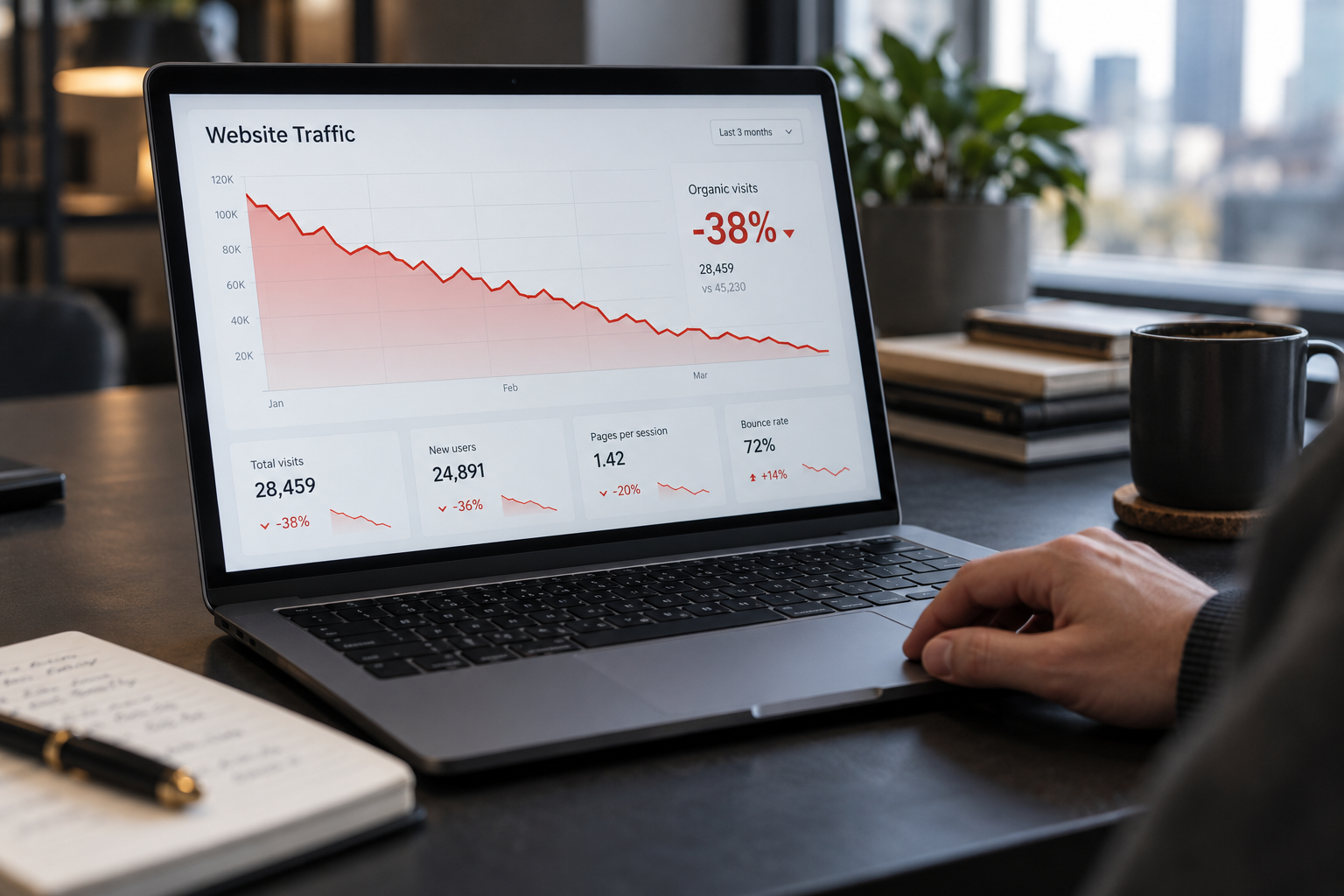


A Google Business Profile suspension can feel like someone flipped the sign on your storefront to “closed” while customers are still walking by. Your map visibility can disappear, calls may slow down, and years of reviews can suddenly seem out of reach. So, how can a business recover from a Google Business Profile suspension? The fastest path is not panic, duplicate listings, or repeated appeals. It is a clean diagnosis, documented fixes, and a precise reinstatement request.
For a small business, this is more than a platform issue. Your profile often sits at the center of local discovery, especially for high-intent searches such as “emergency plumber near me,” “Los Angeles dentist,” or “best HVAC repair.” Treat the suspension like a compliance problem with a revenue impact, then solve both sides.
First, Find Out What Google Actually Suspended
Not every suspension looks the same. A soft suspension usually means the profile is still visible on Google Search and Maps, but you cannot manage it. A hard suspension generally removes the profile from public visibility. Either way, Google may send a notice, but the notice rarely offers a satisfying amount of detail.
Start by checking the exact status in your Google Business Profile dashboard and reviewing every email connected to the account. Look at recent changes, too. Did someone update the business name, switch categories, change the address, add a tracking number, create another profile, or edit the service area? Suspensions often follow a change that conflicts with Google’s business representation rules.
This matters because an appeal that says, “We are a legitimate business, please restore us,” gives Google very little to review. An appeal that says, “We removed the unsupported keyword phrase from our business name, corrected the address format, and attached our business license and utility bill,” is far more useful.
Common Reasons a Google Business Profile Gets Suspended
Google does not suspend profiles only because of bad intent. Plenty of legitimate companies get caught by inconsistent information, an overenthusiastic marketer, or a business model that does not fit local profile rules. The common triggers include:
- A business name stuffed with services, cities, or promotional language that is not part of the real-world name.
- An address that is a virtual office, mailbox, UPS store, or another location where customers cannot actually meet the business.
- A service-area business showing a residential address when customers do not visit that location.
- Duplicate profiles for the same business, practitioner, department, or location.
- A profile created or verified in a way Google cannot confidently connect to the actual business.
- Sudden, major edits to core details, particularly after ownership or management changes.
There are gray areas. A law firm with separate attorneys, a medical practice with practitioners, or a multi-department retailer may qualify for more than one profile under certain conditions. A home-service company may qualify without a storefront, but it generally needs to hide its address and accurately set its service area. This is where generic advice can cause trouble: the right setup depends on how customers interact with your business in real life.
How Can a Business Recover From a Google Business Profile Suspension?
Recovery begins by making your profile true, consistent, and provable. Do not submit an appeal until you have corrected obvious policy issues. Google may limit reinstatement options after repeated failed appeals, and rushing can turn a fixable issue into a longer mess.
Audit the profile against your real business
Review the business name first. Use the name displayed on your storefront, legal documents, and customer-facing branding. Do not add “best,” “near me,” city names, service lists, or keywords simply because they may help rankings. Local SEO is valuable, but putting keywords in the business name when they do not belong there is a shortcut with a weak foundation.
Then verify your location setup. If customers visit you during stated hours, the address should be a genuine, staffed location. If you travel to customers, hide the address and define a reasonable service area. A service area is not a lead-generation wish list. Listing half the state when your team realistically serves three nearby counties is a credibility problem for customers and potentially for Google.
Check your primary category, phone number, website, hours, and business description. They should match your website and major business documents. Minor formatting differences are normal, but conflicting names, addresses, and phone numbers create doubt.
Remove duplicates instead of creating replacements
One of the most expensive mistakes is creating a new profile because the old one was suspended. That can look like an attempt to bypass enforcement, and it can split reviews, confuse customers, and make the original profile harder to recover.
Search Google Maps for old addresses, previous business names, practitioner listings, and accidental duplicates created by former employees or agencies. If you find one, document it. Depending on the situation, it may need to be removed, merged, or marked as moved. Do not delete evidence blindly if you need it to explain the issue in your appeal.
Gather proof before you appeal
Google wants evidence that your business exists and operates as represented. Use documents that clearly connect the business name and address to the real company. Strong evidence can include a business license, registration, utility bill, insurance document, lease, tax document, branded vehicle photos, exterior signage, or photos of the workspace.
The best documents are current, readable, and consistent with the corrected profile. If your legal entity name differs from the public-facing name, provide documents that explain the relationship when possible. For example, a DBA document can make the connection clear.
Avoid sending a random pile of files. More paperwork is not automatically better. Give Google the cleanest evidence available, with a short explanation of what each item proves.
Submit one focused reinstatement appeal
Use Google’s official appeal process from the profile or suspension notice. Your explanation should be brief, factual, and specific. State what you corrected, why the profile now follows the rules, and what documents support the request.
A useful appeal reads more like an operations report than a sales pitch: “We are a service-area plumbing business. We removed our visible residential address, corrected our business name to match our state registration, and removed a duplicate listing at our former location. Attached are our registration, insurance certificate, and branded vehicle photos.”
Do not blame Google, threaten to move advertising spend, or write a long emotional narrative. The reviewer needs verifiable facts, not a courtroom closing argument.
What to Do While the Appeal Is Pending
A suspended profile should not pause your entire marketing engine. Keep your website accurate and easy to contact. Make sure contact forms work, phone calls route correctly, and service pages clearly explain where you operate. If your profile is unavailable, your site has to carry more of the local trust load.
Continue earning leads through organic search, paid search where appropriate, email, social channels, referrals, and local partnerships. For businesses that rely heavily on map-pack traffic, a temporary PPC campaign can protect urgent lead flow, but only if landing pages, tracking, and budget controls are in place. Throwing money at ads without a conversion-ready website is just buying a louder leak.
Also, tell frontline staff what is happening. Receptionists and sales teams should know how to respond if customers say they cannot find your map listing. A simple, calm response protects confidence: “We are updating our Google listing and can help you directly right now.”
Do Not Let a Reinstatement Create a Second Suspension
Once the profile returns, resist the urge to make a dozen optimizations in one afternoon. Major changes in ownership, address, category, name, and URL can trigger another review. Make necessary edits carefully, keep records, and ensure your website, directories, social profiles, and profile details tell the same story.
Build a simple approval process for anyone with profile access. Your web designer should not casually change the phone number. Your SEO provider should not insert keywords into the business name. Your office manager should not create a second listing for a new service unless it truly qualifies. Local visibility is an asset, not a spare account to experiment with.
For multi-location businesses, franchises, medical practices, and home-service brands, a professional audit can be worthwhile before filing an appeal. The trade-off is time and cost versus the risk of losing calls, reviews, and map visibility for longer than necessary. Agencies such as LAv1 can help clarify compliance, local SEO structure, and the broader lead-generation plan, but no legitimate agency can promise a reinstatement. Anyone guaranteeing one is selling confidence, not control.
Your profile is most defensible when it reflects the business customers would encounter offline: real name, real operations, real location rules, and real proof. Get that foundation right, and your next appeal has something much stronger than hope behind it.