
A pretty website that produces no calls is an expensive online brochure. For a small business, the right WordPress web design agency should do more than pick a polished template and hand over a login. It should build a sales tool that helps customers find you, trust you, and take the next step.
That distinction matters because WordPress itself is not the strategy. It is the platform. A great site can support local SEO, paid campaigns, AI search visibility, reputation building, and lead conversion. A poorly planned one can slow every marketing effort down, even if the photos look great.
What a WordPress Website Should Do for Your Business
Start with the business result, not the feature list. A service business website may need to generate booked estimates, consultation requests, or phone calls. A local retailer may need directions, store visits, and product discovery. A professional firm may need to establish credibility before a prospective client is ready to reach out.
That means your website needs a clear job. It should explain what you do in seconds, show why customers should choose you, remove obvious hesitation, and make contacting you easy on a phone. If visitors have to hunt for your service area, pricing approach, credentials, or contact information, the design is working against the business.
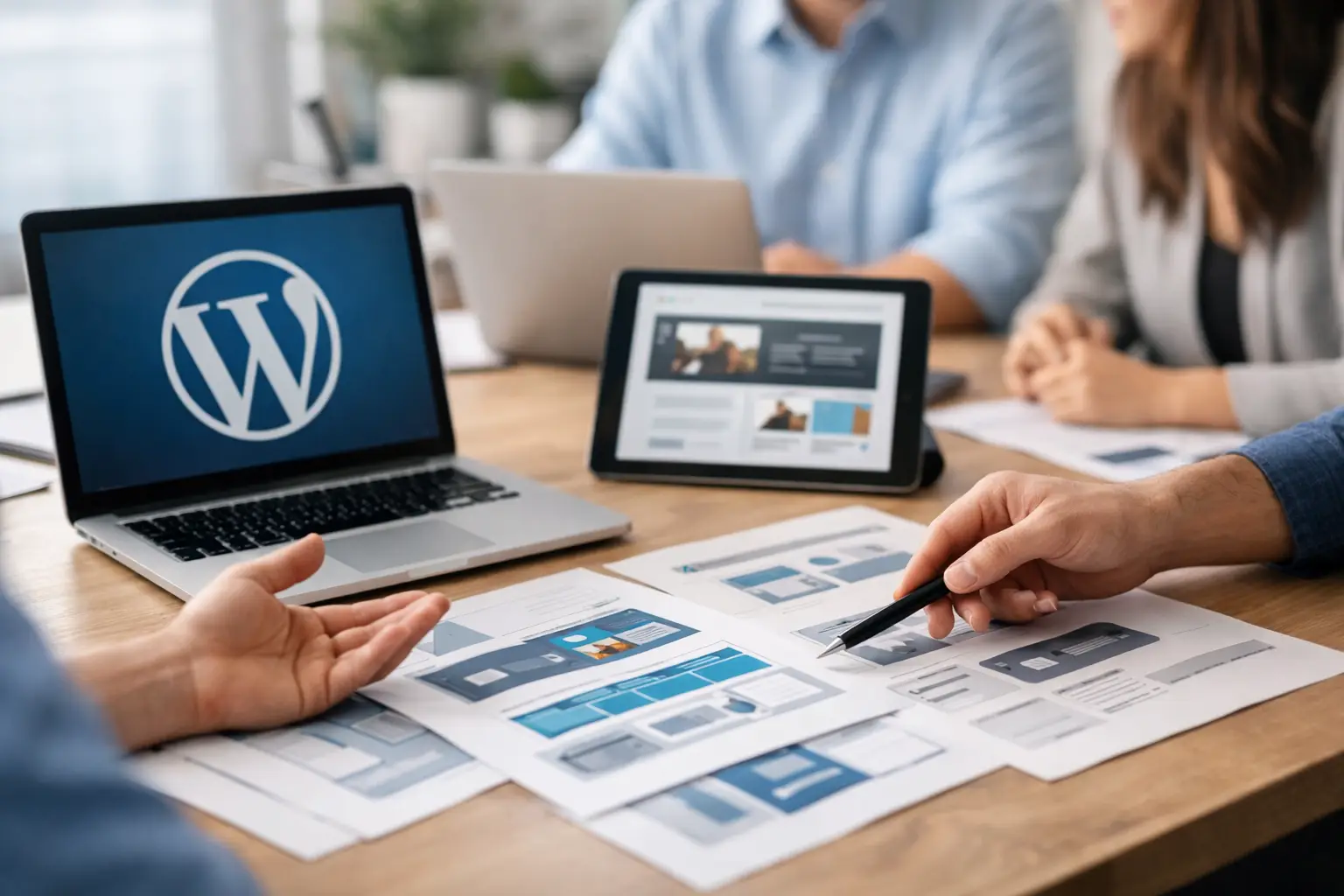
WordPress remains a practical choice because it gives growing companies flexibility. You can add landing pages, publish useful content, integrate forms and scheduling tools, improve technical SEO, and evolve the site without rebuilding everything every year. But flexibility comes with a catch: more options also create more ways to make a mess. Strategy and quality control matter.
How to Evaluate a WordPress Web Design Agency
The best agency for a national ecommerce brand is not automatically the best fit for a Los Angeles plumber, dental office, law firm, or home service company. Ask how the agency approaches businesses like yours, with your sales cycle, geographic market, and available bandwidth.
Look Past the Homepage Portfolio
Most agencies can show attractive homepages. The more useful question is whether their websites help visitors move through a decision. Review their work on a mobile phone. Can you quickly tell what each company offers? Is there a clear call to action? Do service pages answer real customer questions? Does the site feel fast and easy to use?
Also look for range. A thoughtful agency does not force every business into the same visual style. A luxury wellness brand, a contractor, and a B2B consultant can all need lead generation, but they should not look or sound like the same company wearing different logos.
Ask About Discovery Before Design
If the conversation starts and ends with colors, fonts, and pages, pause. Visual identity matters, but it should follow the strategy. Before design begins, an agency should want to understand your customers, highest-value services, competitors, target locations, current traffic, and the actions that count as a conversion.
Good discovery also reveals what not to build. A lean business may not need 30 thin service pages or a flashy custom animation that slows the site down. It may need a focused site architecture, strong proof points, better local relevance, and a simple way for leads to contact the team.
Get Clear on Ownership and Ongoing Costs
This is where confusing proposals tend to appear. Ask who owns the domain, hosting account, website files, written content, images, premium plugin licenses, and analytics accounts. You should not discover later that you cannot move your own site without paying a ransom worthy of a bad movie plot.
Request plain-English answers on recurring costs, maintenance, security updates, backups, and support response times. WordPress needs responsible upkeep. That does not mean it is difficult, but ignoring updates and backups is like skipping oil changes because the car still starts.
Design, SEO, and Conversion Are One System
A web designer and an SEO specialist working separately can create an awkward handoff. The design team builds a beautiful site. The SEO team later asks for pages, headings, internal links, location information, schema, and content sections that were never planned. Then the site gets patched together after launch.
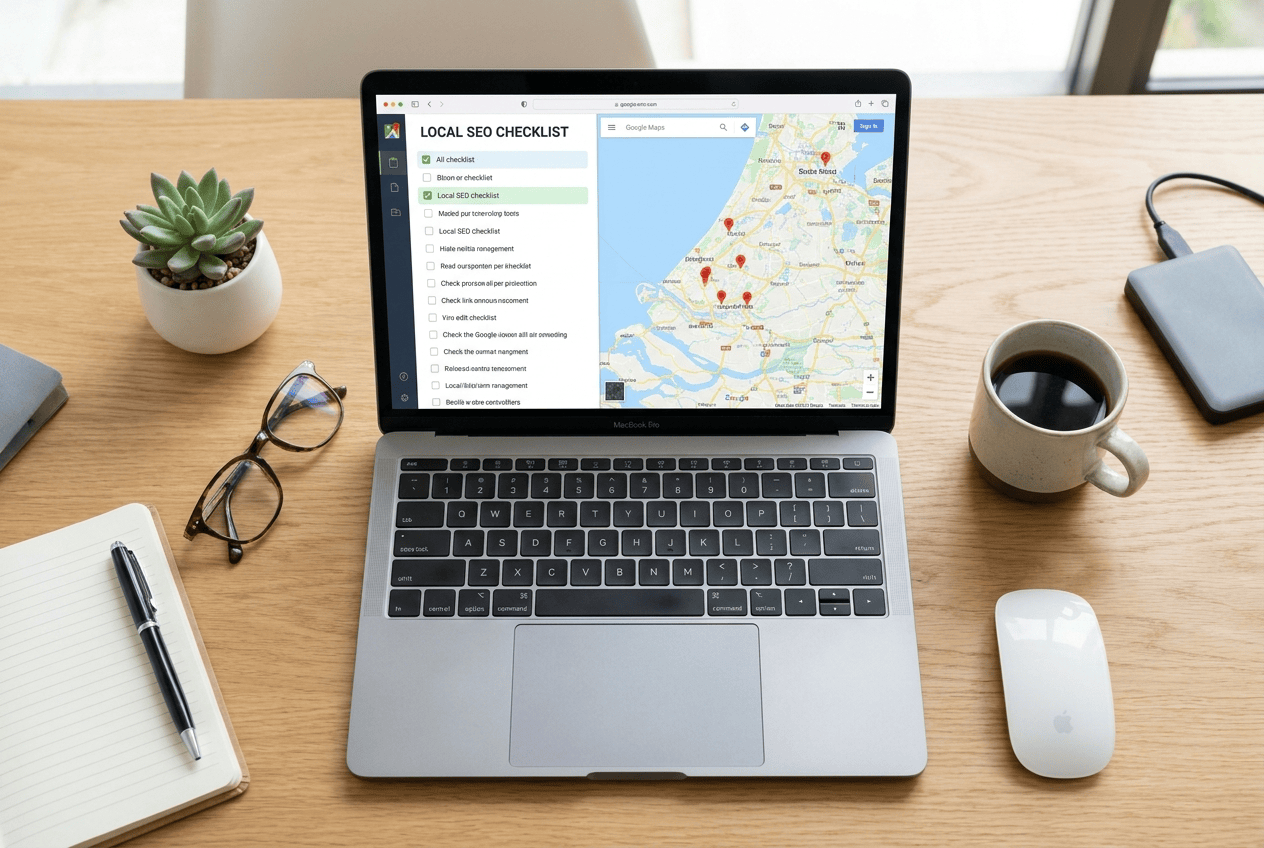
A stronger process treats visibility and conversion as part of the build. That includes keyword-informed page structure, readable headings, clean URLs, local business details, image optimization, crawlable content, and forms that work properly. It also means tracking the actions that matter, such as calls, form submissions, appointment requests, and qualified lead volume.
For local businesses, the service area strategy deserves special attention. Listing every city in the county on one page is not a local SEO plan. Useful location relevance comes from accurate business information, meaningful service coverage, customer proof, and pages that genuinely help people in those markets.
Build for Google Search and AI Discovery
Search behavior is changing, but the fundamentals have not disappeared. People still need reliable answers about services, locations, costs, qualifications, and next steps. Google may surface an answer directly. ChatGPT, Perplexity, and other AI-driven tools may summarize options before someone visits a website. Your site needs to make its expertise easy to understand and verify.
In 2026 and beyond, scattered marketing messages will become even more expensive. A business that says one thing on its website, another thing in local listings, and almost nothing in helpful content is harder for both people and systems to trust.
Ask an agency how it handles content structure, entity clarity, FAQ opportunities, author or business credentials, service details, reviews, and technical markup. Be wary of anyone promising a guaranteed spot in AI answers. No reputable agency controls those platforms. What they can do is improve the clarity, quality, and consistency of the information those systems may use.
Questions Worth Asking Before You Sign
A proposal should make the work feel clearer, not foggier. Before choosing an agency, get direct answers to these questions:
- What business goals will shape the website structure and calls to action?
- What is included in copywriting, photography direction, SEO setup, and conversion tracking?
- How will the site be tested for mobile usability, speed, forms, and accessibility?
- Who is responsible for providing content, approvals, and technical access?
- What happens after launch, and how will results be measured over time?
Listen for specifics. “We optimize for SEO” is vague. “We create service page architecture around demand, set up conversion tracking, optimize core technical elements, and review leads after launch” is a process.
Red Flags That Cost Small Businesses Later
The lowest quote can be perfectly reasonable if the scope is simple. It can also be a shortcut disguised as a bargain. Template-based builds are not inherently bad. A well-configured template can be smart for a limited budget. The problem begins when the agency sells a custom strategy but delivers a generic site with swapped-out text.
Watch for unrealistic launch timelines, mystery fees, no discussion of copy or SEO, and proposals that promise rankings without explaining the work. Another warning sign is a site built entirely around the agency’s preferred tools rather than your business needs. You need a platform your team can manage and a plan that supports growth, not a black box.
Custom development has trade-offs, too. It can create a distinctive, highly tailored experience, but it often costs more and may require specialist support later. For many small businesses, a strategically designed WordPress build using dependable components is the better ROI. The right answer depends on what makes you different, how quickly you need to launch, and what future functionality you actually need.
The Best Website Launch Is Not the Finish Line
A website should get smarter after it goes live. Review what pages attract traffic, where visitors leave, which forms convert, what questions sales prospects keep asking, and whether mobile callers can reach you without friction. Use that information to improve pages, build targeted content, and tighten the path from search to lead.
An agency such as LAv1 can be especially valuable when web design is connected to SEO, local visibility, paid traffic, and AI discovery strategy instead of treated as a one-time creative project. Still, the right partner is the one that can explain the plan plainly, show how it connects to revenue, and earn trust through its process.
Choose a website partner the way you would choose a key hire: not because they use the most impressive jargon, but because they understand the job, communicate clearly, and can help the business grow after the first launch-day applause fades.