

A lot of small business owners do not have a traffic problem. They have a visibility problem, a conversion problem, or a consistency problem. That is why digital marketing for small businesses is less about doing everything and more about doing the right things in the right order.
If your phone rings in bursts, your leads are unpredictable, or your competitors keep showing up before you do, the issue usually is not effort. It is strategy. Too many businesses spend money on random tactics – a few boosted posts here, some Google Ads there, maybe a website update every couple of years – and then wonder why growth feels stuck.
What digital marketing for small businesses actually means
At its core, digital marketing is how people find you, evaluate you, and decide whether to contact you online. For a small business, that usually comes down to a few high-impact channels: search visibility, paid advertising, your website, local presence, reviews, and increasingly, AI-driven discovery.
That last part matters more than many owners realize. People are not only searching on Google and Bing anymore. They are also asking ChatGPT, Perplexity, and AI-powered search tools for recommendations, comparisons, and local options. If your business is invisible in those systems, you are missing demand that does not always show up in traditional analytics.
The good news is that small businesses do not need enterprise budgets to compete. They need a clear plan, a strong online foundation, and enough consistency to build momentum.
Start with the channels closest to revenue
The smartest small businesses do not begin with whatever trend is loudest that week. They begin with what is most likely to produce leads and sales.
For most local and service-based businesses, that starts with local SEO, organic SEO, a fast and trustworthy website, and paid search. Social media can help, but in many cases it supports the real conversion channels rather than replacing them. If you are a plumber, med spa, law firm, contractor, dentist, or home services company, a viral Reel is nice. A phone call from someone ready to book is nicer.
This is where trade-offs matter. SEO tends to build stronger long-term ROI, but it takes time. PPC can generate faster lead flow, but it gets expensive when campaigns are sloppy or landing pages are weak. Social media can grow awareness and trust, but often needs a bigger content commitment than owners expect. Email marketing is powerful if you already have a list, less so if you are still trying to get people in the door.
There is no one-size-fits-all stack. The right mix depends on your sales cycle, margin, competition, and how quickly you need results.
Your website is not a brochure
Many small business websites still act like digital business cards. They say what the business does, show a few stock photos, and then politely wait for someone to care. That is not enough.
Your website should do three jobs well. It should help people understand what you offer, trust that you can deliver, and take the next step without confusion. If the site is slow, dated, hard to use on mobile, or vague about services, even good traffic will leak out.
The strongest small business websites are simple and conversion-focused. They answer real customer questions, make pricing or process feel less mysterious, and place calls to action where people are already making decisions. They also support both SEO and paid ads, which means your site is not just presentable – it is useful.
A pretty website that does not convert is just expensive decor.
Search still matters, but search has changed
For years, the standard advice was straightforward: rank higher on Google, get more clicks, get more business. That still matters, but the landscape is shifting.
Search results now include map packs, featured snippets, AI overviews, zero-click answers, review panels, and platform-based recommendations. In plain English, your future customer may get what they need without ever clicking ten blue links. Annoying? Yes. Real? Also yes.
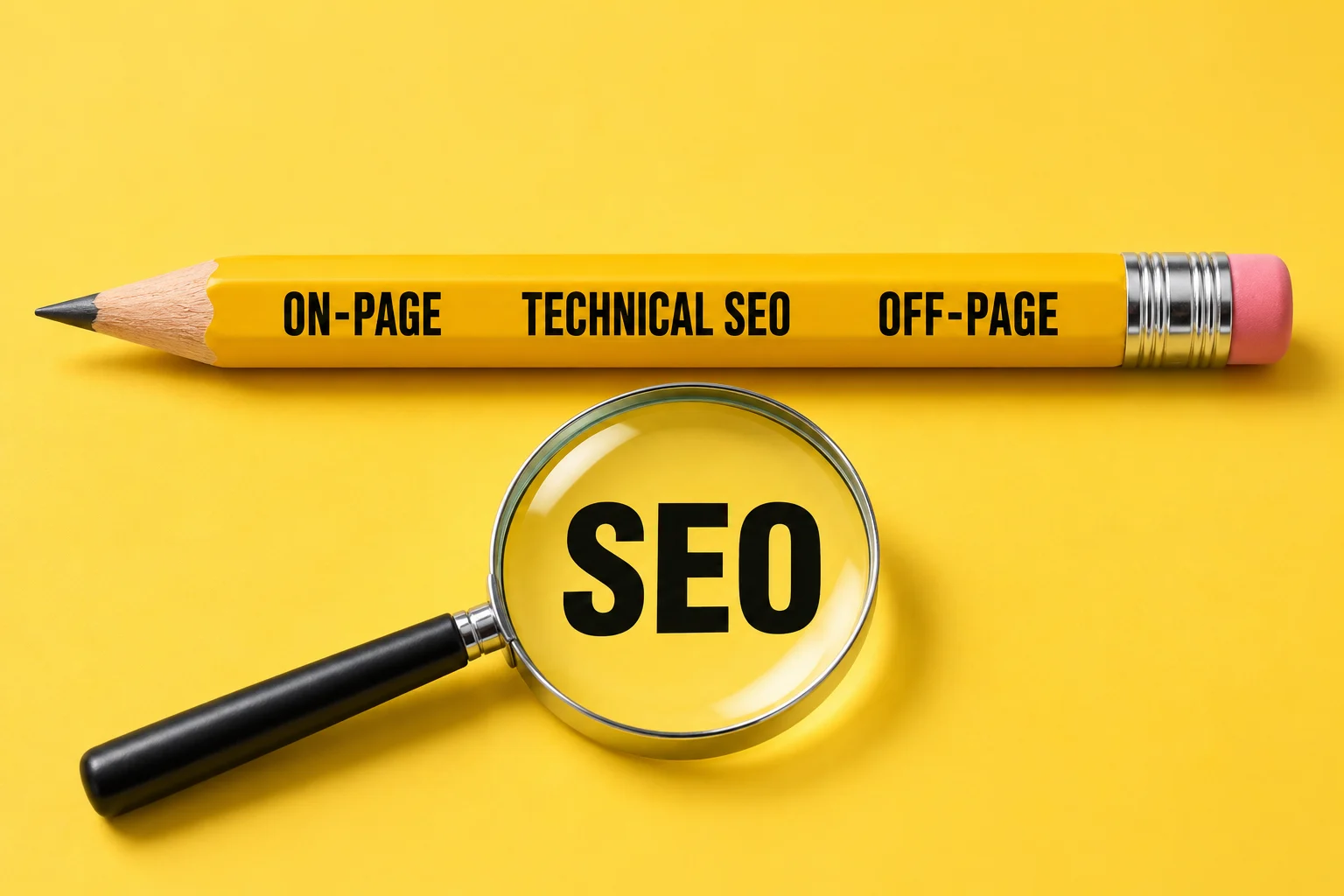
That means modern SEO has to do more than chase rankings. It has to improve your visibility across the full search experience. For small businesses, that includes your Google Business Profile, location signals, structured site content, review quality, and topical authority. It also includes how clearly your business can be interpreted by AI systems.
This is why AI SEO is becoming a real advantage. Businesses that publish clear service pages, strong local information, expert-led content, FAQs that answer actual customer questions, and consistent trust signals are more likely to appear in AI-generated responses. That does not replace traditional SEO. It extends it.
For small businesses trying to compete with larger brands, this creates an opening. You may not outspend them, but you can out-clarify them.
Paid ads work fast, but only when the math works
Google Ads and paid social can absolutely help small businesses grow. They can also burn cash faster than a broken pipe if the setup is wrong.
The biggest mistake is treating paid ads like a switch. Turn them on, leads appear, problem solved. In reality, paid media only works when your targeting, offer, landing page, tracking, and follow-up process are aligned. If any one of those breaks, your cost per lead climbs and your patience disappears right after it.
Paid search usually performs best when intent is high. Someone searches for an emergency electrician, divorce attorney, or nearby med spa because they already need something. That is very different from paid social, where you are interrupting attention rather than capturing demand.
Neither channel is better in every case. Search is often more efficient for immediate lead generation. Social can be stronger for visual categories, retargeting, promotions, and brand familiarity. The right call depends on your business model and margin. If you close high-value jobs, paid acquisition can make sense even at a premium. If your average ticket is low, efficiency becomes everything.
Local visibility is the small business unfair advantage
If you serve a specific city or neighborhood, local SEO is one of the highest-leverage moves you can make. It helps you show up when people search with strong intent, especially on mobile, and often catches buyers close to the point of action.
That means optimizing your Google Business Profile, earning reviews steadily, building location-relevant service pages, and keeping your business information accurate across the web. It also means creating content around the actual areas you serve, not pretending you dominate every ZIP code within a 100-mile radius. Customers can smell that trick from orbit.
Local trust signals carry real weight. A business with recent reviews, helpful website content, clear service areas, and strong calls to action often beats a larger competitor with a weaker local presence. For resource-constrained owners, that is good news.
The best strategy is the one you can maintain
A practical digital marketing plan for a small business should be ambitious enough to drive growth and realistic enough to survive a busy quarter. That balance matters.
A lot of owners get stuck because they think they need to post daily, film videos weekly, write blogs endlessly, run ads on every platform, and somehow also operate the business. That is fantasy scheduling. Better to do fewer things consistently than everything poorly.
A strong baseline often looks like this in practice: a conversion-focused website, active local SEO, monthly content that supports search and AI discovery, paid search if lead volume is urgent, and a simple review-generation process. From there, you layer in social media, email, retargeting, and deeper content based on performance.
This is also where a tailored strategy matters more than templates. What works for a multi-location dental group is not the same as what works for a boutique law firm or a Los Angeles home remodeling company. Good marketing should fit your goals, sales cycle, and budget, not force you into someone else’s playbook.
What small business owners should watch in 2026 and 2027
The next phase of digital marketing is going to reward clarity, trust, and adaptability. AI-generated search answers will keep changing how people discover businesses. Zero-click search will continue reducing casual website visits while increasing the value of strong brand signals. First-party data, better lead tracking, and conversion-focused design will matter more as ad costs rise.
Short version: getting found is no longer enough. You need to be understandable, credible, and easy to choose.
That is why agencies like LAv1 are putting more focus on the overlap between search marketing and AI visibility. Small businesses do not need more jargon. They need modern strategies that help them appear where customers are actually looking, whether that is Google Maps, organic search, paid search, or AI tools making recommendations behind the scenes.
If your marketing feels scattered, that does not mean you are behind forever. It usually means your next stage of growth starts with simplification. Get the fundamentals right, invest in the channels tied closest to revenue, and build a presence that works in both traditional search and AI discovery. The businesses that do that now will look a lot bigger than they are a year from now.