

A local seo marketing agency should do more than promise a spot at the top of Google. For a small business, the real win is simpler: more qualified calls, more booked appointments, more store visits, and a website that turns attention into revenue. If an agency cannot connect its work to those outcomes, you are not buying growth. You are buying a monthly report with colorful charts.
Choosing the right partner matters because local search is crowded, and it is changing quickly. Customers still use Google Maps and traditional search, but they are also asking ChatGPT, Perplexity, and AI-powered search experiences for recommendations. The agencies worth hiring understand both realities without selling science fiction.
What a Local SEO Marketing Agency Actually Does
Local SEO is the work of making a business easier to find when people search for nearby services, specific locations, or urgent solutions. Think “emergency plumber near me,” “Los Angeles family lawyer,” or “best med spa in Pasadena.” The goal is to show up where local buyers make decisions: Google Maps, organic search results, local directories, review platforms, and increasingly, AI-generated answers.
A capable agency starts with the foundation. That means improving your Google Business Profile, correcting inconsistent business information across the web, building location-relevant service pages, strengthening technical website performance, and creating content that answers the questions customers actually ask.
Then comes the part many providers skip: conversion. Ranking for a keyword is nice. Ranking for a keyword that produces no calls is expensive vanity. Your agency should look at phone calls, form submissions, booked consultations, direction requests, and sales quality, not just impressions and traffic.
For businesses with multiple locations, the work gets more detailed. Each location needs accurate information, its own local signals, useful localized content, and a clear way to avoid competing against the company’s other locations in search results. There is no magic copy-and-paste solution here.
Start With Your Business Goal, Not an SEO Package
Before comparing agencies, define what a good result looks like for your business. A roofing contractor may need more estimate requests within a 20-mile radius. A dentist may need a steady flow of new-patient calls. A boutique retailer may care most about map visibility, foot traffic, and seasonal promotions.
This clarity helps you spot generic proposals. If an agency offers the same package to a personal injury attorney, a restaurant, and a Shopify brand, pause. Those businesses have different customer journeys, competition levels, margins, and lead values.
Ask yourself three practical questions: Which services or products are most profitable? Which neighborhoods, cities, or ZIP codes matter most? What happens after a lead arrives? If the phone is not answered, the booking form is broken, or the website makes visitors work too hard, better rankings will not fix the entire problem.
A good partner will ask these questions early. They are trying to understand the economics behind the marketing, not merely collect a list of keywords.
How to Evaluate a Local SEO Marketing Agency
Look for a clear diagnosis before a promise
Be wary of anyone guaranteeing a No. 1 ranking. Google results vary by searcher, location, device, competition, and personalization. AI answers vary too. Ethical agencies can set targets and explain their approach, but they cannot control every platform’s output.
Instead, ask for an initial assessment of your current visibility. It should cover your Google Business Profile, website health, local competitors, reviews, location pages, citations, and likely conversion obstacles. You do not need a 90-page audit full of jargon. You need a clear explanation of what is holding you back and what should be fixed first.
The best recommendations often sound refreshingly unglamorous. Correcting an incorrect address, improving a slow mobile page, adding service-area detail, or responding to reviews can make a meaningful difference. Marketing is not always flashy. It should still be effective.
Ask how they measure leads and revenue
Traffic alone does not pay payroll. Your reporting should show progress from visibility to action: rankings and map presence, organic traffic, calls, forms, appointments, and where possible, closed revenue.
There is a trade-off here. Perfect attribution is rarely possible, especially when customers call after several searches or walk in after seeing your business on a map. But an agency should have a sensible tracking plan and be candid about what the data can and cannot prove.
Ask how calls are tracked, whether spam leads are filtered, how form submissions are categorized, and whether your team will have access to the data. The answer should be plain English. If reporting requires a decoder ring, it is not transparent.
Review the strategy behind content and links
Local SEO still needs useful pages, credible mentions, and authority. The question is how an agency earns them. Avoid providers that rely on thin city pages, recycled blog posts, fake reviews, or bulk link packages. These shortcuts may create a short-term bump, but they can also create cleanup work later.
A better approach builds content around services, locations, buyer questions, and proof. For example, a local HVAC company might need pages that explain emergency repair, financing, maintenance plans, and service areas, supported by real project examples and reviews. The point is not to publish more words than competitors. The point is to be more useful when a customer is close to choosing.
Make sure ownership stays with you
Your website, Google Business Profile, analytics accounts, ad accounts, content, and creative assets should remain accessible to your business. Agencies can manage these assets, but they should not hold them hostage.
This sounds obvious until an owner changes providers and discovers that the old agency created accounts under its own email address. Get access and ownership expectations in writing before work begins.
Local Search Now Includes AI Discovery
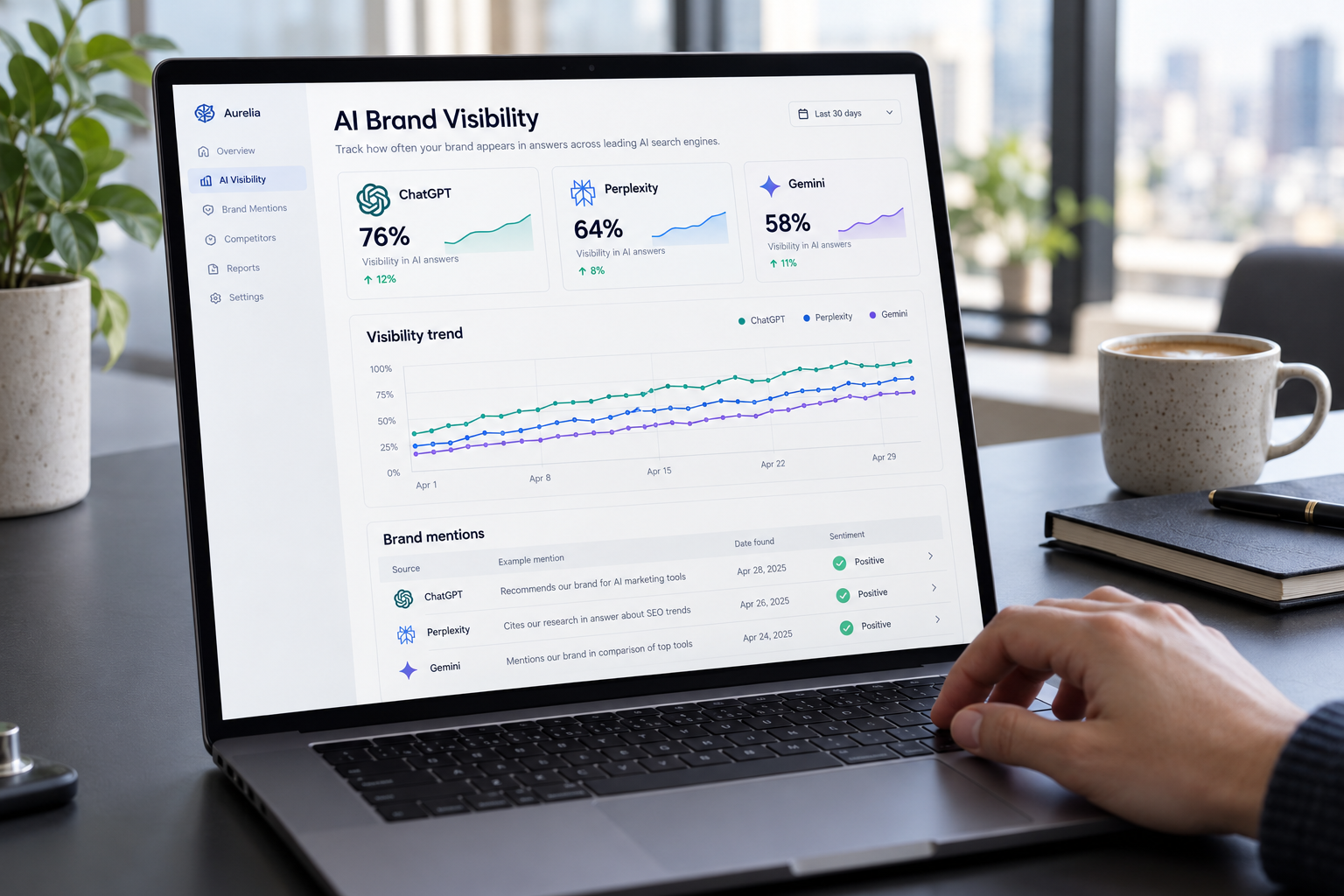
Traditional local SEO is still essential, but the search journey is expanding. A customer may ask an AI platform, “Who are the best pediatric dentists near me that accept my insurance?” or “Which Los Angeles accountant works with small ecommerce businesses?” These systems synthesize answers from sources they consider credible and relevant.
That does not mean there is a secret button for ranking in every AI answer. Anyone claiming guaranteed placement is overselling. It does mean your business needs clear, consistent information across its website and trusted third-party sources. Helpful service descriptions, strong reviews, recognizable expertise, accurate location details, and structured content all make it easier for search engines and AI systems to understand what you do.
When evaluating an agency, ask how it approaches AI visibility without neglecting fundamentals. A thoughtful answer will include entity clarity, content quality, brand mentions, zero-click search behavior, and measurement limits. A weak answer will be a buzzword parade featuring “AI” in every sentence.
LAv1 approaches this intersection as a practical growth problem: protect the Google foundation while preparing the business to be understood and recommended across emerging discovery channels.
Red Flags That Cost Small Businesses Money
Some warning signs are easy to miss because they sound persuasive in a sales call. Watch for these patterns:
- Guaranteed rankings or promises of instant results.
- A fixed package with no discussion of your market, margins, or service area.
- Vague reports focused on impressions while calls and leads are ignored.
- Cheap bulk backlinks, fabricated reviews, or doorway pages for every nearby city.
- No access to your accounts or reluctance to explain what work is being done.
- Long contracts that make it difficult to leave if the agency does not perform.
Local SEO takes time because trust and relevance take time. For many businesses, early improvements can appear within a few months, while stronger competitive gains often require sustained work. The exact timeline depends on your starting point, local competition, website condition, review profile, and how quickly your team can follow up with leads.
Questions Worth Asking Before You Sign
A productive agency conversation should feel specific to your business. Ask what the first 90 days would prioritize and why. Ask which competitors they consider your real search competitors, which may not be the same companies you see across town. Ask what they need from you, including access, customer insights, photos, review processes, and approval turnaround.
Also ask what they would not recommend yet. This is a revealing question. A credible strategist may say paid search should come first for an urgent lead gap, or that rebuilding a broken site should happen before aggressive content production. Good marketing is prioritization. Not every tactic belongs in month one.
Finally, ask how often you will communicate and who will do the work. You deserve more than a salesperson at kickoff and silence afterward.
FAQ
How much does a local SEO marketing agency cost?
Pricing depends on competition, locations, website condition, service scope, and whether the work includes content, web development, paid media, or AI visibility optimization. The lowest quote is rarely the lowest cost if it generates poor leads or creates risky shortcuts. Focus on the plan, access, reporting, and realistic path to return on investment.
Can I do local SEO myself?
Yes, especially basic tasks such as completing your Google Business Profile, requesting honest reviews, posting current photos, and keeping business details accurate. An agency becomes valuable when you need strategy, technical fixes, competitive analysis, content, tracking, and consistent execution that your team cannot realistically sustain.
How long does local SEO take to work?
Some foundational fixes can improve visibility relatively quickly, but durable results usually build over months. Highly competitive industries and large metro areas often take longer. The right expectation is measurable momentum, not overnight domination.
The agency you choose should leave you feeling clearer, not more confused. Look for a partner that can explain the plan, show the work, own the trade-offs, and keep the focus where it belongs: helping more of the right local customers find and choose your business.