
Do brand mentions without links help SEO or AI visibility? Yes, but not in the simplistic “every mention is a ranking boost” way that gets repeated online. An unlinked mention will not pass the direct authority of a quality backlink. It can, however, help search engines and AI systems understand that your business is real, relevant, and connected to a specific service, location, or subject.
For a small business competing with larger brands, that distinction matters. You may not earn a feature in a national publication next week. But you can build a consistent digital footprint through local media, reviews, industry directories, event listings, partner websites, community organizations, and expert commentary. That footprint can support both traditional SEO and visibility in AI-generated answers.
How unlinked brand mentions affect SEO
A brand mention is any time your company name appears online, whether the publisher includes a clickable link or not. Think of a local article that names your plumbing company, a neighborhood association that lists you as a sponsor, or a customer comparing providers in a public forum.
Google has been clear about links being an important discovery and ranking signal. A relevant, earned backlink still has more direct SEO value than a plain-text mention because it gives search engines a crawlable connection between two pages. If someone promises that unlinked mentions are “the new backlinks,” keep one hand on your wallet.
Still, search engines do not evaluate a business using one signal alone. They assess patterns: who talks about you, what they say, where they say it, whether your business details match across the web, and how users respond when they search for your name. Mentions can reinforce those patterns.
What a mention can signal
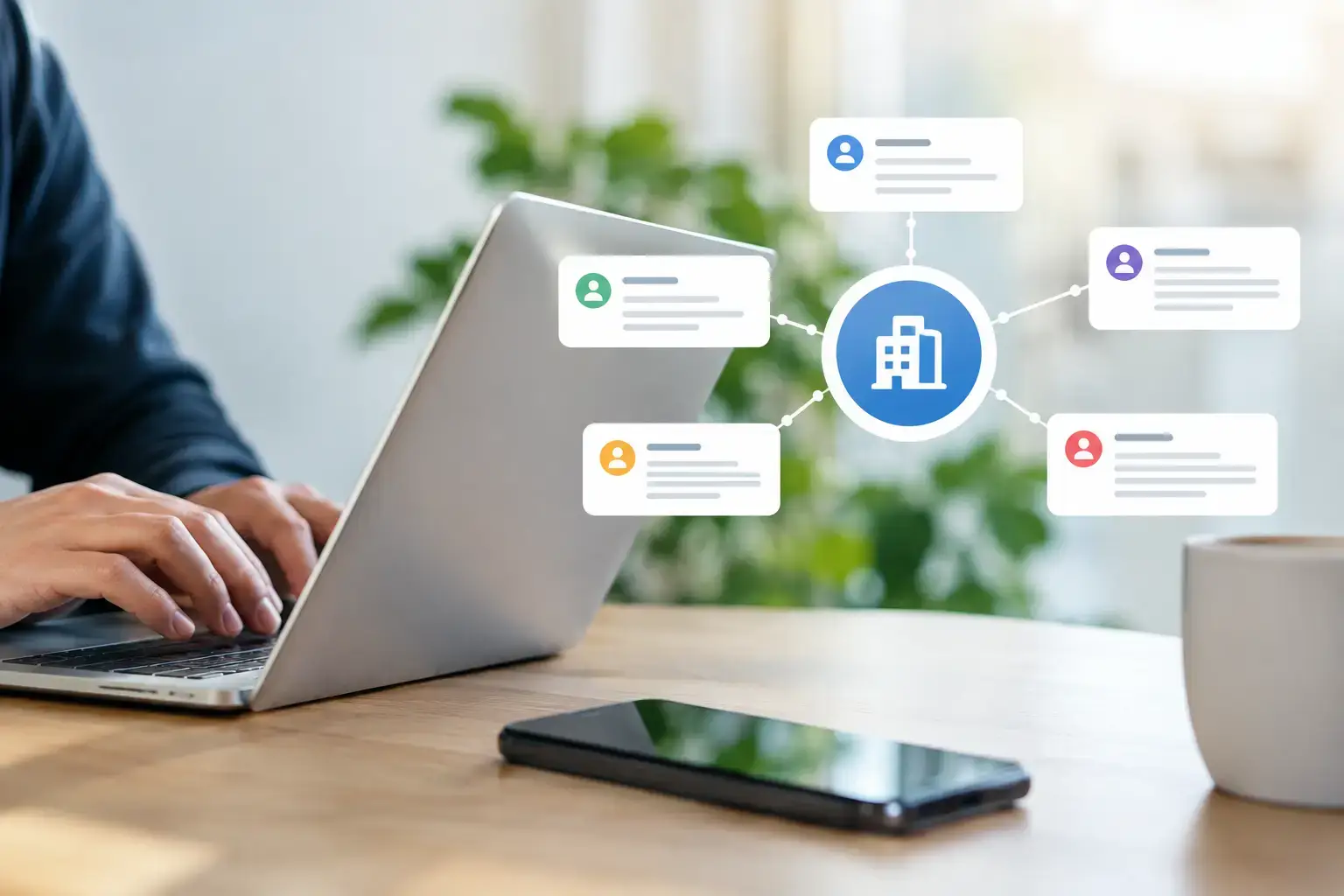
When trustworthy, topically relevant sources repeatedly mention your business, the context can help establish entity understanding. In plain English, an entity is the distinct thing a search engine recognizes as your company, not just a string of words on a webpage.
If a Los Angeles dental practice is regularly mentioned alongside “emergency dentist,” “Invisalign,” and its neighborhood, that creates useful associations. It does not guarantee a first-page ranking for those terms. It may help Google connect the practice with the services and location it claims to serve, especially when its website, Google Business Profile, reviews, and citations tell the same story.
Unlinked mentions may also drive branded searches. A person sees your name in a local roundup, searches for it later, visits your site, and checks your reviews. That is not a magic algorithm switch, but real recognition can produce better marketing outcomes: more direct traffic, more leads, and a stronger brand demand signal over time.
Do brand mentions without links help AI visibility?
They can. AI search tools and answer engines need credible sources to identify businesses and decide which ones are worth mentioning in a response. The exact systems differ, and no platform publishes a complete recipe. But the common-sense direction is clear: businesses with a consistent, well-supported presence across reputable sources are easier for machines to identify and describe accurately.
When someone asks an AI tool, “Who are reliable commercial electricians near me?” the system may draw from indexed websites, business listings, reviews, editorial content, maps data, and other sources. A mention in a respected local publication or trade resource can give the system another reference point for your brand, services, and reputation.
The catch is that AI visibility is not the same as simply appearing on more pages. A vague mention of your company name is weaker than a clear, factual reference that includes what you do, where you operate, and why you are relevant. Context is doing the heavy lifting.
For example, “Brightline HVAC sponsored the event” is a real mention, but it says little about the business. “Brightline HVAC, a Pasadena-based provider of residential heat pump installation and AC repair, sponsored the event” creates a much more useful association. The second version gives both people and machines something they can understand.
AI systems can repeat bad information, too
More mentions are not automatically better. If your old address, outdated phone number, former business name, or incorrect service area appears across the web, AI tools may surface that confusion. This is one reason local SEO and AI visibility work overlap so heavily.
Start with the facts you control. Your website should clearly explain your core services, service areas, credentials, pricing approach where appropriate, and customer proof. Your major listings should use the same business name, address, phone number, and website. Then pursue third-party mentions that reinforce that foundation.
Which unlinked mentions are actually worth earning?
A single relevant mention from a trusted source can be more valuable than dozens of random references. Small business owners often get pulled into low-quality “citation packages” that scatter inconsistent business data across websites nobody uses. That is activity, not necessarily progress.
Prioritize mentions where your customers, peers, or local community would reasonably encounter them. Good opportunities usually include local news coverage, chamber of commerce pages, respected local directories, professional associations, supplier or partner pages, event sponsorships, podcasts, community publications, and expert quotes in relevant articles.
A mention becomes more useful when it includes your accurate brand name, service category, geographic relevance, and a reason someone should trust you. Awards, certifications, case studies, community work, original data, and credible customer results give publishers something concrete to reference.
Avoid paying for manufactured mentions on irrelevant blogs, stuffing your brand name into forum comments, or creating fake review profiles. Those shortcuts create weak signals at best and reputation problems at worst. If the mention would look awkward or suspicious to a potential customer, it is probably not part of a smart visibility strategy.
A practical plan for better mention visibility
Before chasing new coverage, audit what already exists. Search your business name, old business names, key people, phone number, and address. Look for inaccurate listings, duplicate profiles, and references that fail to explain what you do. Fixing ambiguity is often more valuable than adding another low-impact directory entry.
Then build a simple quarterly outreach plan around stories your business can honestly own. A contractor can share a seasonal maintenance checklist with local media. A law firm can explain a new state rule in plain English. A restaurant can partner with a neighborhood event. A B2B company can publish a useful local benchmark or survey. Helpful expertise is more mention-worthy than “we offer great service” for the thousandth time.
Use this four-part filter before pursuing an opportunity:
- Is the source credible to your audience or industry?
- Does it relate to your location, services, or expertise?
- Can the mention include accurate business details and useful context?
- Would it still be worthwhile if no clickable link were included?
That final question keeps the strategy honest. A good mention can create referral traffic, credibility, branded demand, and AI-readable context. A link is still preferable when it fits naturally, but it should not be the only measure of value.
Measure business impact, not just the mention count
Track mentions in a spreadsheet or reporting dashboard, along with the source, topic, location, accuracy, referral traffic, and whether a link was included. Watch branded search impressions, direct traffic, local ranking movement, calls, form fills, and leads that mention where they heard about you.
Do not expect a one-to-one result. SEO and AI discovery are cumulative systems. One mention rarely changes the game, while consistent coverage from relevant, trustworthy sources can make your brand easier to find and easier to trust over months.
If your business has solid services but a thin online footprint, treat unlinked mentions as part of brand building, not a substitute for technical SEO, useful website content, reviews, local optimization, or quality backlinks. LAv1 approaches this as connected visibility work: make the business easy to verify, clear to understand, and credible wherever customers and AI systems look.
The best next move is simple: find one respected place your ideal customer already pays attention to, then give that publisher, partner, or community something genuinely useful to say about your business.