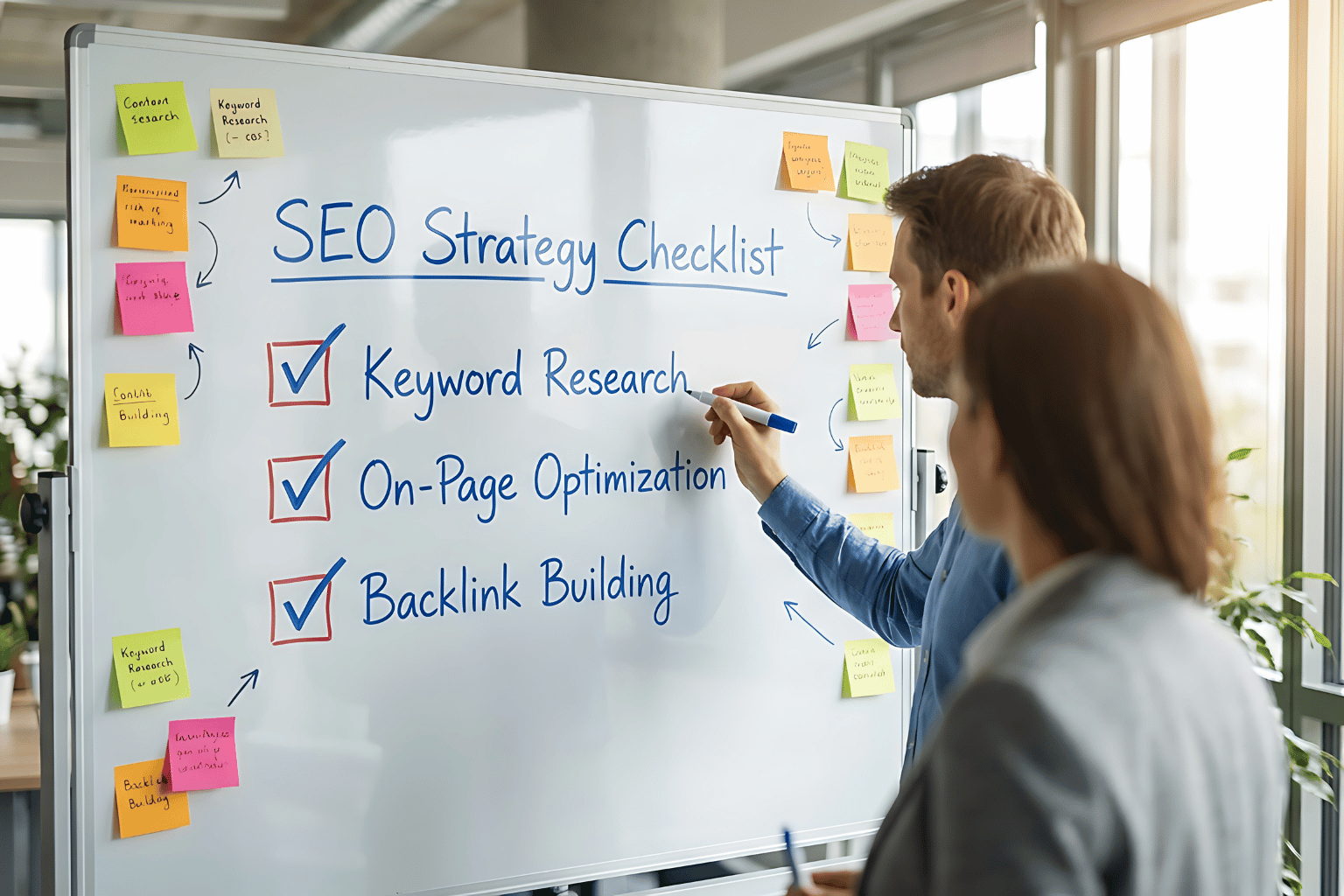


A local plumber can earn a link from a neighborhood blog and still lose the job to a competitor with a clearer service page, stronger reviews, faster website, and better answers to the customer’s urgent question. So, is content quality more important than backlinks? For most small businesses, quality content should come first. But treating backlinks as irrelevant is just as costly as treating them like a magic ranking button.
The smarter answer is that content wins the customer, while backlinks help search engines trust that the customer should find you. One without the other can limit growth. Your job is to put them in the right order.
Is Content Quality More Important Than Backlinks?
Content quality is more important when your website does not yet answer the questions, needs, and objections of the people you want to reach. A backlink can bring attention to a page, but it cannot make that page useful. If visitors land on thin copy, vague service descriptions, or a page that takes too long to load, rankings and referral traffic will not turn into calls or booked appointments.
For a small business, high-quality content is not about publishing 2,000-word essays every week. It means creating pages that make it easy for a real person to understand what you offer, who it is for, where you work, what makes you credible, and what to do next.
A strong HVAC service page, for example, should answer practical questions: Do you offer emergency repairs? Which neighborhoods do you serve? What happens during a visit? What does the estimate process look like? Do you repair the system the customer has? That is useful content. It reduces uncertainty and gives search engines meaningful evidence about the page.
Backlinks are still a major authority signal. When respected, relevant websites mention or link to your business, they can reinforce the idea that your site is legitimate and worth surfacing. The key word is relevant. A link from a local chamber of commerce, industry association, supplier, local news outlet, or credible partner can help far more than a stack of random links purchased from low-quality websites.
What Search Engines Actually Need From Both
Search engines are trying to match a searcher with a result that solves the problem. Content helps them understand relevance. Backlinks help them assess reputation and authority. Technical SEO helps them access and interpret the site. User experience helps confirm that visitors can actually use it.
Think of it like opening a restaurant. Great reviews may persuade someone to visit, but they will not save a confusing menu, cold food, or a locked front door. In this comparison, backlinks are the reviews. Content is the menu and meal. Your website performance is the front door.
This matters even more as AI-generated answers, zero-click results, and conversational search change how people discover businesses. AI platforms and search summaries tend to favor clear, specific, well-supported information. They need language they can interpret and facts they can confidently present. A website with generic pages such as “We provide the best solutions” gives those systems almost nothing to work with.
Well-structured service pages, helpful FAQs, accurate location information, original photos, expert explanations, and evidence of real-world experience give both traditional search engines and AI discovery systems better material to evaluate.
When Content Should Be Your First Investment
If your site has only a homepage, a contact page, and a few short service blurbs, prioritize content before a link-building campaign. The same applies if your pages attract traffic but produce few leads. The problem may not be visibility. It may be that the page does not answer the visitor’s question or create enough confidence to act.
Start with the pages closest to revenue: core services, location pages, product categories, comparison pages, and high-intent problem-solving content. A Los Angeles roofing company, for instance, may get better results from building useful pages around roof leak repair, emergency tarping, roof replacement options, and service areas than from chasing dozens of broad backlinks to its homepage.
Quality also matters because it compounds. A genuinely helpful guide can rank for related searches, support paid ad landing pages, give your sales team material to share, and become a source that local partners are more willing to reference. Content built only to insert keywords rarely has that kind of lifespan.
When Backlinks Become the Missing Piece
There is a point where a well-built site needs more external validation. If your content is accurate, useful, and technically sound but competitors consistently outrank you, authority may be the gap.
This is common in competitive markets such as legal services, home services, healthcare, finance, and ecommerce. Several companies may publish capable pages targeting the same terms. The site with stronger topical credibility, brand mentions, reviews, local signals, and earned links often has an advantage.
That does not mean you should buy a package promising 500 backlinks by Friday. Cheap link schemes can create a messy backlink profile, waste money, and associate your brand with websites no customer would trust. The goal is not link volume. It is credible recognition.
For small businesses, practical link opportunities often come from real business activity: sponsoring a local event, joining professional organizations, contributing expert commentary to local publications, building supplier relationships, earning testimonials from partners, or publishing a useful local resource worth referencing. These efforts can strengthen visibility and community presence at the same time.
A Better SEO Priority Order for Small Businesses
Most owner-operators do not need another marketing checklist with 47 tasks. They need a sequence that protects budget and produces momentum. Use this order:
- Fix the foundation: Make sure your website is crawlable, mobile-friendly, fast enough, secure, and easy to navigate. Confirm that contact forms, call buttons, location details, and conversion tracking work.
- Build pages that deserve traffic: Improve core service and location pages with specific benefits, clear process details, real proof, and direct calls to action.
- Demonstrate experience: Add reviews, case examples, credentials, original images, team information, and answers to common customer concerns where appropriate.
- Earn authority: Pursue relevant local, industry, and editorial mentions that reflect real relationships and genuine value.
- Measure business outcomes: Track qualified calls, form submissions, booked consultations, sales, and lead quality – not rankings alone.
The order can change in special cases. A business with excellent content and no authority in a highly competitive category may need link acquisition sooner. A brand with plenty of press mentions but weak website pages should focus on conversion content first. SEO is not a vending machine. The inputs need to match the bottleneck.
Content Quality Means More Than Good Writing
Polished writing helps, but quality is bigger than grammar and clever headlines. A page can sound professional and still be useless if it avoids specifics. Searchers want evidence, clarity, and a next step.
For service businesses, quality content usually includes accurate service details, service-area coverage, pricing context when possible, realistic expectations, unique expertise, and proof that the company is active and accountable. It should also match search intent. Someone searching “emergency water damage cleanup near me” needs fast action, availability, and reassurance. Someone searching “water damage restoration cost” needs education and transparent context before they are ready to call.
Avoid creating separate pages for every slight keyword variation. Pages written solely for “best dentist Los Angeles,” “top dentist LA,” and “dentist near Los Angeles” can become repetitive and weak. A stronger approach is to create one excellent, comprehensive page when the intent is the same, then support it with distinct content where the customer need truly differs.
The AI Search Factor: Clear Sources Win More Often
As AI search experiences become a larger part of research, businesses cannot rely on rankings alone. People increasingly ask full questions, compare options, and receive summarized answers before they ever visit a website.
That raises the value of original, well-organized content. Explain your process. Define your specialty. Answer follow-up questions. Keep business facts consistent across your website and local profiles. Use meaningful headings instead of vague marketing language. Give AI systems and customers the same thing: a clear reason to trust your business.
Backlinks and brand mentions remain helpful here because they reinforce credibility beyond your own website. But AI visibility is not won by links alone. If your business is never clearly described online, an AI tool has little reliable information to retrieve, summarize, or recommend.
FAQs
Can a website rank without backlinks?
Yes, especially for narrow local searches, branded searches, and less competitive topics. Strong relevance, local optimization, and useful content can earn visibility. In competitive markets, however, backlinks and mentions often become more important over time.
Are backlinks more important than content for local SEO?
Usually, no. Local SEO also depends on accurate business information, reviews, proximity, service relevance, website quality, and local reputation. A few credible local links can help, but they cannot compensate for an incomplete or unconvincing local presence.
How many backlinks does a small business need?
There is no useful universal number. Compare the quality and relevance of your site’s authority signals with the businesses outranking you. Ten meaningful mentions can be more valuable than hundreds of low-quality links.
The best next move is simple: look at the page that is supposed to generate your next customer. If it would not persuade a real person to call, fix that before chasing another backlink. Then build the kind of local reputation that makes other credible websites comfortable pointing people your way.