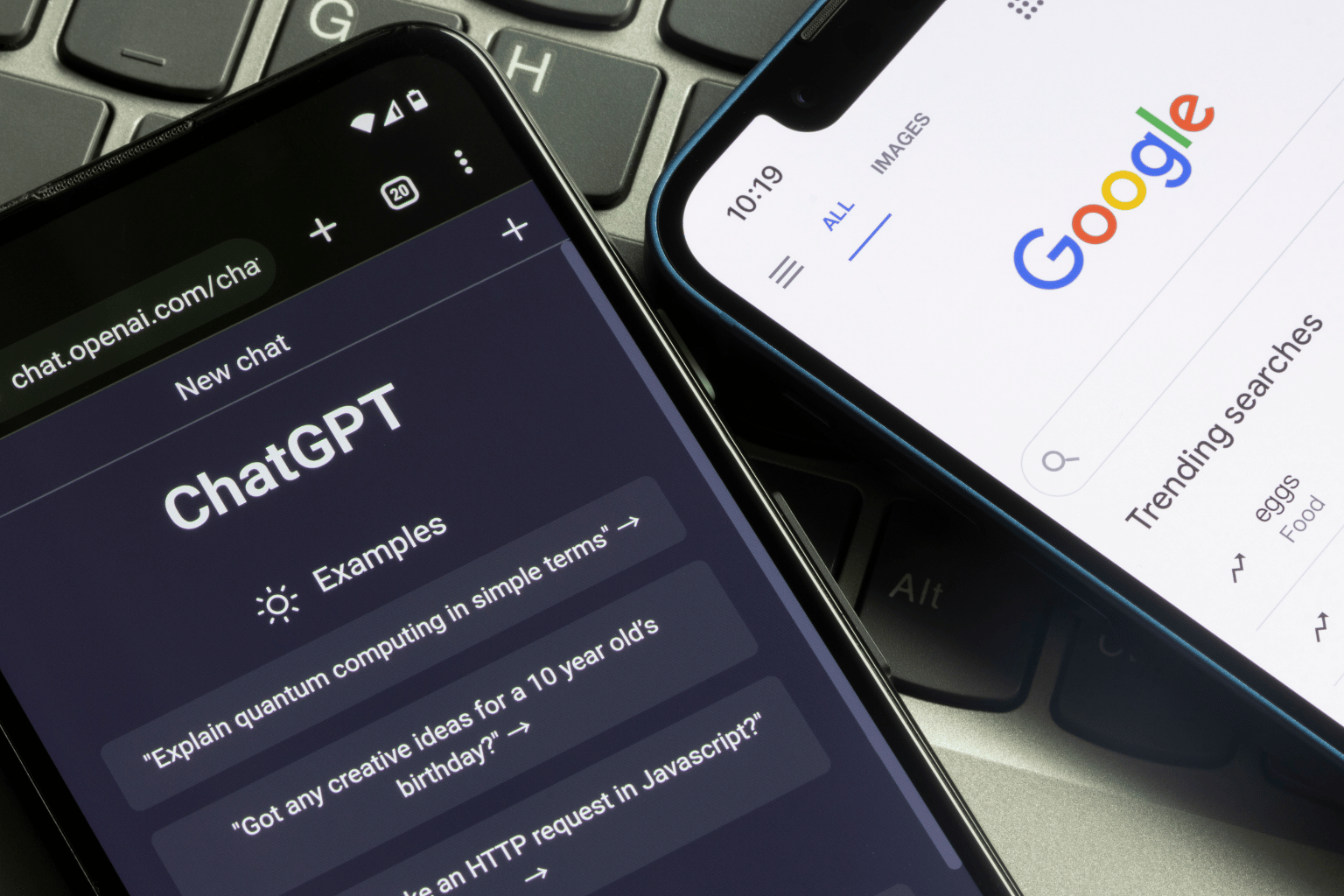


A customer used to search Google, scan a few blue links, and call the business that looked credible. Now they may ask ChatGPT for the best local accountant, use Google’s AI features to compare roofers, or ask Perplexity which med spa offers a specific treatment. If your business is not part of the answer, being on page one may not be enough. An AI SEO service helps your company earn visibility across traditional search results and AI-driven discovery.
For a small business, this is not about chasing every shiny new tool. It is about showing up where real buying decisions are happening, with information that platforms can understand, trust, and recommend. Done well, AI visibility supports the outcomes that matter: qualified traffic, calls, booked appointments, store visits, and revenue.
AI SEO service: what it actually does
AI SEO is the work of making a business easier to discover and cite in AI-generated answers, while strengthening the SEO foundations that still drive Google rankings. It is sometimes called generative engine optimization, answer engine optimization, or AI visibility optimization. The labels vary. The practical goal does not: make your brand the clearest, most credible answer to relevant customer questions.
Traditional SEO often focuses on rankings for keywords such as “emergency plumber in Los Angeles” or “family law attorney near me.” Those searches still matter. AI search adds more conversational, detailed questions, such as “Who can fix a slab leak this week and work with older homes?” or “What should I ask before choosing a divorce mediator?”
An effective service connects both worlds. It reviews how people search, what they need before they buy, and whether your website, local profiles, reviews, and third-party mentions give AI systems enough reliable evidence to feature your business. This is not a trick for forcing a chatbot to say your name. No legitimate agency can guarantee a citation or recommendation from an AI platform. It is a disciplined process for increasing the likelihood that your business is understood and considered.
Why small businesses cannot treat AI search as a side project
Big brands have large content teams, public relations budgets, and years of online mentions working in their favor. Small businesses rarely have that luxury. But they do have an advantage: they can be more specific, more local, and more useful than a generic national competitor.
A Pasadena HVAC company can explain heat pump options for older Southern California homes. A local dentist can answer common questions about insurance, same-week appointments, and sedation in plain English. A Shopify retailer can publish clear shipping, returns, sizing, and product-use guidance. Specificity is not filler. It is the material AI systems use to match an answer to a real question.
The trade-off is that AI visibility is harder to measure than a single keyword ranking. An AI answer may produce brand awareness without a clean referral path. Some platforms cite sources; others summarize information without sending a visible click. That does not make the work unmeasurable. It means reporting should combine search performance, branded search growth, referral traffic where available, local actions, leads, and sales quality instead of relying on one vanity metric.
What a useful AI SEO strategy includes
The best work starts with the business model, not a content calendar. A contractor needs leads in a defined service area. A professional service firm may need trust before a prospect ever contacts them. An ecommerce brand needs product pages that reduce hesitation and answer comparison questions.
Technical and content foundations
AI tools do not replace the basics. A slow, confusing website with thin service pages will struggle in both Google and AI-driven results. An AI SEO engagement should examine site crawlability, page structure, internal linking, mobile experience, duplicate content, local landing pages, and whether important details are easy to find.
Then comes content quality. That does not mean publishing 50 generic articles written around broad keywords. It means building pages that answer high-intent questions with firsthand expertise. A good service page explains who the service is for, what happens next, price factors where appropriate, service areas, timelines, proof of experience, and the next step. Helpful FAQ sections can support this, but they should answer questions customers actually ask, not questions invented to stuff keywords onto a page.
Entity and local credibility
AI platforms look for consistency. Your business name, address, phone number, service categories, hours, website, ownership, and expertise should line up across your site and major business profiles. In local markets, even small inconsistencies can create confusion.
Credibility also comes from evidence. Reviews, case studies, licenses, professional associations, local coverage, original photos, staff bios, and clear policies all help customers evaluate your business. They also create a stronger factual footprint online. For businesses that serve Los Angeles or multiple nearby cities, location pages need real local value. Swapping city names into identical text is a shortcut that rarely earns trust from people or platforms.
AI search opportunity research
Keyword research tells you what people type. AI search research expands the picture by identifying how people ask, compare, qualify, and decide. This may include prompts about cost, alternatives, timing, risks, neighborhoods, product compatibility, or what to expect during a service.
The work should map those questions to the customer journey. Early-stage questions build awareness. Mid-funnel comparisons help buyers narrow choices. Decision-stage queries need direct proof, availability, location details, and a clear contact path. If every page talks only about your company, you miss the questions that create demand before a customer is ready to choose a provider.
Authority beyond your website
Your website is the source you control, but AI answers often draw from a wider web of information. A practical strategy may include improving review generation, correcting inaccurate listings, earning relevant local or industry mentions, and creating assets worth referencing. The point is not to collect random backlinks. A hundred low-quality directory listings will not make a business more trustworthy.
For example, a financial planner may publish a clear retirement checklist for California business owners. A home remodeler might document permitting considerations and realistic project timelines. Useful, experience-based resources are more likely to build trust than generic articles that could describe any business in any city.
What to expect from AI SEO in 2026 and beyond
The direction is clear even as platforms change quickly: search is becoming more answer-led, multimodal, and selective about sources. Customers will continue to use Google, but more will ask follow-up questions inside AI assistants rather than opening ten tabs. Zero-click behavior will grow for simple questions, while high-consideration services will still require a website that convinces people to act.
That means the winning strategy is not “optimize for ChatGPT” in isolation. It is to create a reliable digital presence that works wherever customers discover you. Keep an eye on AI referral traffic and brand mentions, but do not panic if volume starts small. For many local businesses, the first payoff is better content, stronger local signals, and a clearer customer path – benefits that improve traditional SEO too.
Be skeptical of anyone promising instant placement in every AI answer. Platforms update their systems constantly, answer formats vary by query, and personalized results can differ by location and user context. A credible partner explains what they are testing, why it matters, and what the data shows.
How to choose an AI SEO partner
Ask how the provider connects AI visibility to your revenue goals. If the answer is mostly automated blog volume, keep looking. Automation can speed up research, content briefs, and reporting, but it cannot replace subject knowledge, local nuance, quality control, or a strategy built around your customers.
You should also ask what will be measured, how often you will receive reporting, who creates the work, and which improvements you will own. Transparency matters because SEO and AI visibility build over time. You need to know whether progress is coming from technical fixes, stronger pages, local optimization, authority building, or better conversion paths.
At LAv1, the focus is not on making AI search sound mysterious. It is on translating emerging search behavior into a practical plan a busy business owner can understand and use.
Questions business owners ask about AI SEO
Is AI SEO different from regular SEO?
Yes, but the two overlap heavily. Regular SEO helps pages rank and earn clicks in search engines. AI SEO also considers how AI systems interpret, summarize, compare, and cite information. Strong technical SEO, useful content, local accuracy, and brand authority support both.
Can an AI SEO service guarantee ChatGPT mentions?
No. No agency controls the answers generated by ChatGPT, Google AI features, Perplexity, or other platforms. A responsible provider can improve the quality and consistency of the signals those systems evaluate, then monitor visibility and business outcomes over time.
How long does AI SEO take to work?
It depends on your starting point, competition, website health, and local reputation. Technical and content improvements may create early movement within a few months, while authority and sustained visibility usually take longer. The right expectation is steady, documented progress rather than overnight domination.
Your next customer may not search the way they did last year. Give them clear answers, real proof, and an easy reason to choose you when they find them.