

If your marketing to-do list looks like a parking ticket stack, you are not alone. For many owners, AI SEO tools for small business sound promising right up until they create one more dashboard to ignore. The real question is not which tool has the flashiest demo. It is which ones actually help you get found, save time, and turn search visibility into calls, form fills, and sales.
That is the lens worth using.
Small businesses do not need enterprise software with twenty tabs and a six-month onboarding plan. You need tools that help you spot ranking opportunities, fix obvious site issues, create useful content faster, and understand how customers are starting to discover businesses through both Google and AI platforms. Some tools are excellent for speed. Some are better for strategy. A few do both.
What makes AI SEO tools for small business worth it?
The best tools reduce manual work without replacing judgment. That distinction matters. AI can help you group keywords, outline pages, surface content gaps, write first drafts, summarize competitor patterns, and flag technical issues. It cannot magically know your customers, your service area, or why one lead source closes better than another.
For a small business, a useful AI SEO tool should do at least one of three things well. It should save time, improve decision-making, or help you compete above your weight class. If it only produces generic content at scale, that is usually a trap. More pages do not automatically mean more revenue.
This is also where expectations need a reality check. If your website is slow, your service pages are thin, your Google Business Profile is neglected, and your reviews are weak, no AI tool is going to rescue that on its own. Good tools make a smart strategy faster. They do not replace one.
9 AI SEO tools for small business that are actually useful
1. Semrush
Semrush is still one of the strongest all-around options if you want a broad view of SEO in one place. Its AI-assisted features can help with keyword clustering, content ideas, competitor analysis, and site auditing. For a small team, that matters because it cuts down the time spent jumping between platforms.
The trade-off is cost and complexity. If you only need basic local visibility support, Semrush can feel like buying a commercial kitchen to make toast. But if you are actively investing in SEO and content, it gives you enough depth to grow into.
2. Ahrefs
Ahrefs is especially strong for competitor research and content gap analysis. If you have ever wondered why the business across town keeps outranking you, this is one of the better places to investigate. Its keyword insights and backlink data are useful for finding realistic opportunities instead of chasing impossible terms.
It is less of a beginner-friendly platform than some smaller tools, and it is not cheap. Still, for businesses that want clearer visibility into what is working in their market, it earns its keep.
3. Surfer
Surfer is a content optimization tool that uses data to help shape pages around relevant terms, structure, and topical depth. For small businesses publishing service pages, blogs, or location pages, it can speed up the writing process and reduce the guesswork.
The warning here is simple: do not write for the score alone. Some businesses use tools like Surfer and end up with pages that are technically optimized but awkward to read. Search engines and AI systems are getting better at detecting thin, repetitive content. Your page still has to sound human.
4. ChatGPT
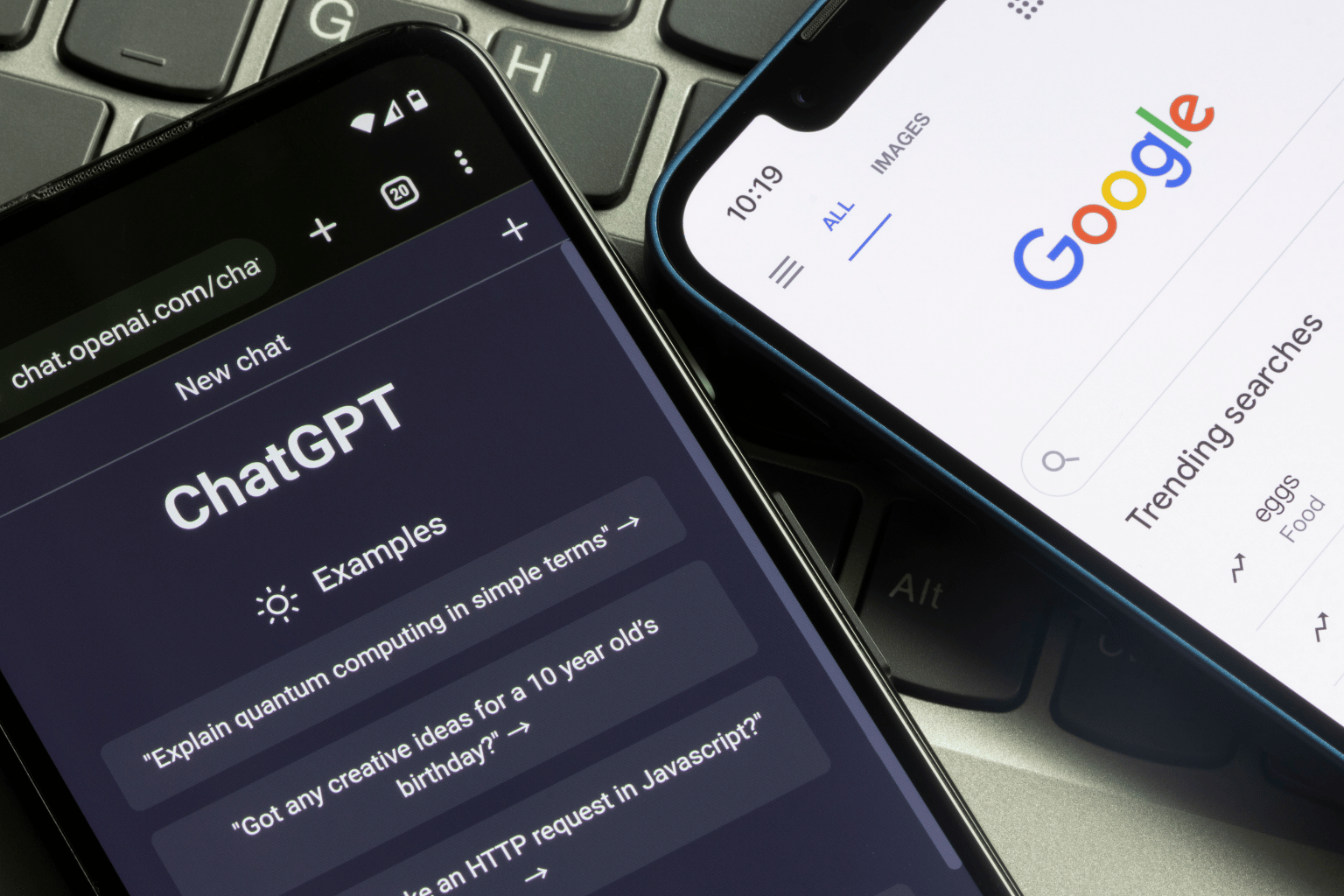
Used correctly, ChatGPT is one of the most flexible AI SEO tools available. It can help brainstorm topic clusters, generate page outlines, rewrite weak copy, simplify technical language, draft FAQs, and identify missing angles on a page. It is especially useful for businesses that struggle to turn expertise into content.
Used poorly, it creates bland copy that sounds like it was written by a robot wearing a blazer. The difference comes down to prompting, editing, and strategy. It works best when you feed it real business context, not just “write me an SEO article about plumbing.”
5. Clearscope
Clearscope is built for content optimization with a cleaner, more focused workflow than broader platforms. If your main need is improving page quality and relevance rather than managing every part of SEO, this can be a smart pick.
It tends to fit businesses that already have some content process in place. If you barely have time to publish one solid page a month, it may be more tool than you need. But if your team is creating pages regularly and wants better quality control, it is helpful.
6. Screaming Frog
Screaming Frog is not flashy, but it is incredibly valuable for finding technical SEO issues. Broken links, missing metadata, redirect chains, duplicate pages, and crawl problems all hurt visibility. This tool helps you find them before they quietly drag your site down.
It is not beginner-friendly in the same way as AI writing tools, but even basic use can uncover issues that affect rankings and user experience. Think of it as an inspection tool, not a magic wand.
7. Frase
Frase combines AI writing help with content research and optimization. It is useful for turning a target topic into a workable draft faster, especially for lean teams. For small businesses trying to publish consistently without hiring a full in-house content team, that is a practical advantage.
The catch is familiar: speed can create sameness. If every page follows the same AI-generated rhythm, your brand starts sounding interchangeable. Frase is best used to accelerate thinking, not replace it.
8. BrightLocal
For local businesses, BrightLocal deserves a spot on this list even though it is not purely an AI-first platform. It helps track local rankings, manage citations, monitor reviews, and understand local search visibility. If most of your revenue comes from a city or service area, local data often matters more than national keyword vanity.
This is a good reminder that the best AI SEO stack is not always made of only AI tools. Practical local visibility still drives real-world leads.
9. Google Search Console with AI support
Google Search Console is free, and every small business should use it. On its own, it shows search queries, page performance, indexing issues, and technical signals. When paired with AI for analysis, it becomes much more powerful. You can use AI to interpret patterns, spot underperforming pages, and turn raw data into action items.
No, it is not glamorous. Yes, it is still one of the smartest places to start.
How to choose the right AI SEO tools for small business
Start with the problem, not the software.
If your biggest issue is that your site barely ranks at all, you likely need technical fixes, better service pages, and local SEO support before investing heavily in AI content tools. If your site already gets some traction but content production is slow, an AI writing and optimization stack can help. If you do not know where leads are coming from, analytics and search data matter more than article generators.
Budget matters too. A lot of small businesses stack subscriptions like they are building a fantasy football roster, then use 12 percent of what they are paying for. Usually, one research tool, one content assistant, and one local or technical tool is enough.
There is also the question most agencies avoid because it is less exciting than software demos: do you have the time to use these tools well? If not, buying more tools can become a very expensive way to procrastinate. In those cases, a tailored strategy and execution support often beats another monthly subscription.
Where AI SEO is going in 2026 and 2027
The next phase of SEO is not just about ranking blue links. It is about visibility across search summaries, AI-generated answers, local map results, zero-click search experiences, and platform-specific discovery tools. That changes what businesses should optimize for.
Content needs clearer expertise, stronger structure, and more direct answers. Local businesses need tighter alignment between websites, profiles, reviews, and entity signals. Brand mentions and reputation signals are becoming more meaningful. So is being easy for AI systems to interpret.
That is why the smartest businesses are no longer asking only, “How do I rank number one?” They are asking, “How do I stay visible wherever customers are getting answers?” That is a better question, and frankly, it is the one more small businesses should be paying attention to.
If you are in a competitive market like Los Angeles, the gap between businesses using AI as a shortcut and businesses using it as a strategy tool is going to widen fast. LAv1 works in that gap, where traditional SEO still matters, but AI visibility is becoming part of the growth conversation whether a business is ready or not.
A practical way to use these tools without wasting money
A smart setup for most small businesses is surprisingly simple. Use Google Search Console to see what is happening. Use a tool like Semrush or Ahrefs if you need deeper research. Use ChatGPT, Frase, or Surfer to improve content production and optimization. Add BrightLocal if local search drives your revenue. Use Screaming Frog periodically to catch technical problems.
Then step back and ask the only question that really matters: is this producing better leads, not just prettier reports?
Because that is the whole game. The right tools should make your marketing clearer, faster, and more profitable. If they do not, they are just expensive wallpaper for your browser.
The businesses that win with AI will not be the ones using the most tools. They will be the ones using a few good ones with better judgment.